Related Articles

When I think about the parts that help a car start, the starter motor is one of the most important components that comes to mind. Most drivers know that turning the key or pressing the start button makes the engine come alive, but many people do not know what actually happens behind the scenes.
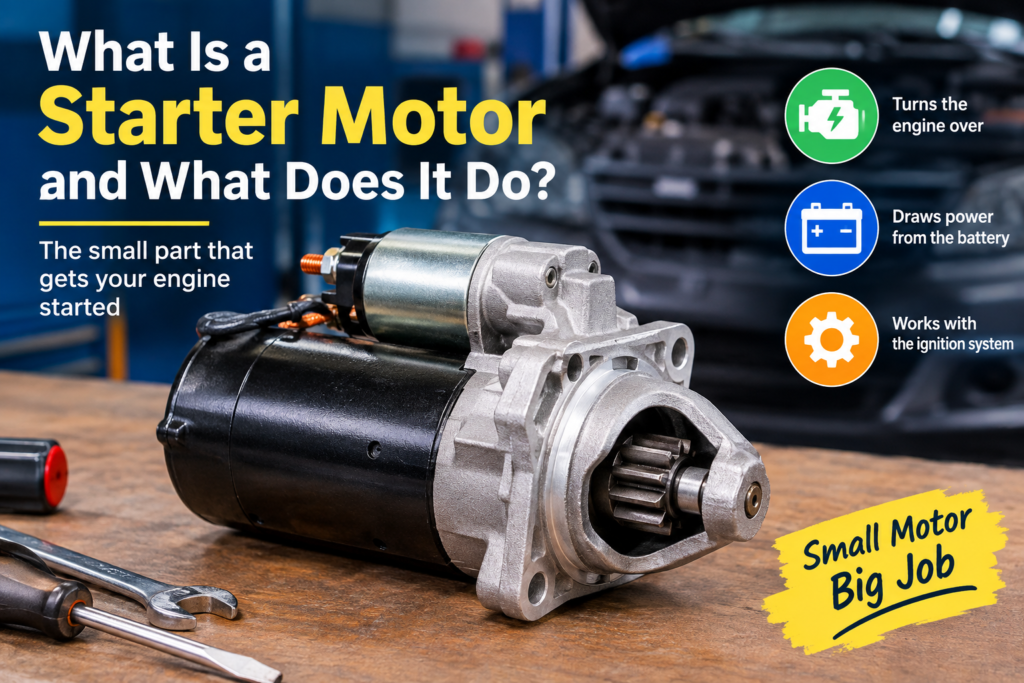
The starter motor is a small but powerful electric motor that plays a major role in starting the engine. Without it, a normal gasoline or diesel engine would not be able to start by itself from a complete stop. In my view, understanding the starter motor is useful for every car owner because problems with this component can leave you stuck when you least expect it.
In this article, I will explain what a starter motor is, how it works, what its main parts are, common starter motor problems, and how you can recognize the signs of a failing starter.
What Is a Starter Motor?
A starter motor is an electric motor designed to turn the engine over when you start your car. It receives electrical power from the car battery and converts that electrical energy into mechanical movement.
An internal combustion engine needs to rotate before it can begin its normal combustion process. The starter motor provides that initial rotation. Once the engine starts running on its own, the starter motor stops working.
I like to think of the starter motor as the component that gives the engine its first push. The battery supplies the electrical power, the starter motor uses that power to rotate the engine, and the engine then takes over.
This process happens very quickly. In many situations, you may only hear a brief sound before the engine starts. However, several mechanical and electrical components are working together during those few seconds.
What Does a Starter Motor Do?
The main job of a starter motor is to rotate the engine until it reaches the speed required for combustion to begin.
When you turn the ignition key or press the start button, an electrical signal is sent through the starting system. The starter motor receives power from the battery and begins to rotate.
The starter motor then engages with the engine flywheel or flexplate. This connection allows the starter to transfer its rotating force to the engine crankshaft.
As the crankshaft turns, the pistons begin moving. The engine can then begin its normal combustion cycle. Once the engine starts running under its own power, the starter motor disengages.
So, in simple terms, the starter motor starts the physical movement that allows the engine to start.
How Does a Starter Motor Work?
The starter motor system may look complicated, but the basic process is relatively easy to understand.
First, you insert the key and turn it to the start position, or you press the start button in a modern vehicle.
The vehicle sends an electrical signal to the starter circuit. This activates the starter solenoid.
The solenoid acts as an electrical switch and also helps move the starter gear into position. Once the starter motor receives enough electrical power, its internal motor begins spinning.
The starter gear connects with the teeth on the engine flywheel or flexplate. The starter motor then turns the flywheel, which rotates the crankshaft.
As the crankshaft rotates, the engine begins its normal operating cycle. Fuel and air enter the cylinders, compression takes place, and ignition produces combustion.
Once the engine is running, the starter gear disengages. The starter motor stops receiving power and remains inactive until the next time you start the vehicle.
Main Parts of a Starter Motor
A starter motor contains several important components. Each part has a specific role in the starting process.
Electric Motor
The electric motor is the main component that creates rotational movement. It receives high electrical current from the battery and converts it into mechanical energy.
Starter Solenoid
The starter solenoid works like a powerful electrical switch. It allows battery current to reach the starter motor and helps move the starter gear into engagement with the flywheel.
Starter Gear
The starter gear connects with the flywheel or flexplate. Its job is to transfer the starter motor’s rotational force to the engine.
Armature
The armature is a rotating component inside the starter motor. Electrical energy interacts with the magnetic field inside the motor and causes the armature to rotate.
Brushes
Starter motor brushes help transfer electrical current to the rotating parts of the motor. They can wear over time because they operate through physical contact.
Housing
The starter housing protects the internal components and provides the structure needed to mount the starter motor securely to the engine or transmission area.
Why Does a Car Need a Starter Motor?
An internal combustion engine cannot normally begin its operating cycle from a complete stop without some initial mechanical movement.
The engine needs the crankshaft to rotate so that the pistons can move and the engine can begin its combustion process.
This is where the starter motor becomes important.
Before electric starter motors became common, starting some engines required a manual crank. Modern vehicles make the process much easier by using an electric starter system.
In my opinion, the starter motor is one of those components that most drivers only think about when something goes wrong. When it works properly, you simply turn the key or press a button and the engine starts.
Signs of a Bad Starter Motor
A failing starter motor can produce several noticeable symptoms. Recognizing these signs early can help you diagnose the problem before the car refuses to start completely.
Clicking Sound When Starting
One of the most common symptoms is a clicking sound when you try to start the engine.
A single click or repeated clicking can be related to the starter system, although a weak battery or poor electrical connection can produce similar symptoms.
Starter Motor Turns Slowly
If the starter motor sounds unusually slow when you start the car, there may be a problem with the starter, battery, cables, or electrical connections.
A weak battery should always be considered before replacing the starter motor.
Engine Does Not Crank
Sometimes you turn the key or press the start button and nothing happens. There may be no engine rotation at all.
This can happen because of a faulty starter motor, starter solenoid, wiring problem, battery issue, or another part of the starting system.
Grinding Noise
A grinding noise during starting can indicate a problem involving the starter gear and the flywheel. This should not be ignored because continued operation could cause additional damage.
Intermittent Starting Problems
Another common warning sign is when the car starts normally sometimes but refuses to start at other times.
Intermittent problems can be difficult to diagnose because the starter may work perfectly during one attempt and fail during another.
Starter Motor vs Car Battery
People sometimes confuse starter motor problems with battery problems because both can cause starting difficulties.
The battery stores and supplies electrical energy. The starter motor uses that electrical energy to rotate the engine.
If the battery is weak, the starter motor may not receive enough power to operate correctly. You may hear clicking or notice slow engine cranking.
A faulty starter motor can also prevent the engine from cranking even when the battery is fully charged.
For this reason, I would not immediately replace the starter motor simply because a car does not start. The battery, battery terminals, cables, fuses, ignition system, and starter circuit should also be checked.
How Long Does a Starter Motor Last?
There is no single mileage or time period that applies to every starter motor.
Its lifespan depends on the vehicle, driving conditions, starting frequency, electrical system condition, and quality of the component.
A vehicle that is started many times every day may put more demand on the starter motor than a vehicle that is driven occasionally.
Good electrical connections and a healthy battery can also help the starting system operate correctly.
Instead of replacing a starter motor based only on age, I recommend paying attention to warning signs and having the starting system tested when problems appear.
Can a Starter Motor Be Repaired?
In some situations, a starter motor can be repaired rather than completely replaced.
Depending on the design and condition of the unit, components such as brushes, solenoids, bearings, or other internal parts may be serviceable.
However, replacement is often chosen because a complete replacement starter can provide a more straightforward repair.
The right option depends on the vehicle, the condition of the starter, local repair costs, and the availability of quality replacement parts.
How Can You Take Care of the Starter Motor?
The starter motor usually does not require regular maintenance like engine oil or filters. However, maintaining the overall electrical system can help prevent starting problems.
I recommend keeping the battery in good condition and checking the battery terminals for corrosion or loose connections.
It is also important to pay attention to unusual starting sounds. If the starter begins making strange noises or the engine takes longer than usual to crank, getting the problem checked early can help prevent a complete starting failure.
Avoid repeatedly holding the key in the start position for longer than necessary. Once the engine starts, the starter motor should disengage.
What Happens When a Starter Motor Fails Completely?
When a starter motor fails completely, the engine may not crank at all.
You may turn the ignition key or press the start button and hear only a click, or you may hear nothing.
The important thing to remember is that a car that will not start does not automatically have a bad starter motor. A professional diagnosis can help determine whether the problem is the starter motor, battery, wiring, ignition system, or another component.
Final Thoughts
The starter motor may be small compared with the engine, but its job is extremely important. It provides the initial mechanical movement that allows an internal combustion engine to begin running.
From my point of view, understanding the starter motor makes it easier to recognize starting problems and communicate with a mechanic when something goes wrong. The starter works closely with the battery, starter solenoid, flywheel, wiring, and ignition system to get the engine running.
If you notice clicking sounds, slow cranking, grinding noises, or intermittent starting problems, it is worth checking the starting system instead of ignoring the warning signs.
A healthy starter motor should operate quickly and smoothly when you start the vehicle. Taking care of the battery and electrical connections and responding to unusual symptoms early can help keep the starting system dependable.
For anyone interested in basic car maintenance, learning about the starter motor is a great place to start because it explains one of the first things that happens every time you turn your car on.