Related Articles
When I think about the important parts of a modern car, the catalytic converter is one component that deserves more attention. Many people know that it is connected to the exhaust system, but they may not know what it actually does or why it is so important. In simple words, a catalytic converter helps reduce harmful gases produced by the engine before those gases leave the vehicle through the exhaust.
I believe understanding basic car components can help every driver take better care of their vehicle. You do not need to be a professional mechanic to understand how a catalytic converter works, what problems can affect it, and what signs may indicate that something is wrong.
In this article, I will explain what a catalytic converter is, how it works, why it is important, and what drivers should know about catalytic converter problems.
What Is a Catalytic Converter?
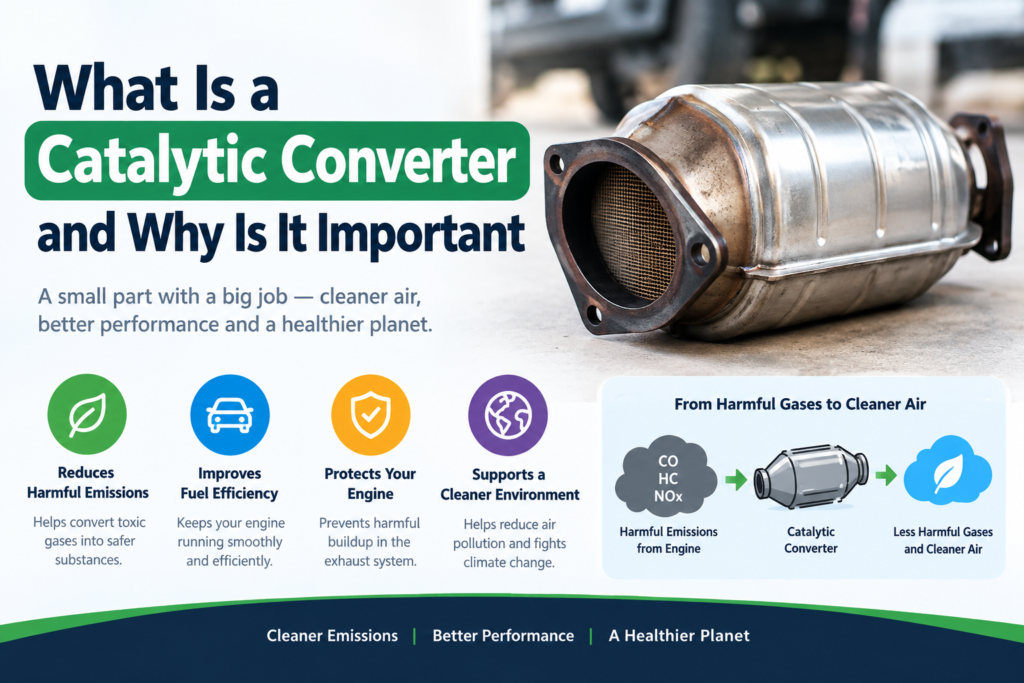
A catalytic converter is an important part of a vehicle’s exhaust system. Its main purpose is to reduce harmful pollutants created when fuel burns inside the engine.
When an engine operates, it produces exhaust gases. Some of these gases can be harmful to people and the environment if they are released directly into the atmosphere. The catalytic converter uses chemical reactions to change several harmful gases into less harmful substances.
A typical catalytic converter helps deal with pollutants such as carbon monoxide, hydrocarbons, and nitrogen oxides. Inside the converter, special materials help these chemical reactions take place.
The catalytic converter is usually located underneath the vehicle and is connected to the exhaust system. Its exact location can vary depending on the vehicle design and engine configuration.
How Does a Catalytic Converter Work?
The working process of a catalytic converter may sound complicated, but the basic idea is actually quite simple.
The engine produces exhaust gases during combustion. These gases travel through the exhaust system and eventually reach the catalytic converter.
Inside the converter is a structure that provides a large surface area for chemical reactions. This structure is coated with special catalyst materials. Common catalyst materials include platinum, palladium, and rhodium.
As hot exhaust gases pass through the converter, chemical reactions take place. These reactions help convert harmful pollutants into substances that are less harmful.
For example, carbon monoxide can be converted into carbon dioxide. Hydrocarbons can be converted into carbon dioxide and water. Nitrogen oxides can also be changed into nitrogen and oxygen.
The catalytic converter does not simply filter the exhaust like a basic filter. Instead, it changes the chemical composition of certain pollutants through catalytic reactions.
Why Is a Catalytic Converter Important?
In my view, the biggest reason a catalytic converter is important is that it helps reduce vehicle pollution.
Cars and other vehicles produce emissions whenever their engines burn fuel. Without proper emission control systems, much higher levels of harmful gases could enter the atmosphere.
A properly functioning catalytic converter helps reduce these pollutants before they leave the vehicle. This supports cleaner air and helps vehicles meet emission requirements in many regions.
The catalytic converter is also an important part of modern vehicle emission control technology. It works together with other systems, including oxygen sensors and engine management systems, to control emissions efficiently.
This means that the catalytic converter is not just another part underneath the car. It plays an important role in controlling what comes out of the vehicle’s exhaust.
What Happens When a Catalytic Converter Fails?
Like other vehicle components, a catalytic converter can develop problems over time.
One common problem is blockage. A damaged catalytic converter can become restricted, making it difficult for exhaust gases to pass through normally. When this happens, the engine may struggle to release exhaust gases efficiently.
A failing catalytic converter can also become damaged internally. The material inside the converter may break apart or become contaminated because of engine problems.
When a catalytic converter is not working correctly, the vehicle may show several warning signs.
These can include reduced engine performance, poor acceleration, unusual exhaust smells, increased fuel consumption, and an illuminated check engine light.
However, these symptoms can also be caused by other vehicle problems. For this reason, I would not recommend assuming that the catalytic converter is faulty simply because the check engine light comes on.
A proper diagnosis can help identify the actual problem.
Common Signs of a Bad Catalytic Converter
There are several signs that may indicate a catalytic converter problem.
Check Engine Light
A check engine light can appear when the vehicle detects an emissions related problem. Modern vehicles use sensors to monitor the exhaust system, and a problem with the catalytic converter can trigger a warning.
The check engine light does not always mean that the converter itself needs to be replaced. A mechanic should diagnose the vehicle to identify the cause.
Poor Engine Performance
A severely restricted catalytic converter can affect engine performance. You may notice that the car does not accelerate as easily as it normally does.
In some cases, the engine may feel weak, especially when driving uphill or trying to accelerate quickly.
Reduced Fuel Economy
A damaged exhaust system can sometimes contribute to poor fuel economy. If your vehicle suddenly starts using more fuel than usual, it is worth checking the vehicle for possible mechanical or emissions problems.
Unusual Exhaust Smell
A strong or unusual exhaust smell can be another warning sign. Since the catalytic converter is designed to process certain exhaust gases, problems with the converter or other components can change the smell coming from the exhaust.
Rattling Noise
A damaged catalytic converter can sometimes produce a rattling sound. This may happen when the internal material becomes loose or breaks apart.
If you hear a new rattling noise underneath your vehicle, it is better to have the exhaust system inspected.
What Can Damage a Catalytic Converter?
Several problems can contribute to catalytic converter damage.
One major cause is an engine that is not running correctly. For example, a misfiring engine can send unburned fuel into the exhaust system. This can cause excessive heat and damage the catalytic converter.
Problems with fuel delivery, ignition components, oxygen sensors, or other engine systems can also affect the converter.
This is why replacing a catalytic converter without finding the original cause may not solve the problem. If an underlying engine issue continues, the replacement converter could also become damaged.
Regular vehicle maintenance can help reduce the risk of these problems.
Can You Drive With a Bad Catalytic Converter?
Whether you can continue driving depends on the condition of the vehicle and the severity of the problem.
If the catalytic converter has a minor issue, the vehicle may continue to run for some time. However, ignoring the problem is not a good long term approach.
A severely blocked converter can affect engine performance and may cause additional problems. A damaged converter can also mean that the vehicle is producing more harmful emissions than it should.
If you notice serious performance problems, unusual smells, excessive heat, or other major symptoms, I would recommend having the vehicle inspected instead of continuing to drive it unnecessarily.
How Can You Protect Your Catalytic Converter?
The best way to protect a catalytic converter is to take care of the engine and exhaust system.
Regular maintenance is important because many catalytic converter problems begin with another engine issue.
Keeping the engine properly tuned can help reduce problems related to misfires and incorrect fuel combustion. Replacing worn spark plugs and maintaining other engine components can also help.
It is also important not to ignore warning lights. A small engine problem can sometimes become a much bigger issue when it is left untreated.
Using the correct fuel and following the vehicle manufacturer’s maintenance recommendations can also support proper engine and emissions system operation.
Why Catalytic Converter Theft Happens
Catalytic converters can sometimes become targets for theft because they contain valuable precious metals.
The exact risk depends on the vehicle, location, and local circumstances. Some vehicles are more attractive targets because of the design and accessibility of their catalytic converters.
If you are concerned about theft, you can ask a qualified mechanic about available security options for your specific vehicle. Parking in secure and well monitored areas can also reduce the risk.
It is important to remember that a catalytic converter is a functional part of the vehicle, not simply a valuable piece of metal.
Final Thoughts
In my opinion, the catalytic converter is one of those vehicle components that many drivers do not think about until a problem appears. It has an important job because it helps reduce harmful pollutants from the engine’s exhaust.
Understanding what a catalytic converter does can make it easier to recognize possible warning signs. Problems such as reduced performance, unusual smells, rattling sounds, and a check engine light should not be ignored.
The catalytic converter also shows how different parts of a modern vehicle work together. The engine produces power, the exhaust system moves combustion gases away from the engine, sensors monitor important information, and the catalytic converter helps reduce harmful pollutants.
For me, the main lesson is simple. A healthy engine and a properly maintained exhaust system are important for both vehicle performance and emission control. If you notice something unusual with your car, getting it checked early can help prevent a small problem from becoming a more expensive repair.
A catalytic converter may not be the most noticeable part of a car, but it plays a major role in making modern vehicles cleaner and more environmentally responsible.