Related Articles
Checking tire pressure is one of the simplest things I can do to take better care of my car. It does not require advanced mechanical knowledge, expensive equipment, or a lot of time. Still, many drivers do not check their tire pressure regularly, and some check it in a way that does not give an accurate reading.
In my experience, keeping the correct tire pressure can make a noticeable difference in how a car feels on the road. Properly inflated tires can help with handling, braking, tire wear, fuel economy, and overall driving comfort. That is why I believe every driver should know how to check tire pressure correctly.
In this guide, I will explain how to check tire pressure step by step, where to find the recommended tire pressure for your car, when to check it, what tools you need, and what to do if the pressure is too high or too low.
Why Is Tire Pressure Important?
Tire pressure affects the way your tires contact the road. When the pressure is correct, the tire can work as intended and provide a good balance of grip, comfort, and stability.
If your tire pressure is too low, more of the tire can contact the road. This can increase rolling resistance and may cause the tire to wear unevenly. The tire can also generate more heat during driving.
If the tire pressure is too high, the tire may feel harder and the contact area with the road can change. The vehicle may also feel less comfortable over rough surfaces.
From my point of view, checking tire pressure is a small maintenance job that can help prevent bigger tire related problems. It only takes a few minutes, but it is worth making it part of your regular car care routine.
What You Need to Check Tire Pressure
The good thing about checking tire pressure is that you do not need many tools. The most important tool is a reliable tire pressure gauge.
There are several types of tire pressure gauges available. A simple mechanical gauge is inexpensive and easy to keep in the car. Digital tire pressure gauges are also popular because they can provide an easy to read number.
You may also need an air compressor or access to an air pump if you discover that your tires need more air.
Before checking the pressure, I recommend making sure your gauge is clean and in good condition. A damaged or unreliable gauge can give you a reading that is not accurate.
Find the Recommended Tire Pressure
Before adding or removing air, you need to know the correct tire pressure for your vehicle.
The recommended pressure is usually listed on a sticker inside the driver’s door area. It may also be listed in the vehicle owner’s manual.
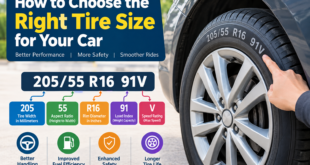
One mistake I often see is people looking at the number printed on the tire sidewall and assuming that it is the recommended pressure for everyday driving. The number on the tire can refer to a maximum pressure limit rather than the pressure recommended by the vehicle manufacturer.
Always check your vehicle information first. Your front and rear tires may also have different recommended pressures, so it is important to check all of the information rather than assuming every tire should have exactly the same pressure.
Check Tire Pressure When the Tires Are Cold
For the most accurate reading, I recommend checking tire pressure when the tires are cold.
Tires can become warmer after driving because of friction and normal operation. As the temperature of the tire increases, the air pressure inside it can also increase.
If possible, check the pressure before driving or after the car has been parked for several hours. This gives you a more consistent reading.
If you have already driven the vehicle and need to check the pressure, you can still measure it, but remember that the reading may be higher because the tires are warm.
Step by Step Guide to Checking Tire Pressure
Checking tire pressure is straightforward when you follow a simple process.
Step 1: Park Your Car Safely
Park the vehicle on a level and safe surface. Turn off the engine and make sure the car is secure.
If possible, check the pressure before driving because cold tires generally provide a more useful reading.
Step 2: Remove the Valve Cap
Find the valve stem on the tire. Remove the small valve cap and place it somewhere safe so you do not lose it.
The valve cap helps protect the valve from dirt and moisture, so I recommend putting it back after checking the pressure.
Step 3: Attach the Pressure Gauge
Press the tire pressure gauge firmly onto the valve stem.
You should hear a short hiss as the gauge connects. If you hear air escaping continuously, the gauge may not be positioned correctly.
Hold it firmly until you get a stable reading.
Step 4: Read the Pressure
Look at the number shown on your tire pressure gauge.
Depending on the gauge, the reading may be shown in PSI or another pressure measurement.
Compare the number with the recommended tire pressure listed on your vehicle information sticker or owner’s manual.
For example, if your vehicle recommends 35 PSI and your gauge shows 30 PSI, the tire needs additional air.
Step 5: Add Air if Necessary
If the tire pressure is too low, use an air compressor or air pump to add air.
I recommend adding air gradually rather than putting in a large amount at once. After adding some air, check the pressure again.
Continue until the tire reaches the recommended pressure.
Step 6: Remove Excess Air if Necessary
If the pressure is too high, you can release a small amount of air from the valve.
Some pressure gauges have a small button that can be used to release air. You can also carefully press the valve pin with an appropriate tool.
Do this slowly because it is easy to remove more air than you intended.
After releasing some air, check the pressure again.
Step 7: Replace the Valve Cap
Once the pressure is correct, remove the gauge and replace the valve cap.
Make sure the cap is secure but do not overtighten it.
Repeat the same process for the other tires.
Do Not Forget the Spare Tire
One thing that is easy to forget is the spare tire.
If your vehicle has a spare tire, check its pressure periodically as well. A spare tire is not very useful if it has been sitting in the vehicle for months with low pressure.
The recommended pressure for a spare can sometimes be different from the normal tires, so check the vehicle owner’s manual or the information provided by the manufacturer.
How Often Should You Check Tire Pressure?
There is no benefit in waiting until a tire looks visibly flat before checking it.
As a general habit, I recommend checking tire pressure at least once a month and before long road trips. It is also a good idea to check the tires when there is a significant change in weather or temperature.
Tires naturally lose a small amount of air over time. Temperature changes can also affect tire pressure.
Regular checks make it easier to notice a slow leak before it becomes a serious problem.
Signs Your Tire Pressure May Be Wrong
Sometimes your car can give you clues that the tire pressure needs attention.
You may notice that the vehicle feels different while driving. Steering can feel unusual, the ride may feel harder or softer than normal, or the tires may show unusual wear.
Many modern vehicles also have a tire pressure monitoring system that can warn you when pressure drops below a certain level.
However, I would not rely only on the warning light. A manual pressure check can give you a more precise idea of the actual tire pressure.
What Happens If Tire Pressure Is Too Low?
Driving with underinflated tires can affect handling and tire performance.
Low tire pressure can increase rolling resistance, which may affect fuel consumption. It can also contribute to uneven tire wear and additional heat buildup in the tire.
A tire that is losing pressure repeatedly should not simply be refilled again and again without finding the reason.
A puncture, damaged valve, wheel problem, or other issue could be responsible for the pressure loss.
What Happens If Tire Pressure Is Too High?
Overinflated tires can make the ride feel harder and may affect how the vehicle behaves on the road.
Too much pressure can also contribute to uneven tire wear.
This is why I do not recommend simply putting the maximum pressure shown on the tire into every tire. The correct everyday pressure should come from the vehicle manufacturer.
Common Tire Pressure Checking Mistakes
There are several simple mistakes that can make tire pressure checks less useful.
One common mistake is checking the pressure immediately after a long drive and treating the reading as the cold tire pressure.
Another mistake is using the maximum pressure printed on the tire sidewall instead of the vehicle manufacturer’s recommended pressure.
Some drivers check only one tire. I believe it is better to check all four tires because pressure can vary from one tire to another.
Another mistake is ignoring the spare tire.
Finally, some people wait until the tire pressure warning light comes on before checking anything. Regular manual checks are a better maintenance habit.
My Simple Tire Pressure Routine
I personally think tire pressure should be treated as a basic part of car maintenance, just like checking engine oil or inspecting the tires.
Once a month, I would choose a convenient time when the tires are cold and check all four tires. I would compare each reading with the recommended pressure and adjust the air if necessary.
Before a long journey, I would check them again. I would also take a quick look at the tire condition to make sure there are no obvious cuts, bulges, or objects stuck in the tread.
This routine takes only a few minutes but can help me stay more aware of the condition of my car.
Final Thoughts
Learning how to check tire pressure the right way is something every car owner can do. You only need a reliable pressure gauge, the correct recommended pressure for your vehicle, and a few minutes of your time.
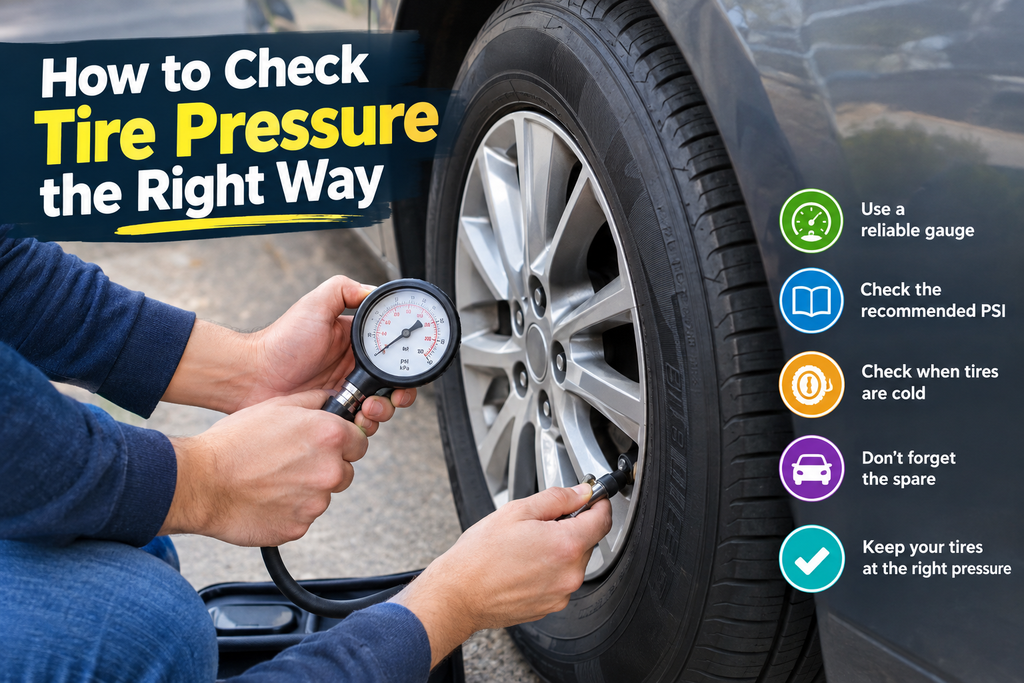
The most important points are to check the tires when they are cold, use the vehicle manufacturer’s recommended pressure, measure all four tires, adjust the pressure carefully, and remember to check the spare tire.
Proper tire pressure is an important part of regular vehicle maintenance. By making tire pressure checks a normal habit, you can stay more aware of your tires and help your vehicle perform as it should.
For me, this is one of those small maintenance tasks that is easy to ignore but simple enough to make part of a regular routine. A few minutes spent checking your tires can help you catch pressure problems early and keep your car ready for everyday driving and longer trips.