Related Articles
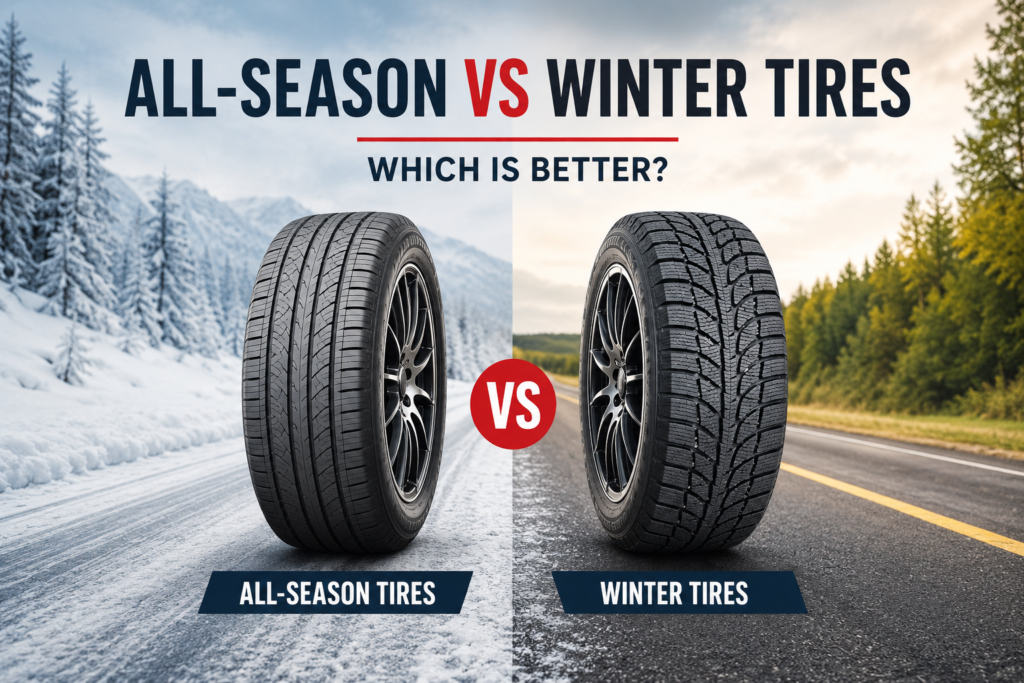
When it comes to choosing the right tires for a car, one question I often come across is whether all season tires or winter tires are better. The simple answer is that it depends on the weather, road conditions, and the way you use your vehicle. Both tire types are designed for different driving needs, so choosing between them should not be based only on price or appearance.
In my view, understanding the difference between all season vs winter tires can help you make a much safer and more practical decision. A tire is the only part of your vehicle that stays in direct contact with the road, so its performance can have a major effect on braking, handling, comfort, and overall safety.
What Are All Season Tires?
All season tires are designed to provide balanced performance in a variety of weather conditions. They are made for drivers who experience mild summers, moderate winters, rain, and occasional light snow.
The rubber compound used in all season tires is designed to work across a broader temperature range. Their tread pattern usually provides a good combination of dry road grip, wet traction, comfort, and reasonable performance in light winter conditions.
One thing I like about all season tires is their convenience. You can normally keep the same set of tires on your vehicle throughout the year instead of changing between summer and winter tires.
However, the term all season does not mean that these tires are perfect in every season. They are designed as a compromise. They can perform well in many conditions, but they cannot usually match a dedicated winter tire when temperatures become very low and roads are covered with snow or ice.
What Are Winter Tires?
Winter tires are specifically designed for cold weather. They are made to provide better traction when temperatures drop and roads become snowy, icy, or extremely cold.
The rubber compound in winter tires stays more flexible at low temperatures. This flexibility helps the tire maintain better contact with the road. Winter tires also have tread patterns with many small grooves and biting edges that help grip snow and improve traction.
In my opinion, winter tires make the biggest difference for drivers who regularly deal with heavy snow, ice, freezing temperatures, or difficult winter roads.
They are not simply tires with deeper tread. Their rubber compound, tread design, and construction are developed specifically for cold conditions.
All Season vs Winter Tires: The Main Difference
The biggest difference between all season and winter tires is the temperature and road condition they are designed to handle.
All season tires are made to provide balanced performance in different conditions. Winter tires are designed to prioritize traction and control in cold weather.
For example, if you live in an area where winters are mild and snow is uncommon, a good set of all season tires may be enough. If you regularly drive through snow and freezing temperatures, winter tires can provide a significant advantage.
The choice becomes easier when you think about your local climate instead of simply asking which tire is better.
Performance on Dry Roads
All season tires generally perform very well on dry roads, especially during moderate and warm weather. Their tread design is usually optimized for a comfortable and stable driving experience.
Winter tires can also perform safely on dry roads, but they are not designed primarily for warm weather. Their softer rubber compound can wear more quickly when used in higher temperatures.
For normal dry road driving outside winter conditions, I would generally prefer all season tires because they provide a better balance of handling, comfort, and tread life.
Performance in Rain
Both all season and winter tires can provide good wet road performance when properly designed and maintained.
All season tires often have grooves that help move water away from the contact area. This helps reduce the risk of losing traction on wet roads.
Winter tires can also perform well in wet conditions, particularly when temperatures are low. However, their biggest advantage is not ordinary rain. Their real strength appears when cold temperatures combine with snow, ice, or packed winter surfaces.
For drivers who mainly deal with rain but very little snow, quality all season tires may be the more practical choice.
Performance in Snow
This is where the difference between all season vs winter tires becomes much more noticeable.
Winter tires are specifically designed to provide traction on snow. Their tread contains many small biting edges and grooves that help the tire grip snowy surfaces. The softer winter compound also remains flexible when temperatures fall.
All season tires can handle light snow, but their performance can decrease as snow becomes deeper or roads become more slippery.
If you live in an area where significant snowfall is common, I believe winter tires are worth considering. Better traction can make starting, turning, and stopping more predictable.
Performance on Ice
Ice is one of the most challenging surfaces for any tire. Even winter tires cannot eliminate the risk of sliding, but they can provide better cold weather traction than all season tires.
Winter tires are designed with compounds and tread patterns that work better in freezing conditions. Their numerous grooves and biting edges can help create more traction on slippery surfaces.
All season tires may become harder as temperatures fall, which can reduce their ability to maintain grip.
For regular winter driving on icy roads, dedicated winter tires are generally the better choice.
Handling in Cold Weather
Temperature plays a very important role in tire performance.
As temperatures drop, the rubber used in some all season tires can become less flexible. This can affect grip and braking performance.
Winter tires use a specialized rubber compound that is designed to remain flexible in cold weather. This allows the tire to maintain better contact with the road.
This is one reason I would not judge tires only by their tread pattern. The rubber compound is also an important part of how a tire performs.
Braking Performance
Braking is one of the most important factors when comparing all season vs winter tires.
On warm and dry roads, all season tires can provide strong braking performance. However, when temperatures fall significantly and roads become snowy or icy, winter tires generally have an advantage.
Better traction allows the tire to maintain more control during braking. This does not mean a winter tire can stop instantly on ice. Road speed, vehicle weight, braking system, road condition, and driver reaction all matter.
Still, having a tire designed for the conditions you are driving in can improve your overall safety.
Ride Comfort and Noise
All season tires are often preferred by drivers who want a smooth and quiet ride throughout the year. Many modern all season tires are designed with comfort in mind.
Winter tires can sometimes produce more road noise because of their aggressive tread patterns. Their ride may also feel slightly different from normal all season tires.
If comfort and quiet highway driving are your priorities and you rarely experience serious winter weather, all season tires can be a practical option.
Tire Life and Wear
How long a tire lasts depends on several factors, including driving style, road conditions, tire quality, inflation pressure, wheel alignment, and maintenance.
Winter tires generally should not be used throughout hot weather. Warm temperatures can cause their softer compound to wear more quickly.
All season tires can remain on the vehicle throughout the year, which can make tire management easier.
However, using the correct tire for the correct conditions is more important than trying to get the maximum number of miles from one set.
Cost Considerations
At first glance, all season tires may appear cheaper because you only need one set for the entire year. Winter tires usually require a second set, which means additional tire costs and potentially storage and installation expenses.
However, the value of winter tires depends on your environment.
If your area receives heavy snow every winter, spending more on appropriate tires can be a worthwhile investment. If you live somewhere with mild winters, buying a dedicated winter setup may not provide enough benefit to justify the additional cost.
I always recommend considering your actual driving conditions rather than buying tires simply because they are marketed as premium or specialized.
Which Tires Are Better for Highway Driving?
For regular highway driving in mild weather, all season tires are usually a good choice. They provide balanced handling, comfortable driving, and reasonable performance across changing conditions.
If the same highway regularly experiences snow and freezing temperatures during winter, winter tires can offer better control during that season.
Your driving route matters just as much as your local weather. Someone who drives mostly on cleared city roads has different needs from someone who travels through rural or mountainous roads during winter.
Which Tires Should You Choose?
Choosing between all season and winter tires becomes easier when you consider a few important questions.
How cold does your area become during winter?
How much snow and ice do you normally experience?
Do you drive every day during winter?
Do you frequently travel on highways or rural roads?
Can you safely avoid driving during severe weather?
If winters are mild and snow is rare, all season tires may be the most convenient option.
If winter temperatures are consistently low and snow or ice is common, winter tires are generally the better choice.
Can You Use Winter Tires All Year?
I would not recommend using winter tires throughout the entire year unless a tire manufacturer specifically approves such use for your conditions.
Winter tires are designed for cold temperatures. When roads become hot during summer, their softer rubber compound can wear faster. Handling can also change as temperatures rise.
The better approach is to use winter tires during the cold season and switch back to an appropriate tire when warmer weather arrives.
This can also help you get better performance and longer service life from both sets of tires.
Can All Season Tires Replace Winter Tires?
For mild winter conditions, all season tires can sometimes be enough. However, they should not automatically be considered a replacement for winter tires in areas with severe winter weather.
There is a major difference between occasional light snow and regular heavy snow or icy roads.
If your vehicle is frequently exposed to difficult winter conditions, choosing a tire specifically designed for those conditions can provide greater confidence and traction.
My Final Take on All Season vs Winter Tires
After looking at the differences, I would say there is no single winner for every driver.
All season tires are better for convenience, moderate climates, everyday driving, and drivers who experience a mixture of weather without severe winter conditions. They offer a useful balance between dry roads, wet roads, comfort, and light winter driving.
Winter tires are better for drivers who regularly experience freezing temperatures, heavy snow, icy roads, and challenging winter conditions. Their specialized rubber compound and tread design give them an important advantage when the weather becomes seriously cold.
For me, the best tire is not necessarily the most expensive tire. It is the tire that matches the environment where you actually drive.
Before buying a new set, I recommend checking your vehicle manufacturer’s recommended tire size and specifications. You should also check tire pressure regularly, inspect tread depth, and make sure your wheels are properly aligned.
The right tires can improve more than just your driving comfort. They can affect braking, steering, traction, and your confidence behind the wheel. Understanding the difference between all season vs winter tires is therefore an important part of making a smart tire buying decision.
In the end, choose all season tires when convenience and year round versatility are your priorities. Choose winter tires when cold temperatures, snow, and ice are a regular part of your driving experience.