Related Articles

When I talk about a car’s braking system, one thing I always consider important is understanding the difference between brake pads and brake shoes. Both parts are designed to slow down and stop a vehicle, but they work with different types of braking systems. They also have different designs, maintenance needs, costs, and performance characteristics.
Many drivers know that brake components eventually wear out, but they may not know whether their vehicle uses brake pads, brake shoes, or both. In my experience, understanding these parts makes it much easier to recognize braking problems and choose the right replacement parts.
In this article, I will explain brake pads vs brake shoes, how they work, where they are used, and the key differences every car owner should know.
What Are Brake Pads?
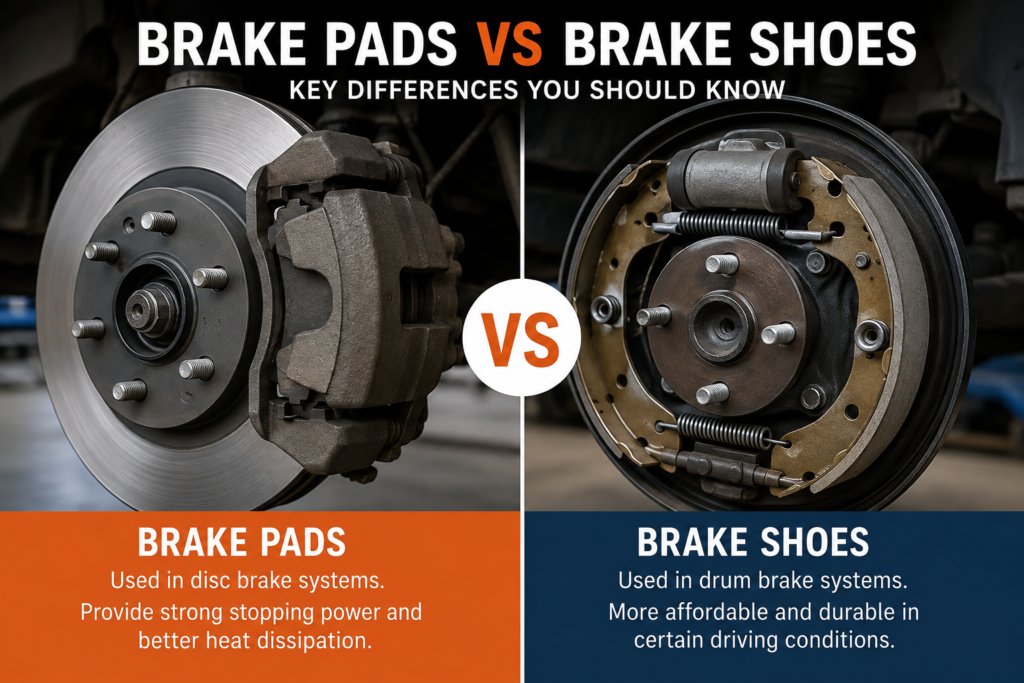
Brake pads are friction components used in a disc brake system. They are normally installed inside a brake caliper, which sits around the brake rotor. When you press the brake pedal, hydraulic pressure causes the caliper to push the brake pads against the rotating rotor.
The friction created between the brake pads and rotor slows the wheel down. When the pressure is released, the pads move away from the rotor enough to allow the wheel to rotate normally again.
Most modern vehicles use disc brakes on the front wheels, and many newer vehicles also use disc brakes on the rear wheels. Brake pads are available in different materials, including ceramic, semi metallic, and organic compounds.
From my point of view, brake pads are one of the most important maintenance parts on a modern vehicle because their condition can directly affect stopping performance.
What Are Brake Shoes?
Brake shoes are friction components used in drum brake systems. Instead of pressing against a flat rotor, brake shoes press against the inside surface of a rotating brake drum.
When the brake pedal is pressed, hydraulic pressure activates a wheel cylinder. The wheel cylinder pushes the brake shoes outward. The friction material on the shoes then contacts the inside of the drum, creating resistance and slowing the wheel.
Drum brakes are still found on many vehicles, particularly on rear wheels. They are also common on older cars and certain vehicles where cost, durability, and parking brake design are important considerations.
Brake shoes have a curved shape because they need to fit inside the brake drum. This is one of the easiest ways to visually distinguish them from brake pads.
Brake Pads vs Brake Shoes: How They Differ
The biggest difference between brake pads and brake shoes is the braking system they work with.
Brake pads work with disc brakes. They press against the outside surfaces of a brake rotor. Brake shoes work with drum brakes. They press against the inside surface of a brake drum.
The basic purpose is the same. Both create friction that converts the vehicle’s moving energy into heat. However, their design and method of operation are quite different.
Brake pads are usually flat and rectangular. Brake shoes are curved and mounted inside a drum assembly.
Another major difference is how heat is managed. Disc brakes generally have better airflow around the rotor, which helps remove heat during repeated braking. Drum brakes can retain more heat because the braking components are enclosed inside the drum.
Design and Construction
Brake pads are relatively simple in appearance. They usually consist of a metal backing plate and a friction material attached to it. The friction material is the part that contacts the brake rotor.
Brake shoes also have a metal base, but their shape is curved to match the inside of the drum. Friction material is attached to the outer surface of the shoe.
A drum brake assembly also contains several additional components, such as return springs, hold down hardware, an adjuster, and a wheel cylinder. This makes drum brake servicing somewhat more involved than replacing a basic set of disc brake pads.
Because of this difference, I always recommend checking the complete brake assembly instead of focusing only on the friction material.
Stopping Performance
Stopping performance depends on many factors, including vehicle weight, tire condition, brake design, friction material, and driving conditions. However, disc brakes with brake pads generally offer excellent performance, especially during repeated or hard braking.
One reason is heat management. The brake rotor is exposed to air, which helps transfer heat away from the braking system. This can reduce the chance of overheating during demanding driving.
Drum brakes can also provide strong braking performance, especially when properly maintained. They have been used successfully for many decades.
However, drums can be more sensitive to heat buildup during repeated heavy braking. This is one reason disc brakes have become increasingly common on modern vehicles.
Brake Pad Wear
Brake pads gradually become thinner as they are used. Many vehicles have wear indicators that produce a noticeable noise when the friction material becomes low.
Common signs of worn brake pads include squealing, grinding, reduced braking performance, vibration, or a brake warning indicator on some vehicles.
I would never recommend ignoring unusual brake sounds. A small noise can sometimes indicate that the friction material is becoming low. If the metal backing plate starts contacting the rotor, expensive damage can occur.
Brake pad life varies considerably. Driving style, traffic conditions, vehicle weight, brake material, and road conditions all affect how long brake pads last.
Brake Shoe Wear
Brake shoes also wear as their friction material contacts the inside of the drum. However, checking them can be slightly more complicated because they are hidden inside the brake drum.
A worn brake shoe may cause reduced braking performance, unusual sounds, or changes in how the parking brake operates.
Some drum brake systems have automatic adjusters that help maintain the correct distance between the shoes and drum. If the adjustment mechanism becomes dirty or fails, the brake pedal may feel different and braking performance can be affected.
When servicing drum brakes, I believe it is important to inspect the springs, adjuster, wheel cylinder, drum surface, and shoe condition rather than replacing only one component.
Maintenance Differences
Brake pads are generally easier to inspect because they can often be seen without removing the brake rotor. A technician can usually check the remaining friction material during a routine inspection.
Brake shoes are enclosed inside the drum. To properly inspect them, the brake drum normally needs to be removed.
This difference can make drum brake maintenance more time consuming. However, brake shoes can sometimes last a long time because rear drum brakes may not handle as much braking force as the front brakes.
Maintenance should always follow the vehicle manufacturer’s recommendations. Brake components should also be inspected whenever there are symptoms such as unusual noise, pulling, vibration, or changes in pedal feel.
Cost Difference Between Brake Pads and Brake Shoes
The price of brake pads and brake shoes depends on the vehicle and the quality of the parts. In many cases, brake pads are relatively straightforward to replace.
Brake shoe replacement can involve more labor because the technician may need to remove the drum and handle several springs and adjustment components.
However, this does not mean brake shoes are always more expensive. The total repair cost depends on the vehicle, parts, labor rates, and whether other components need replacement.
For example, a damaged brake drum, leaking wheel cylinder, or worn hardware can increase the total cost of a drum brake repair.
Which One Lasts Longer?
There is no universal answer to whether brake pads or brake shoes last longer.
Brake shoe life can be quite good in certain vehicles because rear drum brakes may experience less braking load. Some shoes can last for a very long time under normal driving conditions.
Brake pad life can also be excellent when the vehicle is driven gently and maintained properly.
Aggressive driving, heavy traffic, frequent braking, towing, hills, and vehicle weight can all shorten brake component life.
Instead of judging brake life only by mileage, I think it is better to inspect the actual condition of the braking components.
Brake Pads and Brake Shoes Can Work Together
One thing that sometimes confuses drivers is that a vehicle can have both brake pads and brake shoes.
For example, a vehicle may use disc brakes with brake pads on the front wheels and drum brakes with brake shoes on the rear wheels.
Some vehicles also use a separate drum mechanism inside a rear brake rotor for the parking brake.
This means you should not assume that a car uses only one type of friction component. The exact brake configuration depends on the vehicle design.
Which Is Better: Brake Pads or Brake Shoes?
I would not say that brake pads are always better than brake shoes or that brake shoes are outdated. Both systems have advantages.
Brake pads and disc brakes generally offer strong braking performance, excellent heat management, and easier visual inspection. This makes them especially useful for modern vehicles and demanding driving conditions.
Brake shoes and drum brakes can provide reliable performance, good durability, and an economical design. Drum brakes can also work well as parking brakes.
The better choice is usually the system designed for the vehicle. You should not replace one system with another simply because you believe it is better. Any brake modification should be properly engineered and compatible with the vehicle.
Signs Your Brakes Need Attention
Regardless of whether your vehicle uses brake pads or brake shoes, certain warning signs should never be ignored.
Squealing or grinding sounds can indicate friction material wear or another brake problem. A vehicle that pulls to one side during braking may have an issue with the braking system or another suspension component.
A soft or spongy brake pedal can indicate a hydraulic problem, air in the brake system, or another issue that needs professional inspection.
Vibration while braking may be related to brake rotor or drum condition, although other mechanical problems can also cause vibration.
If the parking brake becomes difficult to apply or does not hold the vehicle properly, the rear brake system may also need inspection.
Final Thoughts
The difference between brake pads and brake shoes mainly comes down to the type of brake system they operate in. Brake pads are used with disc brakes and press against a rotor, while brake shoes are used with drum brakes and press against the inside of a drum.
Both are essential friction components, and both require regular inspection. Brake pads are generally easier to inspect and are commonly found on modern disc brake systems. Brake shoes are enclosed inside drum assemblies and can provide reliable performance and long service life when properly maintained.
In my opinion, the most important thing is not whether your vehicle uses brake pads or brake shoes. What matters most is keeping the entire braking system in good condition. Regular inspections, quality replacement parts, proper installation, and attention to warning signs can help keep your vehicle safe on the road.
If you understand how brake pads and brake shoes work, you can make better decisions about brake maintenance and recognize potential problems before they become more serious. Always use the correct components for your specific vehicle and have important brake repairs checked by a qualified professional.