Related Articles


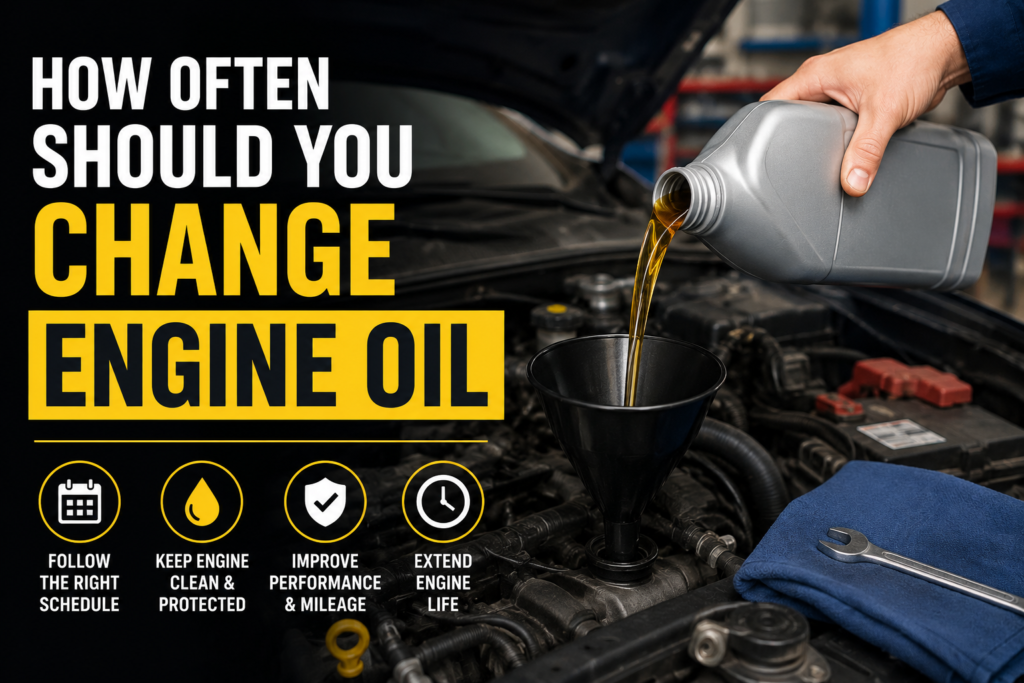
One of the most common questions I hear from car owners is, how often should you change engine oil? It might seem like a simple maintenance task, but regular oil changes play a huge role in keeping an engine healthy and reliable. I have always believed that taking care of the engine is the best way to avoid expensive repairs later, and changing the oil on time is one of the easiest ways to do that.
Engine oil is often called the lifeblood of a vehicle because it keeps the engine lubricated, reduces friction, controls heat, and protects internal parts from wear. When the oil becomes old or dirty, it loses its ability to do these important jobs. That is why understanding the right oil change interval is essential for every driver.
In this article, I will explain how engine oil works, how often it should be changed, the factors that affect oil life, and the warning signs that tell you it is time for fresh oil.
Why Engine Oil Is So Important
Every time the engine runs, hundreds of metal components move at very high speeds. Without lubrication, these parts would rub against each other, creating excessive heat and wear.
Engine oil creates a protective layer between moving components. It also helps remove heat, carries away dirt and tiny metal particles, prevents corrosion, and keeps the engine running smoothly.
Clean oil allows the engine to perform efficiently while reducing unnecessary stress on important parts.
How Often Should You Change Engine Oil
There is no single answer that applies to every vehicle because oil change intervals depend on the type of engine, the oil being used, and driving conditions.
Most modern vehicles using synthetic oil can usually go between 7500 and 10000 miles before needing an oil change.
Vehicles using conventional motor oil generally require an oil change every 3000 to 5000 miles.
However, I always recommend following the maintenance schedule provided in the owner’s manual because manufacturers know what is best for their engines.
What Happens If You Do Not Change Engine Oil
Ignoring oil changes may save money in the short term, but it often leads to expensive repairs later.
As oil ages, it becomes contaminated with dirt, carbon deposits, fuel residue, and microscopic metal particles.
Old oil becomes thicker and loses its ability to lubricate properly.
This can lead to:
Increased engine wear
Poor fuel economy
Engine overheating
Reduced performance
Oil sludge buildup
Premature engine failure
Regular oil changes are much less expensive than repairing or replacing an engine.
Factors That Affect Oil Change Frequency
Several conditions influence how quickly engine oil breaks down.
Driving Habits
Frequent short trips prevent the engine from reaching normal operating temperature.
This causes moisture and contaminants to remain inside the oil, reducing its lifespan.
Weather Conditions
Very hot and extremely cold temperatures place additional stress on engine oil.
Drivers living in harsh climates may need more frequent oil changes.
Traffic Conditions
Heavy stop and go traffic keeps the engine working harder.
The engine spends more time idling while generating heat, causing oil to deteriorate faster.
Towing Heavy Loads
Vehicles that regularly tow trailers or carry heavy cargo experience greater engine stress.
In these situations, oil changes should usually occur more frequently.
Dusty Roads
Driving on gravel roads or dusty construction areas exposes the engine to more airborne particles.
Although the air filter removes most contaminants, dusty conditions can still shorten oil life.
Types of Engine Oil
Choosing the right oil is just as important as changing it on time.
Conventional Oil
Conventional oil is the traditional option used in many older vehicles.
Advantages include:
Lower cost
Widely available
Suitable for many older engines
However, it usually requires more frequent replacement.
Synthetic Oil
Synthetic oil is specially engineered for improved performance.
Benefits include:
Longer service life
Better engine protection
Improved cold weather performance
Excellent resistance to heat
Cleaner engine operation
Although synthetic oil costs more, its longer lifespan often makes it a worthwhile investment.
Synthetic Blend Oil
Synthetic blend oil combines conventional and synthetic base oils.
It offers better protection than conventional oil while remaining more affordable than full synthetic.
Many drivers choose this option for everyday use.
Signs Your Engine Oil Needs Changing
Sometimes the vehicle gives warning signs before the recommended oil change interval.
Some common symptoms include:
Dark dirty oil
Engine noise
Oil warning light
Burning oil smell
Poor fuel economy
Sluggish acceleration
Rough engine performance
Excessive exhaust smoke
If you notice several of these signs, checking the oil level and condition should be your first step.
How to Check Engine Oil
Checking engine oil only takes a few minutes.
Park the vehicle on level ground.
Turn off the engine.
Allow it to cool for several minutes.
Remove the dipstick.
Wipe it clean.
Insert it again.
Remove it once more.
Check both the oil level and its appearance.
Clean amber colored oil usually indicates good condition.
Very dark, gritty, or thick oil often means it is time for a replacement.
Should You Trust the Oil Life Monitor
Many modern vehicles include an oil life monitoring system.
These systems calculate oil condition based on:
Driving habits
Engine temperature
Trip length
Engine speed
Vehicle load
While these systems are generally accurate, I still recommend checking the oil manually from time to time.
Low oil levels cannot always be detected simply by monitoring oil life.
Can You Change Engine Oil Too Often
Changing oil earlier than necessary does not harm the engine.
However, replacing perfectly good oil more frequently than recommended may simply increase maintenance costs.
Using high quality oil and following the manufacturer’s schedule usually provides the best balance between protection and value.
Choosing the Right Engine Oil
Always select oil that meets your vehicle manufacturer’s specifications.
Important factors include:
Correct viscosity rating
Recommended oil type
Quality certification
Manufacturer approval
Using the wrong oil can reduce performance and may even affect warranty coverage.
Benefits of Regular Oil Changes
Changing engine oil on time provides several important advantages.
Better engine protection
Longer engine life
Improved fuel economy
Cleaner engine components
Reduced engine wear
Lower repair costs
Smoother performance
Higher resale value
These benefits make routine oil changes one of the smartest maintenance investments.
Common Oil Change Mistakes
Many drivers accidentally make mistakes that reduce engine protection.
Some common examples include:
Ignoring the maintenance schedule
Using the wrong oil viscosity
Installing poor quality oil filters
Overfilling the engine
Underfilling the engine
Forgetting to replace the oil filter
Waiting too long between oil changes
Avoiding these mistakes helps keep the engine operating efficiently.
Should You Change the Oil Filter Every Time
Yes.
The oil filter removes dirt, sludge, and tiny metal particles from circulating oil.
A dirty filter cannot perform its job effectively.
Replacing the filter with every oil change helps ensure the fresh oil remains clean for as long as possible.
Professional Oil Change Versus Doing It Yourself
Many drivers enjoy changing their own oil because it saves money and allows them to inspect the vehicle.
Others prefer professional service because technicians can also inspect brakes, suspension, tires, belts, and fluid levels during the appointment.
Both options are effective as long as quality oil and filters are used.
How Long Does an Oil Change Take
A typical oil change usually takes between thirty and forty five minutes at most repair shops.
Drivers performing the job at home may need slightly longer depending on experience and available tools.
Considering the protection it provides, this small amount of time is well worth it.
Tips to Extend Engine Oil Life
Although oil eventually wears out, several habits help maximize its lifespan.
Drive the vehicle regularly.
Avoid unnecessary engine idling.
Use high quality motor oil.
Replace the oil filter with every oil change.
Check the oil level every month.
Repair leaks immediately.
Follow the manufacturer’s maintenance schedule.
These simple practices help keep the engine clean and running efficiently.
Final Thoughts
Knowing how often you should change engine oil is one of the most important parts of responsible car ownership. Fresh oil keeps the engine lubricated, reduces friction, controls heat, and protects valuable components from premature wear. Whether your vehicle uses conventional oil or full synthetic oil, following the recommended maintenance schedule is the best way to ensure long term reliability.
I always believe that preventive maintenance saves both time and money. Regular oil changes improve engine performance, support better fuel economy, and reduce the risk of expensive repairs. Spending a little time and money on routine oil maintenance today can help your engine stay dependable for many years and thousands of miles ahead.