
Related Articles



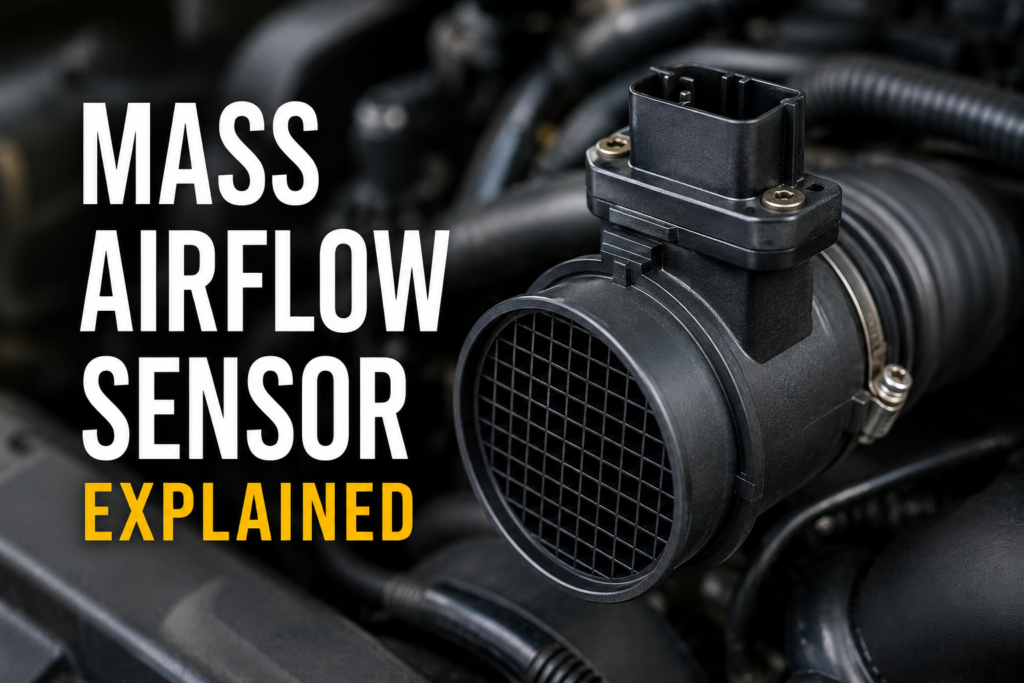
When I think about the parts that help a modern car engine run smoothly, the mass airflow sensor is one of the components that deserves more attention. It is a small part, but its job is extremely important. The mass airflow sensor, commonly called the MAF sensor, measures the amount of air entering the engine and sends this information to the engine control unit.
The engine needs the correct balance of air and fuel to work properly. If the engine receives too much or too little fuel compared with the amount of air entering it, performance can suffer. This is why a properly working MAF sensor can make a noticeable difference in engine performance, fuel economy, emissions, and overall drivability.
In this article, I will explain what a mass airflow sensor does, how it works, where it is located, common symptoms of a bad MAF sensor, and what you should know before replacing one.
What Is a Mass Airflow Sensor?
A mass airflow sensor is an electronic sensor installed in the engine air intake system. Its main purpose is to measure the amount of air entering the engine.
The information from the MAF sensor is sent to the engine control unit, also known as the ECU. The ECU uses this information to determine how much fuel should be injected into the engine.
This process happens continuously while the engine is running. When you accelerate, the throttle opens and more air enters the engine. The MAF sensor detects the increased airflow and sends updated information to the ECU. The computer can then adjust fuel delivery according to the engine’s needs.
From my point of view, the easiest way to understand a MAF sensor is to think of it as an air measurement device. It tells the vehicle computer how much air the engine is breathing at any given moment.
Where Is the MAF Sensor Located?
The mass airflow sensor is usually located in the air intake system between the air filter housing and the engine throttle body.
Its exact position can vary depending on the vehicle. In many cars, you can find it attached to the air intake tube close to the air filter box. It normally has an electrical connector attached to it.
The location makes sense because the sensor needs to measure the air entering the engine before that air reaches the intake manifold.
If you open the hood and follow the large intake tube from the air filter toward the engine, there is a good chance you will find the MAF sensor along that path.
How Does a Mass Airflow Sensor Work?
Most modern MAF sensors use a heated sensing element to measure incoming air.
Inside the sensor is a very small electronic element that is heated electrically. As air passes over this element, it removes some of its heat. The sensor detects how much heat is being removed and uses that information to determine the amount of air flowing into the engine.
The sensor then sends an electrical signal to the ECU.
The ECU combines the MAF reading with information from other sensors. These may include the oxygen sensor, throttle position sensor, intake air temperature sensor, and engine coolant temperature sensor.
Using all this information, the ECU can adjust fuel injection and engine operation.
This process happens very quickly. The computer is constantly making small adjustments as driving conditions change.
Why Is the MAF Sensor Important?
The mass airflow sensor plays an important role in maintaining the correct air and fuel mixture.
An engine needs enough air for combustion. At the same time, it needs the correct amount of fuel. If the mixture is not correct, the engine may not operate efficiently.
A properly functioning MAF sensor helps the ECU understand the engine’s current airflow. This allows the vehicle to adjust fuel delivery according to demand.
A good MAF sensor can contribute to smooth acceleration, stable idle, better fuel economy, proper emissions control, and reliable engine performance.
That is why I would not ignore MAF sensor problems. A small sensor can create several noticeable problems when its readings become inaccurate.
Common Symptoms of a Bad MAF Sensor
A failing MAF sensor can produce several symptoms. Some problems can also be caused by other engine components, so it is important not to assume that every symptom automatically means the MAF sensor is bad.
Check Engine Light
One of the most common signs is the check engine light.
If the MAF sensor sends incorrect information to the ECU, the computer may detect that the airflow readings do not match expected engine conditions. It can then store a diagnostic trouble code and turn on the check engine light.
A diagnostic scan can help identify whether the MAF sensor or another component is responsible.
Poor Acceleration
Another common symptom is weak or uneven acceleration.
If the ECU does not receive accurate airflow information, fuel delivery may not be ideal. You may notice hesitation when pressing the accelerator or a lack of power during acceleration.
In some cases, the vehicle may feel normal at low speeds but struggle when you demand more power.
Rough Idle
A bad MAF sensor can also contribute to an unstable idle.
The engine may shake, RPM may move up and down, or the engine may feel like it is struggling to remain running.
However, rough idle can have many causes, including vacuum leaks, ignition problems, dirty throttle components, and fuel system issues.
Poor Fuel Economy
If the MAF sensor provides inaccurate airflow information, the ECU may deliver more fuel than necessary.
This can result in reduced fuel economy. If you suddenly notice that your car is using more fuel without a clear change in your driving habits, checking the intake and MAF system can be worthwhile.
Engine Stalling
In some cases, a serious MAF sensor problem can contribute to engine stalling.
The engine depends on accurate information to maintain the correct air and fuel mixture. If that information becomes unreliable, the engine may struggle to maintain stable operation.
Difficult Starting
A faulty airflow reading can sometimes make starting more difficult.
The engine may take longer to start or may start and then struggle to maintain idle. Again, this symptom can come from several different problems, so proper diagnosis is important.
What Causes a MAF Sensor to Fail?
There are several reasons why a mass airflow sensor may become dirty or faulty.
One common cause is contamination. The sensing element is sensitive, and dirt, oil, dust, or other contaminants can affect its ability to measure airflow accurately.
A damaged or poorly maintained air filter can allow unwanted particles into the intake system. An improperly installed filter can also allow unfiltered air to pass into the intake.
Another possible cause is an air intake leak. If air enters the engine after the MAF sensor, that air may not be measured correctly. This can create symptoms that appear to be related to the MAF sensor even when the sensor itself is working.
Electrical problems can also cause trouble. Damaged wiring, loose connectors, corrosion, or poor electrical connections can interfere with the sensor signal.
Can You Clean a MAF Sensor?
In some cases, cleaning a MAF sensor can help if contamination is affecting its readings.
However, I strongly recommend using a proper MAF sensor cleaner designed specifically for this purpose. The sensing element is delicate, and touching or damaging it can make the situation worse.
Do not use aggressive cleaners or rough tools on the sensor.
Before cleaning, the vehicle should be turned off and the sensor should be handled carefully. The exact removal and cleaning procedure depends on the vehicle, so following the manufacturer’s service information is the safest approach.
It is also important to remember that cleaning will not repair an electrically failed or physically damaged sensor.
How Do You Test a MAF Sensor?
Testing a MAF sensor can be done in several ways.
A diagnostic scan tool can be useful because it allows you to look at stored trouble codes and live data. A technician can compare MAF readings with engine speed, throttle position, and other sensor information.
Visual inspection is also important. Check the electrical connector, wiring, intake tube, air filter, and sensor housing.
You should also look for cracks or loose connections in the intake system. A vacuum or intake leak can sometimes create symptoms that are easily confused with a MAF sensor problem.
For accurate diagnosis, I would rather test the system properly than replace the sensor based only on one symptom.
Should You Replace or Clean the MAF Sensor?
The answer depends on the condition of the sensor.
If the sensor is contaminated but otherwise functioning correctly, cleaning it with the appropriate cleaner may help.
If the sensor has an electrical fault, physical damage, or continues to provide inaccurate readings after cleaning, replacement may be necessary.
Before replacing the MAF sensor, it is worth checking the air filter, intake system, wiring, connectors, and diagnostic codes. Replacing an expensive part without confirming the problem can waste money.
When replacement is necessary, using a quality sensor that matches the vehicle is important. Poor quality sensors may provide inaccurate readings and create new drivability problems.
Can You Drive With a Bad MAF Sensor?
A vehicle may continue to run with a faulty MAF sensor, but that does not mean you should ignore the problem.
Some vehicles can use backup information from other sensors when the MAF signal becomes unreliable. The ECU may enter a different operating strategy to keep the engine running.
Even if the car seems to drive normally, fuel economy and emissions may be affected. Long term driving with an engine that is not receiving the correct air and fuel information can also contribute to other problems.
If the check engine light is on or the vehicle has noticeable performance issues, getting the problem diagnosed is the better choice.
MAF Sensor and Fuel Economy
The relationship between the MAF sensor and fuel economy is important.
The engine control unit uses airflow information to calculate how much fuel the engine needs. When the airflow measurement is accurate, the ECU has better information for controlling fuel injection.
When the reading is incorrect, the engine may receive an unsuitable amount of fuel for its current operating conditions.
This is one reason why a faulty MAF sensor can sometimes be associated with increased fuel consumption.
If your fuel economy suddenly becomes worse, I would not immediately blame the MAF sensor. It is better to inspect the entire system because tire pressure, driving conditions, fuel quality, ignition components, oxygen sensors, injectors, and other issues can also affect fuel economy.
Final Thoughts
The mass airflow sensor may look like a small and simple component, but its role in modern engine management is significant. It measures the air entering the engine and provides important information to the ECU so the computer can control fuel delivery properly.
When the MAF sensor works correctly, the engine can maintain a more suitable air and fuel mixture. When it becomes dirty, damaged, or inaccurate, you may notice poor acceleration, rough idle, reduced fuel economy, starting problems, stalling, or a check engine light.
In my opinion, the best approach to a MAF sensor problem is proper diagnosis rather than replacing parts based only on symptoms. Start by checking the air filter and intake system, inspect the electrical connection, scan for trouble codes, and consider professional testing when necessary.
Taking care of the air intake system and replacing the air filter according to the vehicle manufacturer’s recommendations can also help protect the sensor.
Understanding the mass airflow sensor makes it easier to recognize engine problems before they become more expensive. It is a small part, but when it comes to modern engine performance, accurate airflow information matters a lot.