Related Articles

When we talk about a vehicle’s braking system, the master cylinder is one of those parts that often gets overlooked. In my view, it is one of the most important components because it takes the force you apply to the brake pedal and turns it into hydraulic pressure that actually helps the vehicle slow down.
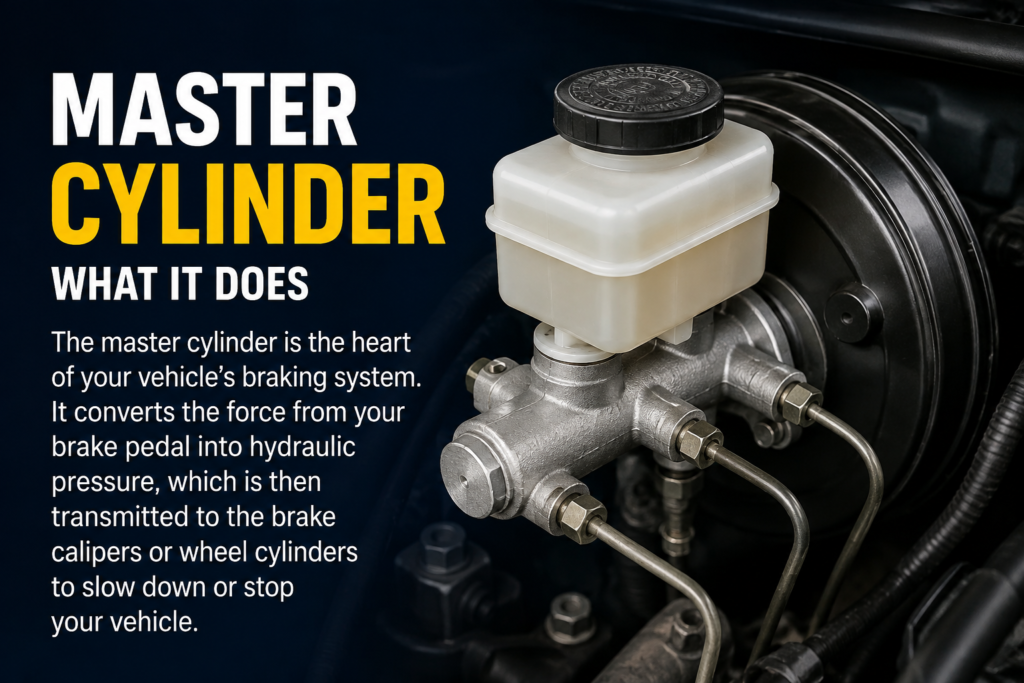
The master cylinder is usually located under the hood and is connected to the brake booster. On top of it, you will normally find the brake fluid reservoir. From the outside, it may not look like a complicated component, but its job is essential for proper brake operation.
What Does a Master Cylinder Do?
The main job of the master cylinder is to convert mechanical force into hydraulic pressure.
When you press the brake pedal, that movement is transferred toward the master cylinder. Inside the cylinder, pistons move and push the brake fluid through the brake lines. This creates hydraulic pressure that travels to the brake calipers or wheel cylinders.
Those components then apply pressure to the brake pads or brake shoes. The result is friction at the wheels, which slows the vehicle down and eventually brings it to a stop.
In simple terms, the process looks like this:
Brake pedal → Master cylinder → Hydraulic pressure → Brake lines → Calipers or wheel cylinders → Brakes
That is why the master cylinder plays such an important role in the braking system.
How Does a Master Cylinder Work?
A typical modern vehicle uses a master cylinder with one or more pistons inside. When the brake pedal is pressed, the piston moves inside the cylinder and pressurizes the brake fluid.
The pressurized fluid cannot be compressed easily, so the pressure is transferred through the brake lines to the braking components at the wheels.
Most modern vehicles use a dual circuit master cylinder. This design provides two separate hydraulic circuits. If one circuit develops a problem, the other circuit can still provide some braking ability.
This does not mean the vehicle is safe to drive with a failed brake circuit. It simply provides an important level of redundancy in the braking system.
Why Is Brake Fluid Important?
Brake fluid is essential because the master cylinder relies on it to transfer hydraulic pressure.
If the brake fluid level is low, contaminated, or the wrong type of fluid is used, braking performance can be affected. Moisture can also enter brake fluid over time, which is one reason proper brake fluid maintenance matters.
I always think of brake fluid as the messenger between the master cylinder and the brakes at the wheels. If that hydraulic system cannot maintain proper pressure, the brakes cannot work as they should.
Common Symptoms of a Bad Master Cylinder
A failing master cylinder can cause several noticeable brake problems. Some symptoms can also be caused by other brake components, so proper inspection is important before replacing anything.
Soft or Spongy Brake Pedal
If the brake pedal feels unusually soft or spongy, there could be air in the brake lines, a brake fluid problem, or an issue with the master cylinder.
A soft pedal should never be ignored because the braking system needs to provide consistent pedal feel.
Brake Pedal Slowly Sinks
One symptom that can point toward an internal master cylinder problem is a brake pedal that slowly moves toward the floor while you maintain pressure.
This can happen when the master cylinder is unable to maintain hydraulic pressure properly.
Brake Fluid Leaks
A leak around the master cylinder or its connections can result in a loss of brake fluid. Any visible brake fluid leak deserves immediate attention because the braking system depends on sufficient hydraulic pressure.
Reduced Braking Performance
If the vehicle does not stop as confidently as it normally does, the problem could involve the master cylinder, brake fluid, brake lines, calipers, pads, or another component.
Braking problems should always be inspected rather than diagnosed from one symptom alone.
What Happens When the Master Cylinder Fails?
When a master cylinder develops a serious fault, it may not be able to create or maintain the hydraulic pressure needed for normal braking.
Depending on the type of failure, you may notice a low brake pedal, reduced braking performance, or unusual pedal behavior.
This is one reason I would never recommend continuing to drive a vehicle when the brakes suddenly feel different. A braking system problem can become a serious safety issue very quickly.
Master Cylinder vs Brake Booster
The master cylinder and brake booster work together, but they have different jobs.
The brake booster helps increase the force applied to the master cylinder when you press the brake pedal. The master cylinder then uses that force to create hydraulic pressure in the brake system.
So, if the brake pedal suddenly becomes extremely hard, the brake booster may be worth checking. If the pedal feels soft or sinks while being held, the hydraulic system and master cylinder may need closer inspection.
Of course, these symptoms can overlap with other brake problems, so a proper diagnosis is always the better approach.
How Long Does a Master Cylinder Last?
There is no single mileage figure that applies to every master cylinder. Its lifespan depends on the vehicle, driving conditions, brake fluid condition, maintenance, and the quality of the component.
A well maintained braking system can help reduce unnecessary wear. Regular brake inspections can also help identify leaks, fluid problems, and other issues before they become more serious.
Can You Drive With a Bad Master Cylinder?
I would not recommend driving a vehicle if you suspect the master cylinder is failing.
The master cylinder is directly involved in creating the hydraulic pressure needed for braking. If it cannot perform its job correctly, stopping performance can be affected.
If the brake pedal suddenly becomes soft, sinks toward the floor, or braking performance changes noticeably, the safest approach is to stop driving and have the braking system inspected by a qualified technician.
Final Thoughts
The master cylinder may not be the part you notice every time you drive, but it has a major role in how your vehicle stops. It takes the force from your brake pedal and converts it into hydraulic pressure, allowing the braking components at the wheels to do their job.
In my opinion, understanding the master cylinder is useful for every vehicle owner because it makes brake symptoms easier to recognize. A soft pedal, sinking pedal, fluid leak, or change in braking performance should not be treated as a normal part of driving.
Keeping the brake fluid in good condition and having the braking system inspected when something feels unusual can go a long way toward keeping the vehicle’s braking system working properly.