
Related Articles



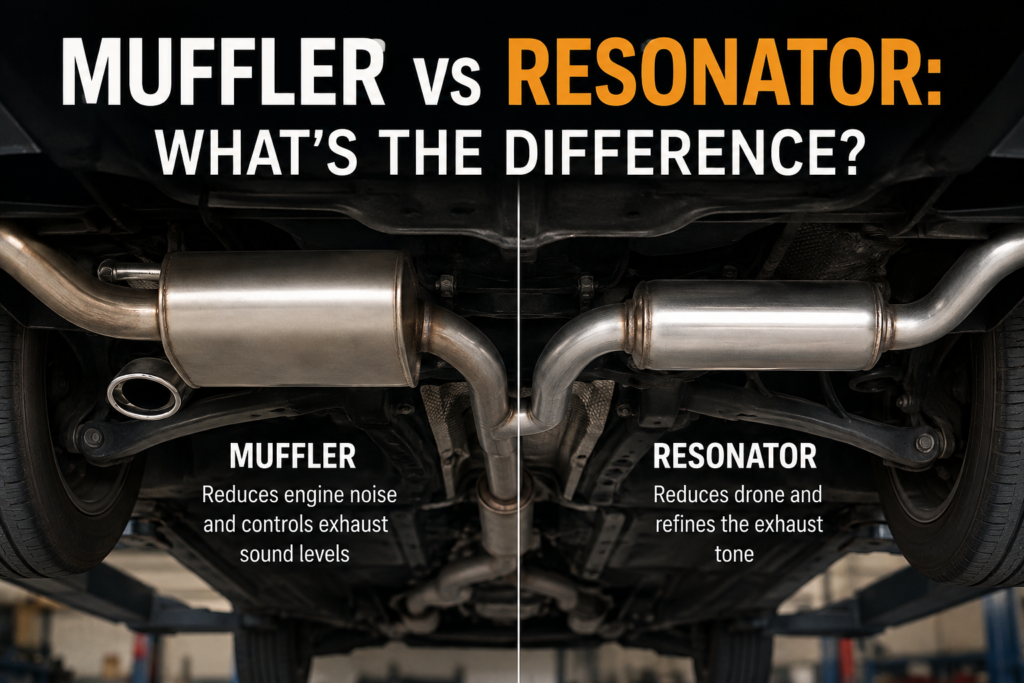
When I talk about a car’s exhaust system, two components that often create confusion are the muffler and the resonator. Many people think both parts do exactly the same job because they are both designed to control exhaust sound. However, they work in different ways and have different purposes.
In my view, understanding the difference between a muffler and a resonator is important before replacing or modifying any part of the exhaust system. A muffler mainly reduces overall exhaust noise, while a resonator focuses more on refining the sound and reducing certain unwanted frequencies. Both can work together to make an exhaust system quieter, smoother, and more pleasant to hear.
What Is a Muffler?
A muffler is one of the main components of a vehicle’s exhaust system. Its primary purpose is to reduce the noise produced by the engine and exhaust gases.
When an engine runs, combustion creates high pressure exhaust gases. These gases move through the exhaust system at high speed, producing sound waves. If those gases were released directly into the atmosphere, the vehicle would be extremely loud.
The muffler uses internal chambers, tubes, and passages to control these sound waves. Depending on its design, it can redirect, reflect, and absorb sound before the exhaust gases leave the tailpipe.
From my experience with vehicle systems, the muffler is one of the most noticeable exhaust components when it starts developing a problem. A damaged muffler can make a normal car sound surprisingly loud.
What Is a Resonator?
A resonator is another component used to control exhaust sound, but its job is slightly different from the muffler.
Instead of mainly reducing the overall volume, the resonator is designed to target specific sound frequencies. It helps remove harsh or unpleasant tones from the exhaust note and can make the sound smoother.
A resonator can also help reduce what is commonly called exhaust drone. Exhaust drone is a low frequency humming sound that can become noticeable inside the cabin, especially when driving at a steady speed.
I think of the resonator as a sound tuning component. It does not simply make the exhaust quiet. Instead, it helps shape the character of the exhaust sound.
Muffler vs Resonator: The Main Difference
The simplest way to understand the difference is to look at their primary purposes.
A muffler is mainly responsible for reducing overall exhaust noise.
A resonator is mainly responsible for controlling specific sound frequencies and improving the quality of the exhaust note.
This means they are not necessarily competing components. In many vehicles, the muffler and resonator work together.
The exhaust gases may pass through a resonator first and then reach the muffler before leaving through the tailpipe. The exact arrangement depends on the vehicle and exhaust system design.
How Does a Muffler Work?
A muffler uses different internal designs to reduce sound. Some mufflers contain multiple chambers that force exhaust gases to change direction. Others use perforated tubes and sound absorbing materials.
When sound waves travel through these internal passages, some of their energy is reflected or cancelled. This reduces the amount of noise that reaches the outside of the vehicle.
Modern mufflers can be designed for different purposes. A standard factory muffler is usually designed to provide quiet operation and meet noise regulations. Performance mufflers may allow a deeper and louder exhaust sound while still providing a level of noise control.
This is why changing a muffler can noticeably change how a vehicle sounds.
How Does a Resonator Work?
A resonator works by targeting particular frequencies within the exhaust sound.
The design creates chambers or tubes that interact with sound waves. Certain frequencies can be reduced or cancelled while allowing other frequencies to remain.
This makes the exhaust note more controlled.
For example, a vehicle with a modified exhaust might sound aggressive from outside but produce an annoying buzzing or humming noise inside the cabin. Adding or using the correct resonator can help reduce that unwanted sound without making the exhaust completely quiet.
This is one reason resonators are popular in performance exhaust systems.
Is a Muffler the Same as a Resonator?
No, a muffler and resonator are not the same thing.
They both control sound, but their functions are different.
The muffler focuses mainly on reducing overall exhaust volume. The resonator focuses mainly on specific frequencies and the quality of the exhaust tone.
There can be some overlap because both components influence sound. However, replacing one with the other does not always produce the same result.
If someone removes a resonator and expects the vehicle to become significantly louder, they may notice a change in tone rather than simply a large increase in volume.
What Happens When You Remove a Muffler?
Removing a muffler usually makes a vehicle significantly louder.
The exhaust gases have fewer restrictions and less sound control before reaching the tailpipe. Depending on the vehicle, the result can range from a deeper exhaust tone to an extremely loud and unpleasant sound.
A muffler delete may also increase cabin noise. In some cases, the vehicle can develop an uncomfortable exhaust drone during highway driving.
I would not recommend removing a muffler simply because a louder exhaust sounds better in theory. The final result depends on the engine, exhaust design, pipe size, resonator, catalytic converter, and other components.
A properly designed exhaust system usually gives a better result than simply removing parts.
What Happens When You Remove a Resonator?
Removing a resonator can change the tone of the exhaust without necessarily creating the same level of loudness associated with a muffler delete.
The exhaust may become louder and more aggressive, but the biggest difference can be in the character of the sound.
Some vehicles may develop more rasp or harshness after a resonator is removed. Others may produce more cabin drone.
This is why I think resonator removal should be considered carefully. If the goal is to improve exhaust sound, changing the resonator design may be more effective than simply deleting it.
Muffler or Resonator: Which One Is More Important?
Both are important, but their importance depends on what you want from the vehicle.
If your main concern is excessive exhaust noise, the muffler is usually the more important component.
If your concern is an unpleasant exhaust tone, buzzing, or drone, the resonator may be more important.
For a quiet daily driver, keeping both components is often the best choice. For a performance vehicle, the ideal combination depends on the engine and the desired exhaust sound.
A well designed system can provide a sporty sound without becoming uncomfortable during everyday driving.
Can a Car Run Without a Muffler?
A car may physically run without a muffler, but that does not mean it is a good idea.
The engine can continue operating because the muffler is not responsible for creating combustion or controlling the basic operation of the engine. However, removing it can create excessive noise and may cause legal or inspection problems depending on local regulations.
It can also make the vehicle unpleasant to drive.
Another important point is that removing exhaust components without understanding the complete system can lead to poor results. Exhaust modifications should be planned according to the vehicle and engine rather than based only on sound.
Can a Car Run Without a Resonator?
In many cases, a car can run without a resonator because the resonator is primarily designed for sound tuning.
However, removing it can affect the exhaust tone and cabin comfort.
Some vehicles may sound louder and sportier. Others may develop a harsh or raspy sound that was not intended by the manufacturer.
If the vehicle is being modified for performance, I would consider the entire exhaust system rather than focusing on one component.
Does a Resonator Reduce Horsepower?
A resonator does not automatically cause a meaningful loss of horsepower.
Many people assume that any component in the exhaust system restricts performance. In reality, exhaust design is more complicated than simply removing components.
A properly designed resonator can help control sound while maintaining suitable exhaust flow.
The effect of changing or removing one component depends on the engine, exhaust diameter, catalytic converter, muffler, tuning, and overall system design.
For most daily driven vehicles, sound and comfort are more important considerations than trying to gain a small performance difference from removing a resonator.
Does a Muffler Reduce Performance?
A muffler can create some resistance to exhaust flow, but modern mufflers are designed to balance noise reduction and exhaust flow.
A high quality performance muffler can provide good sound control without creating excessive restriction.
Simply removing the muffler does not guarantee a noticeable increase in horsepower. In many cases, the difference may be very small, especially on a standard road car.
This is why I prefer looking at the exhaust system as a complete unit rather than assuming that louder automatically means faster.
Common Muffler Problems
Mufflers are exposed to heat, moisture, road debris, and corrosion. Over time, they can develop problems.
Common muffler symptoms include excessive exhaust noise, rattling sounds, visible rust, holes, exhaust leaks, and changes in exhaust tone.
A rattling noise can sometimes indicate that an internal component has become loose. A hole in the muffler can allow exhaust gases and noise to escape before reaching the tailpipe.
If you notice a sudden change in exhaust sound, it is worth having the exhaust system inspected.
Common Resonator Problems
Resonators can also suffer from rust, cracks, holes, and loose internal components.
A damaged resonator may cause increased exhaust noise or a noticeable change in exhaust tone. You might also hear rattling or buzzing sounds underneath the vehicle.
Because the resonator is part of the exhaust system, any leak should be checked rather than ignored.
An exhaust leak can create noise and may allow gases to escape from areas where they should not.
Which Is Better for a Daily Driver?
For a daily driver, I generally prefer keeping both a muffler and resonator when the original exhaust system is working correctly.
The muffler keeps overall noise under control, while the resonator helps maintain a smoother exhaust tone.
This combination is especially useful for people who spend a lot of time driving in traffic or on highways.
A loud exhaust may sound exciting for a short drive, but excessive noise can become tiring during everyday use.
Which Is Better for a Performance Car?
For a performance car, the answer depends on the sound and performance goals.
Some owners prefer a deeper and louder exhaust note. Others want a sporty sound without excessive cabin drone.
A performance muffler can improve the exhaust character while maintaining reasonable noise levels. A performance resonator can further refine the tone and reduce unwanted frequencies.
In my opinion, the best performance exhaust is not necessarily the loudest one. A good system should have a clean sound, suitable exhaust flow, and comfortable driving characteristics.
Final Thoughts
The difference between a muffler and a resonator becomes much easier to understand when you focus on their main jobs.
The muffler is primarily designed to reduce overall exhaust noise. The resonator is designed to control specific frequencies and improve the quality of the exhaust sound.
Both components can work together to create a balanced exhaust system. Removing either one can change the sound, but the result is not always an improvement.
If you are considering an exhaust modification, I recommend thinking about how you actually use your vehicle. A system that sounds great for a few minutes may not be comfortable on a long daily drive.
For me, the best exhaust setup is one that provides the sound I want while still keeping the vehicle practical, comfortable, and reliable. Understanding the role of the muffler and resonator makes it much easier to choose the right exhaust setup for your car.