
Related Articles



Driving has become much easier over the years thanks to modern safety technology. One feature that I believe every vehicle owner should consider is a reverse camera. Whether you drive a small hatchback, a family SUV, or a pickup truck, a reverse camera can make parking safer and far less stressful. I still remember how difficult it was to judge the exact distance behind the car using only mirrors. After installing a reverse camera, reversing into tight parking spaces became much more comfortable and accurate.
Many drivers think reverse cameras are only useful for beginners, but I disagree. Even experienced drivers can benefit from having a clear view of blind spots that mirrors cannot fully cover. Choosing the right reverse camera, however, requires more than simply buying the first model you see. Factors like image quality, viewing angle, night vision, durability, and installation all make a significant difference.
In this article, I will explain everything you need to know before buying a reverse camera so you can choose the best option for your vehicle.
Why a Reverse Camera Is Important
A reverse camera improves safety by giving you a clear view of the area behind your vehicle while reversing.
Many accidents occur because drivers cannot see small children, pets, bicycles, or low objects hidden behind the vehicle.
A reverse camera reduces blind spots and provides extra confidence during parking.
It also helps protect your vehicle from unnecessary scratches and minor collisions.
In my opinion, it is one of the most valuable safety upgrades available for any car.
How a Reverse Camera Works
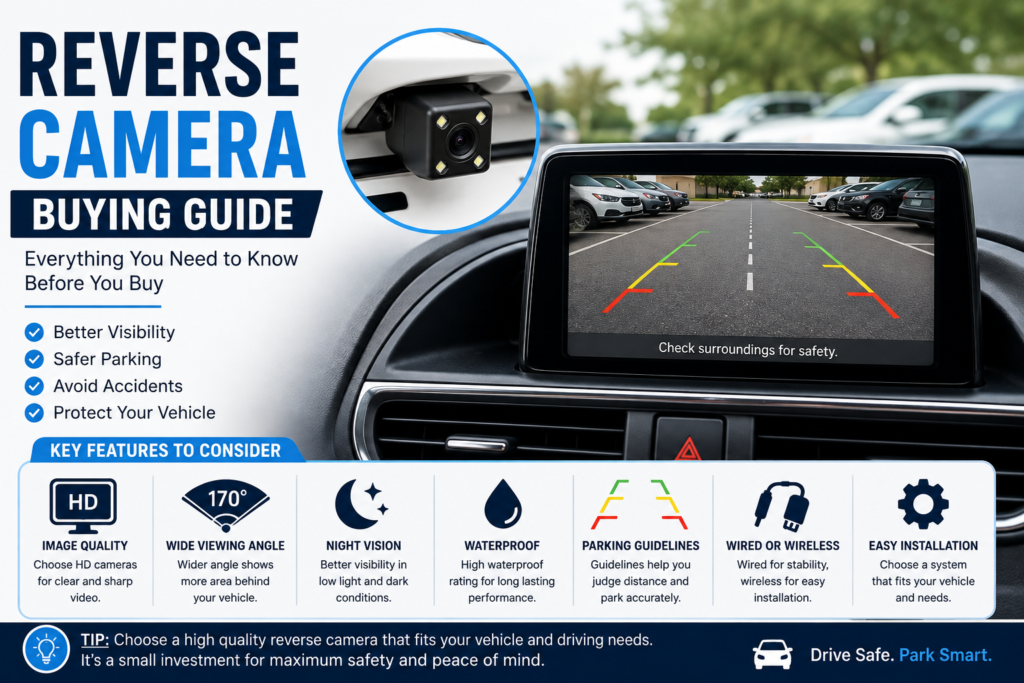
A reverse camera is mounted at the rear of the vehicle, usually above the license plate or near the trunk handle.
When the driver selects reverse gear, the camera automatically activates.
The live video appears on the infotainment screen, a dedicated monitor, or a rearview mirror display.
Some systems also include parking guidelines that help estimate distance and steering direction.
The entire process happens instantly, allowing you to reverse with better visibility.
Types of Reverse Cameras
Several different types of reverse cameras are available.
Understanding their differences makes it easier to select the right one.
License Plate Cameras
These cameras attach directly to the license plate frame.
Installation is relatively simple.
They are popular because they require minimal modification to the vehicle.
Most aftermarket systems use this design.
Flush Mount Cameras
Flush mount cameras fit directly into the vehicle’s body.
They create a clean factory style appearance.
Installation usually requires drilling a small hole.
The finished result looks professional and discreet.
Surface Mount Cameras
Surface mount cameras attach to the rear of the vehicle using screws or adhesive.
They are commonly used on trucks, vans, and larger SUVs.
Their adjustable angle makes installation flexible.
OEM Style Cameras
OEM style cameras are designed specifically for certain vehicle models.
They replace existing trim pieces or trunk handles.
These cameras provide the closest appearance to a factory installed system.
Wired vs Wireless Reverse Cameras
One of the biggest decisions is choosing between wired and wireless systems.
Wired cameras generally provide the most stable video signal.
They offer excellent image quality with minimal delay.
Installation takes more time because cables must run through the vehicle.
Wireless cameras eliminate long video cables.
Installation is easier and faster.
However, signal interference may occasionally affect image quality.
For maximum reliability, I usually recommend wired systems.
Image Quality Matters
Image quality should be one of your top priorities.
Higher resolution cameras produce sharper pictures.
Clear images make it easier to identify obstacles behind the vehicle.
Modern reverse cameras commonly support HD resolution, providing much better visibility than older low resolution models.
Choosing a quality camera greatly improves the overall driving experience.
Wide Viewing Angle
A wider viewing angle allows you to see more of the area behind the vehicle.
Most quality cameras offer viewing angles between 120 and 170 degrees.
Extremely wide angles provide greater visibility but may slightly distort distance perception.
A balanced viewing angle usually offers the best combination of coverage and accuracy.
Night Vision Performance
Parking at night becomes much easier with good night vision.
Many reverse cameras include infrared LEDs or advanced low light sensors.
These features improve visibility in dark parking areas.
If you frequently drive at night, strong night vision performance is definitely worth considering.
Waterproof Rating
Because reverse cameras remain exposed to rain, dust, and road debris, weather resistance is extremely important.
Look for cameras with a high waterproof rating.
A durable waterproof design helps ensure reliable performance throughout the year in different weather conditions.
Parking Guidelines
Many reverse cameras display colored parking guidelines on the screen.
These lines help estimate distance and vehicle position while reversing.
Some advanced systems even provide dynamic guidelines that move as the steering wheel turns.
Although experienced drivers may not rely on them completely, they are extremely helpful during tight parking.
Display Options
Reverse cameras can connect to several different display types.
Many modern vehicles use the factory infotainment screen.
Some aftermarket systems include dedicated dashboard monitors.
Others display the camera image inside the rearview mirror.
Choose the display option that best fits your vehicle and personal preference.
Camera Placement
Proper camera placement affects image quality significantly.
The camera should be mounted near the center of the vehicle.
It should provide a clear view of the bumper and the surrounding area.
Incorrect positioning may reduce visibility or create blind spots.
Professional installation often produces the best results.
Compatibility With Your Vehicle
Before purchasing a reverse camera, verify compatibility with your vehicle.
Some cameras are universal.
Others are designed specifically for certain makes and models.
Also confirm compatibility with your infotainment system or display screen.
Checking these details before buying helps avoid installation problems.
Installation Considerations
Some reverse cameras are simple enough for experienced DIY enthusiasts.
Others require professional installation.
Running cables through the vehicle, connecting power sources, and integrating the display may require technical knowledge.
If you are unsure, professional installation is usually the safest option.
Additional Features
Modern reverse cameras often include useful extra features.
High definition video.
Dynamic parking guidelines.
Wide dynamic range for improved lighting.
Automatic brightness adjustment.
Anti glare technology.
Integrated parking sensors.
Recording capability when combined with certain systems.
While not every feature is necessary, they can improve convenience and safety.
Common Mistakes When Buying
One mistake I often see is choosing the cheapest available camera.
Low quality models may produce blurry images or fail quickly.
Another mistake is ignoring waterproof ratings.
Some buyers also overlook compatibility with their vehicle.
Taking time to compare features usually leads to a much better purchase.
Maintaining Your Reverse Camera
A reverse camera requires very little maintenance.
Keep the camera lens clean.
Remove mud, dust, or snow regularly.
Inspect wiring if image quality suddenly changes.
Check mounting screws occasionally to ensure the camera remains secure.
Simple maintenance helps maintain clear visibility.
Is a Reverse Camera Worth the Investment?
In my opinion, absolutely.
A reverse camera improves safety, reduces stress while parking, and helps prevent expensive bumper damage.
Considering the relatively affordable cost of many quality systems, the benefits far outweigh the investment.
It is one of the most practical upgrades available for both new and older vehicles.
Tips Before Making Your Final Decision
Compare several brands before purchasing.
Read customer reviews.
Choose a camera with good image quality.
Prioritize reliable night vision.
Select a suitable viewing angle.
Confirm compatibility with your vehicle.
Consider professional installation if necessary.
Buying carefully ensures long term satisfaction.
Final Thoughts
In my opinion, a reverse camera is one of the smartest safety upgrades any driver can make. It provides a clear view of areas that mirrors cannot fully cover, making parking easier, reducing blind spots, and helping prevent accidents. Choosing the right reverse camera involves more than just looking at the price. Image quality, viewing angle, night vision, waterproof construction, compatibility, and installation quality all play an important role in overall performance.
Whether you drive every day in busy city traffic or simply want more confidence while reversing into your driveway, investing in a reliable reverse camera is a decision you are unlikely to regret. By understanding the available options and selecting a system that matches your vehicle and driving needs, you can enjoy safer parking, greater convenience, and added peace of mind every time you get behind the wheel.