Related Articles

When I think about the parts that make a car easy to use every day, the starter motor is one of those components that often gets overlooked. Most drivers only think about it when the engine refuses to start. You turn the key or press the start button, expect the engine to come to life, and instead hear a click or nothing at all. In many cases, the starter motor is involved.
The starter motor has a simple but very important job. It turns the engine over when you start the car. Without it, the engine cannot begin its normal combustion cycle on its own. In this guide, I will explain how a starter motor works, what its main parts do, the common starter motor problems you may notice, and how to tell when the starter needs attention.
What Is a Starter Motor?
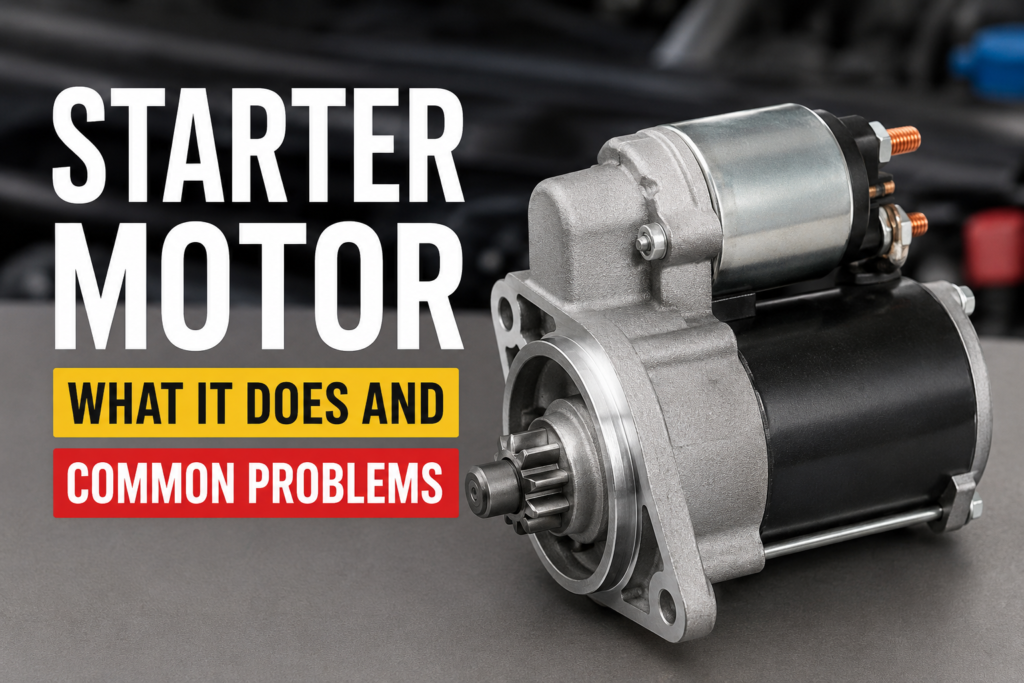
A starter motor is a powerful electric motor used to crank the engine during startup. It receives electrical power from the car battery and converts that electrical energy into mechanical movement.
An engine needs to rotate before it can run by itself. The starter motor provides that initial rotation. Once the engine starts running, the starter motor stops working and the engine continues operating under its own power.
From my point of view, the starter motor is basically the bridge between the car battery and the running engine. The battery provides the electrical energy, while the starter motor uses that energy to physically rotate the engine.
How Does a Starter Motor Work?
The starting process happens very quickly, but several things take place when you start your car.
When you turn the ignition key or press the start button, an electrical signal is sent toward the starter system. The starter solenoid receives this signal and activates. The solenoid performs two important jobs.
First, it helps connect the battery’s high current supply to the starter motor. Second, it pushes the starter gear forward so that it can engage with the engine’s flywheel or flexplate.
Once the starter gear engages, the electric motor begins spinning. The gear transfers this rotation to the flywheel, which turns the engine crankshaft.
As the crankshaft rotates, the pistons begin moving. Air and fuel enter the cylinders, compression takes place, and the ignition system produces the spark in a gasoline engine. The engine then starts running.
After the engine starts, the starter gear moves away from the flywheel. This prevents the starter motor from continuing to spin with the engine.
The whole process usually takes only a few seconds, but the starter motor has to produce a significant amount of torque during that short period.
Main Parts of a Starter Motor
A starter motor contains several important components. Understanding them can make starter motor troubleshooting much easier.
Electric Motor
The electric motor is responsible for producing the rotational force needed to crank the engine. It uses electrical current from the battery to create mechanical movement.
Because starting an engine requires considerable force, the starter motor is designed to handle high electrical current for short periods.
Starter Solenoid
The starter solenoid acts like a powerful electrical switch. It controls the connection between the battery and starter motor.
It also moves the starter gear into position. A faulty solenoid can therefore cause symptoms such as clicking without engine cranking.
Starter Gear
The starter gear, sometimes called the pinion gear, connects the starter motor to the engine’s flywheel or flexplate.
When the starter operates, this gear moves into engagement. After the engine starts, it disengages to protect the starter.
Brushes and Commutator
Traditional starter motors use brushes and a commutator to transfer electrical current to the rotating part of the motor.
These components can wear over time. Heavy wear can cause intermittent starting problems or complete starter failure.
Common Starter Motor Problems
A starter motor can last for many years, but like any mechanical and electrical component, it can eventually develop problems.
Clicking Sound but No Cranking
One of the most common starter motor symptoms is a clicking sound when you try to start the vehicle.
A single strong click can point toward the starter solenoid or starter motor. However, a weak battery or poor electrical connection can produce similar symptoms.
This is why I would not replace the starter immediately just because the car clicks. The battery and cable connections should be checked first.
Starter Motor Turns Slowly
If the engine cranks much slower than normal, there may be a problem with the starter motor or battery.
A weak battery is one of the first things I would check because the starter requires a large amount of current. Corroded battery terminals or damaged cables can also restrict current flow.
If the battery and connections are healthy but the starter still turns slowly, the starter motor itself may be worn.
Nothing Happens When Starting
Sometimes you turn the key or press the start button and there is complete silence.
This can be caused by several things, including a faulty starter solenoid, damaged wiring, a failed ignition switch, a problem with a starter relay, or a weak electrical connection.
Modern vehicles can also have starting issues related to safety switches and electronic control systems. For example, an automatic transmission vehicle may prevent starting if the system does not recognize Park or Neutral.
Grinding Noise
A grinding noise during starting should not be ignored.
It may indicate that the starter gear is not engaging correctly with the flywheel or flexplate. Damaged teeth on either component can create a grinding sound.
Continuing to operate the vehicle with this type of problem can potentially increase repair costs, so I would have it inspected as soon as possible.
Starter Keeps Running
Another serious problem occurs when the starter motor continues running after the engine starts.
This can happen because of a sticking solenoid, a wiring issue, or a problem with the starter mechanism.
If the starter remains engaged, it can become damaged by excessive speed and heat. The vehicle should be inspected promptly rather than repeatedly operated in this condition.
How to Tell If the Starter Motor Is Bad
Diagnosing a starter motor problem requires looking at the entire starting system rather than focusing on one component.
I normally recommend starting with the battery. Check whether the battery has sufficient charge and whether the terminals are clean and tight.
Next, inspect the positive and ground cables. A damaged or corroded connection can prevent enough current from reaching the starter.
If the battery and connections are good, attention can move toward the starter relay, solenoid, wiring, and starter motor itself.
A professional technician can perform voltage and current tests to determine whether the starter is receiving the correct electrical supply.
One important point is that a no start condition does not automatically mean the starter motor is bad. A vehicle can also fail to start because of fuel delivery, ignition, sensors, immobilizer systems, or other engine related problems.
Can a Weak Battery Damage the Starter?
A weak battery does not necessarily damage the starter immediately, but repeated attempts to crank an engine with insufficient battery power can place extra stress on the starting system.
When the battery voltage drops significantly, the starter may struggle to turn the engine. Drivers often keep trying again and again, which can cause additional heat buildup in the starter and cables.
For this reason, if your engine is cranking slowly, I would first check the battery instead of repeatedly attempting to start the vehicle.
How Long Does a Starter Motor Last?
There is no single mileage or time period that applies to every starter motor. Its lifespan depends on the vehicle, climate, driving habits, engine size, electrical system, and overall condition.
A starter can last for many years and a large number of starting cycles. However, frequent short trips may require the starter to operate more often than long distance driving.
Heat and contamination can also affect starter performance.
The good thing is that starter motors usually provide warning signs before complete failure, although sudden failure is also possible.
Starter Motor Maintenance Tips
There is not much routine maintenance required for a modern starter motor, but maintaining the surrounding electrical system can help prevent starting problems.
Keep the battery terminals clean and properly tightened. Make sure the battery is in good condition and receives the correct charging voltage from the alternator.
Pay attention to slow cranking, unusual clicking, grinding sounds, or intermittent starting.
If you notice a change in starting performance, investigate it early. A small electrical connection problem can sometimes look like a major starter failure.
It is also important to avoid repeatedly holding the starter for long periods. If the engine does not start after reasonable attempts, give the starter time to cool before trying again.
Starter Motor Replacement
If testing confirms that the starter motor has failed, replacement is usually the most practical solution.
The exact replacement process depends on the vehicle. The starter is commonly mounted to the engine or transmission housing, and access can sometimes be difficult.
Before replacing it, I would make sure the diagnosis is correct. Replacing a starter when the real problem is a weak battery, bad ground cable, or faulty relay can waste both time and money.
When choosing a replacement starter, use a component that matches the vehicle’s engine and electrical specifications. Quality also matters because a starter is exposed to high electrical loads and mechanical stress.
Final Thoughts
The starter motor may only operate for a few seconds each time you start the car, but its role is extremely important. It uses power from the battery to rotate the engine and begin the combustion process.
The most common starter motor problems include clicking without cranking, slow engine cranking, complete silence, grinding noises, and a starter that remains engaged. However, these symptoms can sometimes be caused by the battery, cables, solenoid, relay, or other parts of the starting system.
In my experience, the best approach is to diagnose the complete starting system instead of immediately blaming the starter motor. Checking the battery, electrical connections, and starting circuit first can save unnecessary expense.
If your car suddenly develops a starting problem, pay attention to exactly what happens when you turn the key or press the start button. The sound and behavior of the vehicle can provide useful clues. With basic knowledge of how a starter motor works, it becomes much easier to understand those clues and decide when professional inspection is needed.