Related Articles
When it comes to choosing the right tires for a car, I believe the decision should be based on how you actually drive rather than simply choosing the most expensive option. Two common choices that often come up are touring tires and performance tires. Both can offer excellent road performance, but they are designed with different priorities in mind.
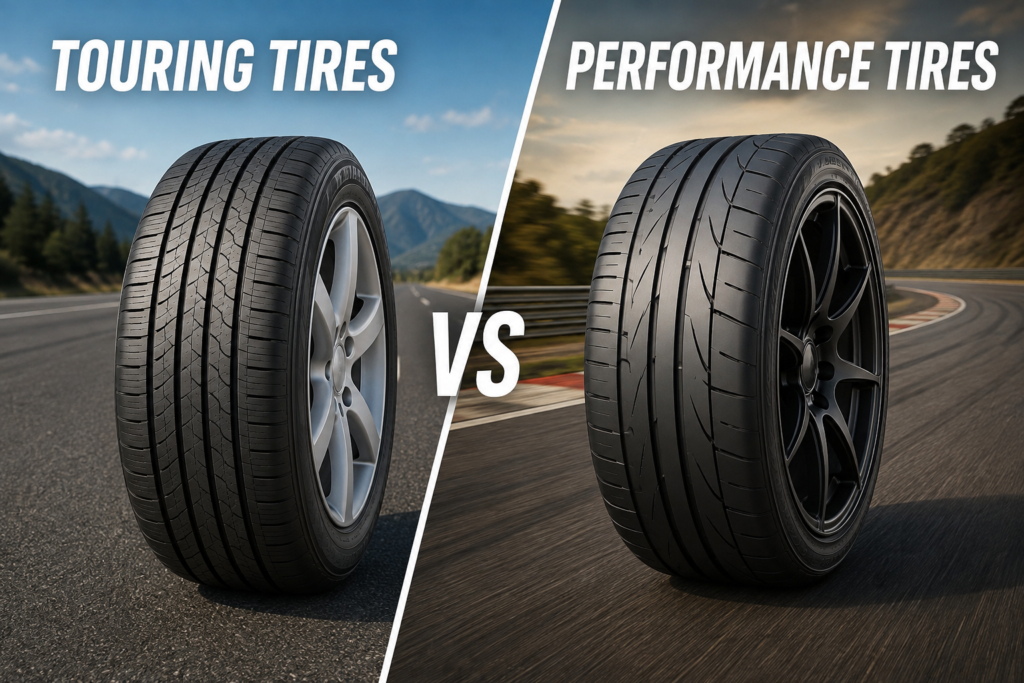
Touring tires are generally made for drivers who want a comfortable, quiet, dependable ride with good handling and long tread life. Performance tires, on the other hand, are designed for drivers who want sharper steering, stronger cornering ability, and better road grip.
In this guide, I will explain the difference between touring tires and performance tires, their advantages and disadvantages, and which option may make more sense for your driving needs.
What Are Touring Tires?
Touring tires are designed primarily for everyday driving. In my opinion, they are one of the most practical tire choices for drivers who spend most of their time commuting, traveling on highways, or driving around town.
The main goal of touring tires is to provide a balanced driving experience. They usually focus on comfort, low road noise, predictable handling, fuel efficiency, and long tread life.
The tread pattern on touring tires is generally designed to provide stable contact with the road while also helping water move away from the tire. This can make them a good choice for regular driving in both dry and wet conditions.
Another reason I like touring tires for everyday vehicles is their comfort. If you drive several hours at a time, a tire that reduces road vibration and noise can make a noticeable difference.
What Are Performance Tires?
Performance tires are designed with a different purpose. Instead of putting maximum emphasis on comfort and tread life, they focus more on handling, traction, steering response, and cornering performance.
Performance tires are often fitted to sports cars, performance sedans, and vehicles where the driver wants a more responsive feel behind the wheel.
One of the biggest differences you may notice is steering response. Performance tires can make the car feel more connected to the road. When you turn the steering wheel, the vehicle may respond more quickly and feel more controlled during aggressive cornering.
Performance tires can also provide strong grip on dry roads. This is especially useful for drivers who enjoy spirited driving or want a sportier driving experience.
However, there are compromises. Performance tires may wear faster than touring tires, and some models can produce more road noise. They may also provide a firmer ride.
Touring Tires vs Performance Tires: The Main Difference
The simplest way I would explain the difference is this: touring tires are designed for balanced everyday driving, while performance tires are designed to prioritize handling and grip.
Touring tires generally give you a smoother and quieter driving experience. They are often a practical choice for family cars, sedans, crossovers, and vehicles used for commuting.
Performance tires are more focused on responsive handling. They can be a better choice for someone who enjoys winding roads, faster cornering, and a more engaging driving experience.
Neither type is automatically better. The better option depends on what you expect from your vehicle.
Comfort and Ride Quality
If comfort is important to you, touring tires usually have the advantage.
Touring tires are commonly designed to absorb road imperfections and provide a smoother ride. This can be particularly noticeable on rough roads, broken pavement, and long highway journeys.
Performance tires often have stiffer construction. That stiffness can improve steering response and cornering stability, but it can also make the ride feel firmer.
Personally, I would choose touring tires for a vehicle that I use mainly for daily transportation. If I were driving a sporty vehicle and wanted more road feedback, I would consider performance tires.
Handling and Steering Response
This is where performance tires usually have a clear advantage.
Performance tires are engineered to provide stronger cornering grip and quicker steering response. Their construction and tread design are intended to maintain better contact with the road when the vehicle is being driven more aggressively.
Touring tires can still handle corners safely and confidently, but they are usually tuned for comfort and stability rather than maximum responsiveness.
If you frequently enjoy driving on curvy roads, performance tires can make the vehicle feel more precise. If most of your driving involves normal city streets and highways, the additional handling capability may not be necessary.
Tread Life
For many drivers, tread life is an important part of the tire buying decision.
Touring tires generally have an advantage here. Many touring tire models are designed to provide long lasting tread wear under normal driving conditions.
Performance tires can wear more quickly, especially when they are driven aggressively. Hard acceleration, sudden braking, and frequent hard cornering can increase tire wear.
This does not mean every performance tire has a short lifespan. Tire quality, driving habits, road conditions, alignment, tire pressure, and vehicle condition all affect how long tires last.
Still, if long tread life is one of your biggest priorities, touring tires are usually worth considering.
Wet Weather Performance
Both touring tires and performance tires can perform well in wet conditions, but the actual result depends heavily on the specific tire model.
Touring tires are often designed to provide dependable traction in everyday wet weather. Their tread patterns commonly include grooves that help channel water away from the contact area.
Some performance tires are also excellent in wet conditions, particularly modern models designed for high performance street driving. However, performance should never be judged only by the category name.
When buying tires, I recommend checking the wet traction performance of the exact model you are considering. A high quality performance tire may outperform a basic touring tire in some conditions, while another model may not.
Dry Road Grip
Dry road grip is one of the strongest reasons people choose performance tires.
Performance tires are designed to provide strong traction during acceleration, braking, and cornering. They can give the driver a more confident feeling when the road is dry.
Touring tires can also provide good dry road grip, especially for normal everyday driving. For most drivers, their grip is more than sufficient for regular commuting.
The difference becomes more noticeable when the vehicle is pushed harder. If you enjoy spirited driving, performance tires can provide the additional grip and response you are looking for.
Road Noise
Road noise is another area where touring tires often have an advantage.
Touring tires are generally designed with comfort in mind, so manufacturers often pay close attention to tread patterns and construction that can reduce unwanted road sound.
Performance tires may produce more noise depending on their tread design and construction. This is not necessarily a problem, but it can be noticeable if you are used to a very quiet ride.
For a family car or daily commuter, I would personally place more importance on a quiet ride. For a sports car, I may be more willing to accept additional road noise in exchange for better handling.
Fuel Efficiency
Touring tires may also be a better choice for drivers who care about fuel economy.
Many touring tires are designed with rolling resistance in mind. Lower rolling resistance can help reduce the amount of energy required to move the vehicle.
Performance tires can have characteristics that prioritize grip and handling over maximum efficiency. Depending on the tire, vehicle, and driving conditions, this can affect fuel consumption.
The difference is not always dramatic, but if you drive many miles every month, small efficiency differences can become more meaningful over time.
Price and Overall Value
Price is another factor I would consider before choosing between touring tires and performance tires.
Performance tires can cost more depending on the brand, size, construction, and performance category. They can also have higher replacement costs if they wear more quickly.
Touring tires can offer strong overall value because they often combine reasonable pricing with comfort, durability, and everyday performance.
However, the cheapest tire is not always the best value. I believe it is better to consider the total cost of ownership, including tread life, fuel efficiency, comfort, and performance.
Which Tires Are Better for Highway Driving?
For frequent highway driving, I would generally lean toward touring tires.
Highway drivers often spend long periods at steady speeds, so comfort, stability, road noise, and tread life become important. Touring tires are well suited to these requirements.
Performance tires can certainly be used on highways, and they may provide excellent stability and grip. However, many drivers may not benefit enough from their extra handling capability to justify the compromises.
If your vehicle is used mainly for long distance trips and commuting, touring tires are usually a sensible choice.
Which Tires Are Better for Sporty Driving?
If your main goal is sporty handling, performance tires are the more natural choice.
They can provide sharper steering response, stronger cornering grip, and better feedback from the road. These characteristics can make a sporty car feel more enjoyable.
I would especially consider performance tires if you regularly drive on winding roads or simply want your vehicle to feel more responsive.
Just remember that sporty tires should still be selected according to the vehicle manufacturer’s specifications and the conditions in which you drive.
Touring Tires vs Performance Tires for Daily Driving
For everyday driving, touring tires are often the more practical option.
Most daily drivers do not regularly use the maximum handling capability of their vehicles. They drive through traffic, travel on highways, visit shopping areas, and commute to work.
For these situations, comfort and reliability can be more valuable than extreme cornering ability.
Touring tires can provide a good balance between handling, comfort, tread life, and fuel efficiency. That balance is exactly why they remain popular for everyday vehicles.
Which One Should You Choose?
Choosing between touring tires and performance tires really comes down to your priorities.
Choose touring tires if you want:
Long tread life
A comfortable ride
Lower road noise
Good everyday handling
Reliable highway performance
A balanced driving experience
Potentially better fuel efficiency
Choose performance tires if you want:
Sharper steering response
Stronger dry road grip
Better cornering performance
A sportier driving feel
More road feedback
Improved handling during spirited driving
For most regular drivers, I think touring tires make more sense. They provide the combination of features that people generally need every day.
For drivers who genuinely care about handling and enjoy a more aggressive driving style, performance tires can be worth the additional cost and possible compromises.
Final Thoughts
When comparing touring tires vs performance tires, I do not think there is one universal winner. Each tire category has been designed around a different driving purpose.
Touring tires are about balance. They offer comfort, quiet operation, dependable handling, and long tread life. Performance tires are about responsiveness. They focus more heavily on grip, steering feel, and cornering ability.
Before buying a new set of tires, I recommend thinking about your normal driving habits. Consider how many miles you drive, the type of roads you use, your local weather, how much you value comfort, and whether you actually need high performance handling.
For a daily commuter, touring tires are usually the practical choice. For someone who wants a sportier driving experience, performance tires can be the better fit.
The most important thing is to choose a quality tire that matches your vehicle, driving conditions, and personal priorities. A tire that suits your real driving needs will usually give you more satisfaction than simply choosing the most expensive or most aggressive option.