Related Articles
When I first started learning about modern car technology, one feature that really caught my attention was the Head Up Display, commonly known as a HUD. It may look like a small piece of futuristic technology, but in my opinion, it is one of the most practical features available in modern cars. A Head Up Display allows drivers to see important information without constantly looking down at the dashboard or instrument cluster.
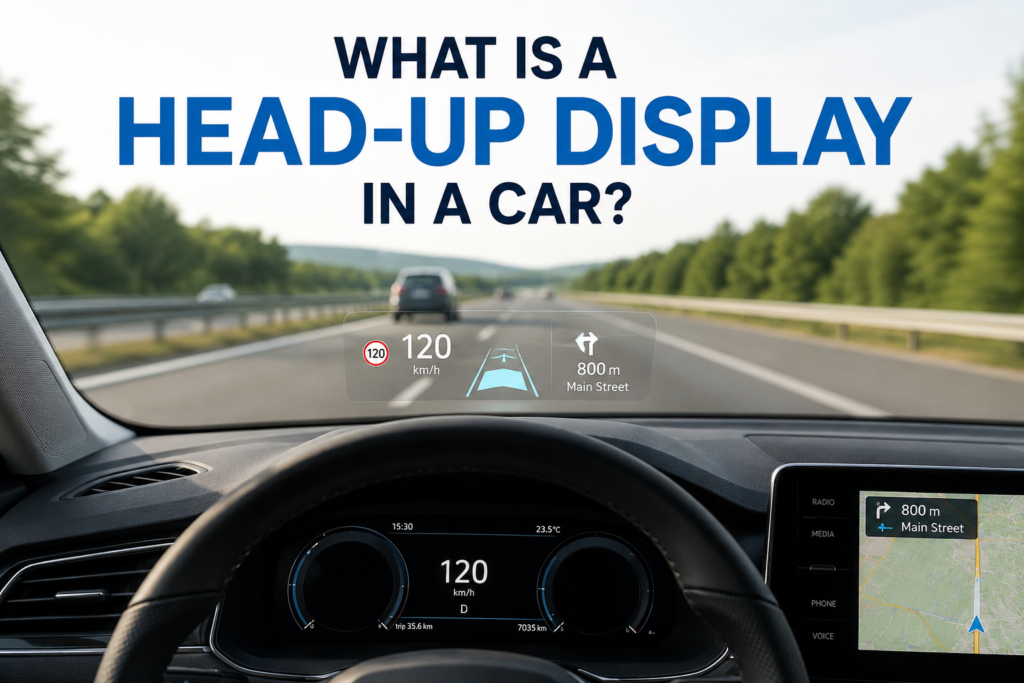
In simple words, a car Head Up Display projects useful driving information into the driver’s field of vision. Depending on the vehicle, this information can include speed, navigation directions, traffic signs, safety warnings, incoming calls, and other details. The main purpose is to help drivers keep their eyes focused on the road.
What Is a Head Up Display in a Car?
A Head Up Display is a technology that displays important information directly in front of the driver. Instead of forcing the driver to look down at the dashboard, the system projects information onto the windshield or a transparent screen positioned above the dashboard.
The information appears to float in front of the driver. This does not mean that the information is physically floating in the air. The system uses a projector, mirrors, lenses, and a transparent surface to create the visual effect.
From my point of view, the biggest advantage of a HUD is convenience. When I am driving, even a quick glance at the speedometer takes my eyes away from the road. A Head Up Display reduces the need for these repeated glances.
How Does a Head Up Display Work?
The working principle of a Head Up Display is actually quite interesting. A small projector creates the information that needs to be displayed. This information is then reflected through a series of mirrors and optical components before reaching the windshield or a special transparent display screen.
The system is designed so that the information appears at a comfortable viewing distance. In many vehicles, the driver can adjust the position and brightness of the display.
Modern HUD systems receive information from different parts of the vehicle. For example, the vehicle’s speed sensors provide speed information, while the navigation system can provide directions. Advanced driver assistance systems can also send safety warnings to the HUD.
The result is a display that can show important information while the driver continues looking ahead.
What Information Can a Car HUD Display?
The information shown by a Head Up Display depends on the vehicle and its technology. Basic systems may only show a few essential details, while advanced systems can provide much more information.
One of the most common pieces of information is the current vehicle speed. Some systems can also display the speed limit of the road, which can be particularly useful when driving in areas with changing speed restrictions.
Navigation information is another important feature. Instead of looking at the central infotainment screen for every turn, the driver may see a simple arrow or direction indicator directly in the field of vision.
Some advanced Head Up Display systems can also show lane departure warnings, collision warnings, adaptive cruise control information, traffic signs, incoming calls, and audio information.
In my opinion, displaying only useful information is important. A HUD should help the driver rather than become another source of distraction.
Why Is a Head Up Display Useful?
The biggest benefit of a Head Up Display is that it can reduce the amount of time a driver spends looking away from the road. Driving requires constant attention, so keeping important information within the driver’s normal line of sight can be helpful.
For example, imagine driving on a highway and wanting to check your speed. With a traditional dashboard, you need to look down at the instrument cluster. With a HUD, your speed can appear directly in front of you.
Navigation is another good example. Looking repeatedly at a navigation screen can take attention away from the road. A HUD can provide simple turn instructions without requiring the driver to move their eyes toward the center console.
This does not mean a Head Up Display makes driving completely distraction free. Drivers still need to pay attention to traffic, pedestrians, road conditions, and other vehicles.
Head Up Display and Driving Safety
Safety is one of the main reasons manufacturers include HUD technology in modern cars. The basic idea is simple. The less often a driver needs to look away from the road, the easier it can be to maintain awareness of what is happening ahead.
A good Head Up Display can provide information in a simple and easy to understand format. For example, a driver might see a warning symbol when another vehicle is approaching from a blind spot or when the vehicle detects a possible collision.
Some advanced systems can combine navigation with real world driving information. These systems may place directional arrows in a way that appears to match the road ahead. This can make navigation easier to understand.
However, I would not depend completely on a HUD for safety. It is an assistance feature, not a replacement for responsible driving.
Types of Head Up Display
There are generally two common approaches to Head Up Display technology.
The first type projects information directly onto the windshield. This type is usually found in vehicles designed with HUD technology from the factory. The windshield may have special optical characteristics to make the projected image clear.
The second type uses a small transparent screen that rises from the dashboard. This type is sometimes called a combiner HUD. Instead of projecting directly onto the windshield, the system displays the information on this separate transparent surface.
Both systems have the same basic goal, which is to provide important information within the driver’s field of vision.
Is a Head Up Display Worth It?
Whether a Head Up Display is worth paying extra for depends on your driving habits and personal preferences. If you frequently drive long distances, use navigation regularly, or spend a lot of time on highways, I believe a HUD can be a very useful feature.
For someone who mostly drives short distances in familiar areas, it may not feel as important. Some drivers also prefer traditional gauges and may not immediately see the value of projected information.
Personally, I think the value of a HUD comes from small improvements rather than one dramatic feature. Seeing your speed, navigation instructions, and warnings without looking down can make the driving experience feel more convenient and modern.
Head Up Display vs Digital Instrument Cluster
A Head Up Display and a digital instrument cluster may appear similar because both provide electronic information, but they serve different purposes.
A digital instrument cluster replaces traditional gauges behind the steering wheel. It can display speed, engine information, navigation, fuel level, driving modes, and many other details.
A HUD, on the other hand, projects selected information into the driver’s forward view.
A digital instrument cluster can provide more detailed information, while a HUD is designed to show the most important information at a glance.
For me, these technologies work best together. The instrument cluster can provide detailed information when needed, while the HUD can provide essential information during normal driving.
Can You Add a Head Up Display to Any Car?
Not every car comes with a factory installed Head Up Display. However, aftermarket HUD devices are available for many vehicles.
Some aftermarket systems connect to the car’s diagnostic port and display information such as vehicle speed, engine data, and other readings. Smartphone based systems can also use a phone screen and reflective surface to create a basic HUD effect.
However, factory installed systems usually provide a better experience because they are designed specifically for the vehicle. They can also integrate with navigation, driver assistance systems, and other vehicle functions.
If someone is considering an aftermarket HUD, I would recommend checking compatibility first and choosing a system that does not create unnecessary visual distractions.
Disadvantages of Head Up Display
Although Head Up Display technology has many advantages, it is not perfect.
One possible issue is visibility. Bright sunlight can sometimes make projected information harder to see, depending on the quality of the system and windshield design.
Another issue is cost. A factory HUD is usually available on higher trim levels or as part of an optional technology package. This can increase the overall price of a vehicle.
Some drivers may also find the display distracting, especially if too much information is shown at once. A good HUD should provide useful information without overwhelming the driver.
There can also be maintenance considerations. If the windshield needs to be replaced on a vehicle with a windshield projected HUD, the replacement glass may need to meet specific requirements for the system to work properly.
The Future of Head Up Display Technology
I think Head Up Display technology will become even more interesting as cars become smarter. Modern vehicles already use cameras, radar, navigation data, and other sensors to understand the environment around them.
Future HUD systems could provide more advanced augmented reality information. Instead of simply showing a navigation arrow, the system could make the direction appear aligned with the actual road. It could also highlight hazards, lanes, pedestrians, or other important objects.
The goal should always be to provide useful information without distracting the driver. Technology is most helpful when it works naturally and does not require constant attention.
Final Thoughts
A Head Up Display is more than just a futuristic feature. It is a practical technology designed to place important driving information closer to the driver’s natural line of sight.
From speed and navigation directions to traffic signs and safety warnings, a modern HUD can make driving more convenient and potentially help drivers maintain better awareness of the road.
In my opinion, the best Head Up Display is not the one that shows the most information. It is the one that shows the right information at the right time without becoming a distraction.
As car technology continues to develop, I believe HUD systems will become more advanced and more common. For drivers who value convenience, navigation, and modern safety technology, a Head Up Display can be a genuinely useful feature rather than just another expensive option.