Related Articles

When we think about the dashboard of a car, the first thing that usually comes to mind is the speedometer, fuel gauge, engine temperature indicator, and warning lights. For many years, these features were displayed using traditional analog gauges with physical needles. However, modern cars are changing the way drivers see and understand important vehicle information. One of the biggest changes is the introduction of the digital instrument cluster.
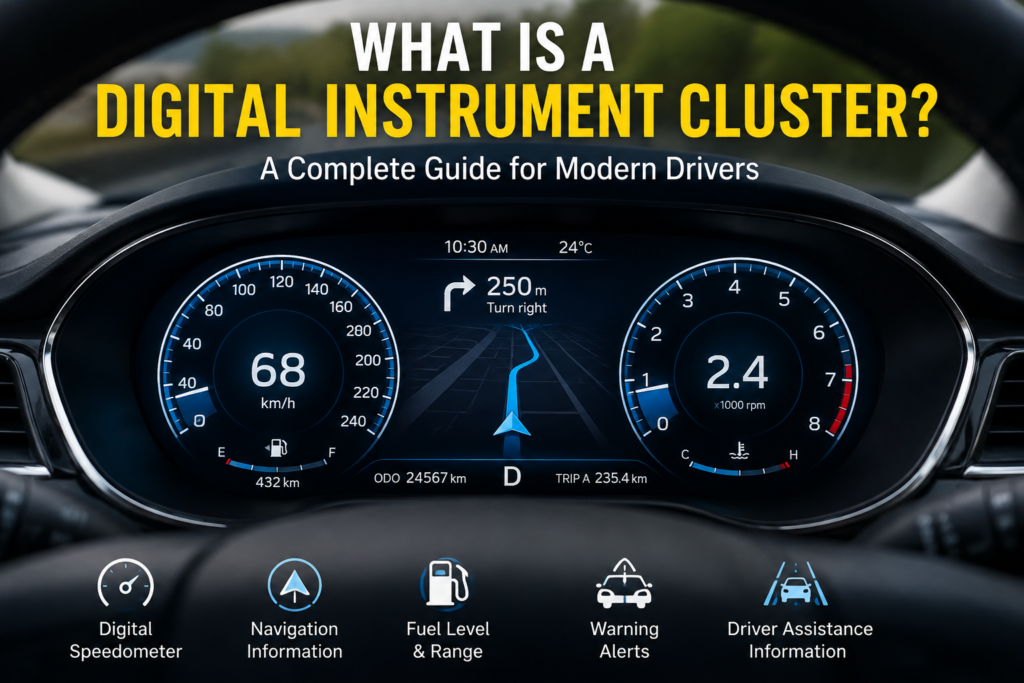
A digital instrument cluster is an electronic display behind the steering wheel that shows important driving information in a digital format. Instead of relying only on traditional mechanical gauges, it uses a screen to display speed, engine information, fuel level, navigation directions, warning messages, driver assistance information, and other useful details.
From my point of view, a digital instrument cluster is more than just a stylish screen. It has become an important part of the modern driving experience because it makes vehicle information easier to understand and, in many situations, more convenient to access.
What Is a Digital Instrument Cluster?
A digital instrument cluster is a modern replacement for the traditional analog dashboard. It is usually located directly behind the steering wheel and uses an LCD, TFT, LED, or similar digital display technology.
The purpose of a digital instrument cluster is to provide the driver with real time information about the vehicle and the journey. Depending on the car model, the display can show vehicle speed, engine RPM, fuel level, driving range, outside temperature, trip information, warning alerts, navigation instructions, and driver assistance features.
Unlike a traditional instrument panel, a digital display can change its layout and content. This means the driver can sometimes choose what information should be visible at a particular moment.
For example, one driving mode may show a large digital speedometer, while another may place more focus on navigation or engine performance information. This flexibility is one of the main reasons digital instrument clusters have become popular.
How Does a Digital Instrument Cluster Work?
A digital instrument cluster works by receiving information from different electronic systems inside the vehicle. Modern cars contain many sensors and control modules that constantly monitor the condition of the engine, transmission, brakes, fuel system, and other components.
This information is sent through the vehicle’s electronic communication network to the instrument cluster. The cluster processes the data and presents it on the screen in a way that the driver can easily understand.
For instance, the vehicle speed sensor provides speed information, while the fuel system provides information about the remaining fuel. If the engine detects a problem, the system can also send a warning to the instrument cluster.
In many modern vehicles, the digital instrument cluster can work together with the infotainment system, navigation system, and advanced driver assistance features. This creates a more connected dashboard experience.
Common Features of a Digital Instrument Cluster
One of the biggest advantages of a digital instrument cluster is the number of features it can provide. Although the exact features depend on the vehicle, most modern systems offer several useful functions.
Digital Speedometer
The digital speedometer displays the current speed of the vehicle using numbers on the screen. Some drivers find this easier to read than a traditional needle based speedometer.
RPM Display
Many digital instrument clusters provide engine RPM information. Depending on the design, RPM can be shown as a traditional looking gauge or as a digital graphic.
Fuel Level and Driving Range
A digital dashboard can display the amount of fuel remaining in the vehicle as well as the estimated driving range. This can help drivers understand how far they can travel before needing to refuel.
Navigation Information
Some advanced digital instrument clusters can display turn by turn navigation instructions. Instead of looking toward the center screen, the driver can see upcoming directions directly in front of them.
In my opinion, this is one of the most useful features because it can reduce the need to look away from the road.
Warning Messages
A digital instrument cluster can display warning messages for issues such as low fuel, low tire pressure, engine problems, open doors, overheating, or other system alerts.
Because the information can be displayed using text and graphics, some systems can explain the issue more clearly than a simple warning light.
Driver Assistance Information
Modern cars often include features such as adaptive cruise control, lane keeping assistance, blind spot monitoring, and collision warning systems. A digital instrument cluster can show the status of these systems and provide visual alerts.
Digital Instrument Cluster vs Analog Instrument Cluster
The main difference between digital and analog instrument clusters is the way information is displayed.
An analog instrument cluster typically uses physical gauges and mechanical needles. A digital instrument cluster uses an electronic screen.
Traditional gauges have a classic appearance and can be very easy to understand. They are also familiar to most drivers. However, their information is generally fixed in position.
A digital instrument cluster offers much greater flexibility. The manufacturer can change the layout through software, and some vehicles allow drivers to customize the appearance.
For example, the same display may provide a simple classic view during normal driving and a performance focused view when the driver selects a sport mode.
Benefits of a Digital Instrument Cluster
There are several reasons why digital instrument clusters are becoming common in modern vehicles.
Better Customization
One major advantage is customization. Drivers can often change what information is shown and how it is arranged.
Some vehicles allow users to select different themes, colors, layouts, or information screens. This gives the driver more control over the dashboard experience.
Easy Access to Information
A digital instrument cluster can bring several types of information into one location. Instead of relying on separate gauges and displays, important information can be organized on one screen.
This can make the driving experience feel more convenient and connected.
Modern Appearance
There is also no denying that digital instrument clusters can make the interior of a car look more modern. Large high resolution screens can create a premium appearance, especially in newer vehicles.
For many car manufacturers, dashboard technology has become an important part of the vehicle’s overall design.
Integration With Other Systems
Another advantage is integration. A digital instrument cluster can communicate with the navigation system, infotainment system, vehicle settings, and driver assistance technology.
This creates a unified system where information from different parts of the car can be presented in one place.
Software Updates
Some newer vehicles support software updates that can improve or modify digital dashboard functions. This means the display may receive new features without requiring a complete hardware replacement.
This is an important difference from traditional instrument clusters, which are much more limited once they leave the factory.
Are Digital Instrument Clusters Safe?
A common question is whether digital instrument clusters are safe. In general, they can be designed to provide information clearly and reduce unnecessary driver distraction.
A well designed cluster presents important information in a readable format and keeps essential details directly in front of the driver.
However, the safety of any dashboard depends on its design and how the driver uses it. Too much information, unnecessary animations, or complicated menus could potentially make the display distracting.
This is why I believe simplicity is still important. A dashboard may have advanced technology, but the most important information should always be easy to see at a glance.
Possible Disadvantages of Digital Instrument Clusters
Although digital instrument clusters provide many benefits, they are not perfect.
One potential disadvantage is cost. Advanced electronic displays and related components can be more expensive than traditional gauges. If the display or control electronics fail, repairs may also be costly.
Another concern is reliability. Traditional mechanical gauges are relatively simple, while digital instrument clusters depend on electronics, software, wiring, and communication networks.
A software problem can sometimes affect the display even when the vehicle itself is mechanically fine.
There can also be a learning curve. Drivers who are used to traditional gauges may initially need time to become comfortable with different layouts and menus.
Digital Instrument Clusters in Electric Cars
Digital instrument clusters are especially common in electric vehicles. EVs often need to display information that traditional cars do not require.
For example, an electric vehicle may display battery percentage, estimated remaining range, energy consumption, regenerative braking information, charging status, and power usage.
Because these vehicles are heavily software driven, a digital dashboard fits naturally into the overall design.
In my view, this is one reason digital instrument clusters are becoming more important. As vehicles become more connected and software based, the dashboard also needs to become more flexible.
Are All Digital Instrument Clusters the Same?
No, digital instrument clusters can be very different depending on the vehicle manufacturer and model.
Some cars use a small digital display in the center of the dashboard while keeping physical gauges on either side. Other vehicles use a large full screen display that replaces almost the entire traditional instrument panel.
Premium vehicles may offer advanced graphics, multiple display modes, navigation maps, and detailed vehicle information. More affordable vehicles may provide a simpler digital display with basic driving information.
The technology may look different, but the basic purpose remains the same, which is to provide the driver with useful information clearly and quickly.
What Should You Look for in a Digital Instrument Cluster?
When considering a car with a digital instrument cluster, I think drivers should focus on usability rather than screen size alone.
A good digital instrument cluster should be easy to read in both bright sunlight and low light. The essential information should be visible without requiring complicated menus.
It is also useful to check whether the display can show navigation instructions, driver assistance information, fuel or battery range, and vehicle warnings.
Customization can be a great feature, but it should not come at the cost of simplicity.
The Future of Digital Instrument Clusters
The future of digital instrument clusters looks closely connected with the development of smarter vehicles.
As cars become more advanced, dashboards are likely to provide even more personalized and interactive information. Artificial intelligence, connected navigation, advanced driver assistance systems, and augmented reality technology may influence how information is presented.
Some vehicles are already combining digital dashboards with head up displays and other technologies to reduce the amount of information the driver needs to view in one place.
I believe the biggest goal of future dashboards should not simply be adding more features. The real goal should be presenting the right information at the right time without creating unnecessary distractions.
Final Thoughts
A digital instrument cluster is one of the most noticeable changes in modern car interiors. It replaces or supplements traditional gauges with a flexible electronic display that can show speed, RPM, fuel level, navigation, warnings, driver assistance information, and much more.
From my perspective, the biggest benefit is flexibility. A traditional gauge has one main purpose, while a digital instrument cluster can adapt to different driving situations and provide a wider range of information.
There are some disadvantages, including higher repair costs and dependence on electronic systems, but the advantages make digital instrument clusters an important part of today’s automotive technology.
As cars continue to become smarter, more connected, and more software focused, the digital instrument cluster will likely become even more advanced. For modern drivers, it is not simply a screen behind the steering wheel. It is becoming an essential communication point between the driver and the vehicle.
I can also create an AdSense friendly featured image for WordPress related to a digital instrument cluster.