Related Articles

When people talk about tires, they usually focus on tread depth, tire size, traction, or air pressure. However, there is another important part of a tire that deserves just as much attention. That part is the tire sidewall.
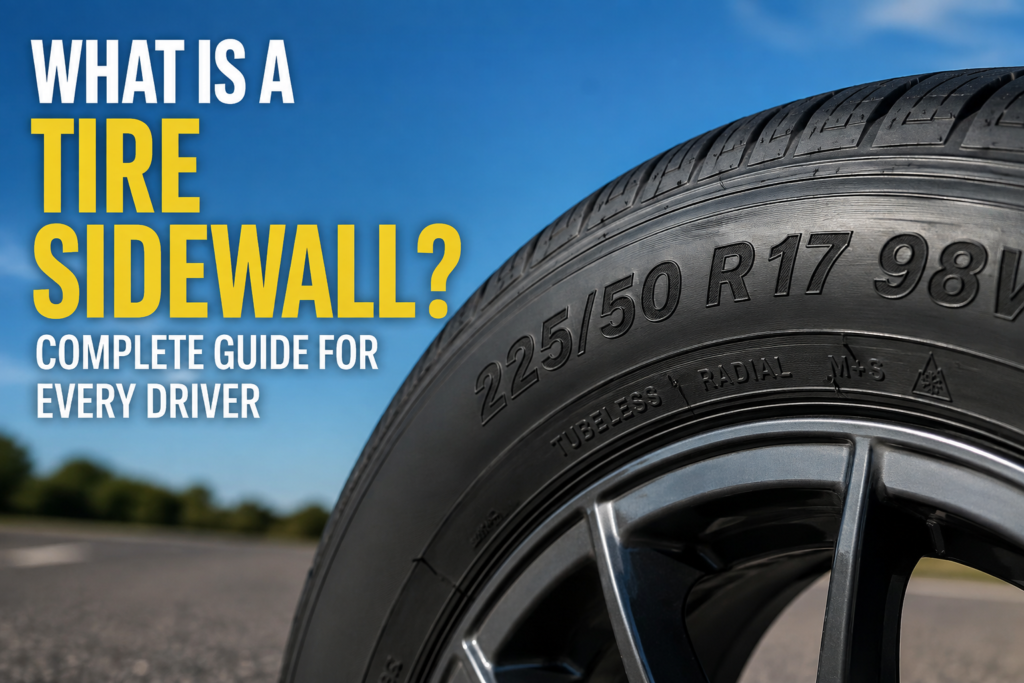
The tire sidewall is the area between the tread and the wheel rim. It is easy to recognize because it contains important information printed or molded into the rubber. Tire size, load index, speed rating, brand name, tire type, manufacturing information, and several other markings can be found there.
In my opinion, understanding the tire sidewall is one of the easiest ways to become more confident about basic tire maintenance. You do not need to be a tire expert to understand it. Once you know what the markings mean and why the sidewall matters, choosing, checking, and maintaining your tires becomes much easier.
What Is a Tire Sidewall?
The tire sidewall is the outer section of a tire that connects the tread area to the bead near the wheel. Unlike the tread, which is designed mainly to contact the road, the sidewall has a different job.
It provides flexibility, supports the vehicle, helps absorb impacts, and protects the internal structure of the tire. It also contains important identification markings that tell you more about the tire.
A tire sidewall may look like a simple piece of rubber, but it is actually an important structural part of the tire. The materials and construction used inside the sidewall are designed to withstand bending, pressure, heat, and the forces created when a vehicle accelerates, brakes, and turns.
Why Is the Tire Sidewall Important?
The tire sidewall plays several important roles in vehicle performance and safety.
One of its main functions is to provide flexibility. When your vehicle drives over a small bump or uneven section of road, the sidewall can flex and help absorb some of that movement. This contributes to a more comfortable ride.
The sidewall also helps maintain the shape of the tire. A properly inflated tire needs to support the weight of the vehicle while maintaining its intended shape. The sidewall works with the internal construction of the tire to provide that support.
Another important function is protection. The sidewall helps protect the internal layers of the tire from outside damage. However, it is also one of the more vulnerable areas because it does not have the thick tread material found on the road contact surface.
This is why sidewall damage should never be ignored.
What Information Is Written on a Tire Sidewall?
One of the most useful things about the tire sidewall is the amount of information it provides. If you look closely at a tire, you will see a combination of letters, numbers, and symbols.
For example, you might see something like:
225/50 R17 98V
This simple marking tells you several important things about the tire.
The number 225 represents the tire width in millimeters. The number 50 represents the aspect ratio, which tells you the sidewall height as a percentage of the tire width.
The letter R means the tire uses radial construction. The number 17 represents the wheel diameter in inches.
The number 98 is the load index, which indicates the maximum load the tire is designed to carry at its specified conditions. The letter V represents the speed rating.
Learning to read these markings can help you understand whether a tire is suitable for your vehicle.
Tire Sidewall and Tire Size
The tire sidewall is where you will normally find the tire size. This is one of the most important pieces of information when replacing tires.
For example, if your tire says 225/50 R17, the first number is the tire width. The second number is the aspect ratio, while R indicates radial construction. The final number indicates the wheel diameter.
It is important to use the tire size recommended for your vehicle unless you have confirmed that an alternative size is appropriate.
Using an incorrect tire size can affect handling, ride quality, fuel economy, speedometer accuracy, and clearance.
From my point of view, checking the sidewall before buying replacement tires is always a smart habit. It gives you a starting point for understanding what is currently installed on the vehicle.
Understanding the Tire Aspect Ratio
The aspect ratio is another important sidewall marking.
If a tire is marked 225/50 R17, the number 50 means that the sidewall height is 50 percent of the tire width.
A lower aspect ratio generally means a shorter sidewall. A higher aspect ratio generally means a taller sidewall.
Tires with shorter sidewalls can provide a more responsive steering feel, while tires with taller sidewalls can often provide a softer and more comfortable ride.
The right choice depends on the vehicle, wheel size, driving conditions, and manufacturer recommendations.
Tire Sidewall and Load Index
The load index is another important number found on the sidewall.
It represents the maximum load capacity of the tire under specified conditions. The load index is not simply the weight in kilograms or pounds. Instead, it corresponds to a standardized load capacity table.
For example, a tire marked with a load index of 98 has a specific maximum load capacity determined by the tire industry rating system.
When replacing tires, it is important to choose a load index that meets or exceeds the vehicle manufacturer’s requirements.
This becomes particularly important for larger vehicles, SUVs, trucks, and vehicles that regularly carry passengers or heavy cargo.
Tire Speed Rating
The speed rating is normally represented by a letter.
Common speed ratings include letters such as H, V, W, and Y. Each letter corresponds to a maximum speed capability under specified testing conditions.
However, the speed rating should not be interpreted as a recommendation to drive at that speed. It is a technical rating of the tire.
When selecting replacement tires, I recommend following the vehicle manufacturer’s specifications rather than choosing a tire based only on its speed rating.
What Does DOT Mean on a Tire Sidewall?
You may also notice a DOT marking on the tire sidewall.
DOT stands for the United States Department of Transportation. A tire with a DOT identification code contains information used for tire identification and manufacturing traceability.
The final digits of the code can provide information about when the tire was manufactured. This is useful because tires can age even when they have not been driven extensively.
When buying tires, checking the manufacturing information can be a useful part of the inspection process.
Tire Sidewall Damage
One of the most important reasons to inspect your tire sidewall is to identify damage.
Sidewall damage can occur after hitting potholes, curbs, road debris, or other obstacles. You may notice cuts, cracks, bulges, punctures, or unusual shapes.
A small cosmetic mark is not necessarily a serious problem, but deep cuts, exposed internal material, or bulges should be treated seriously.
A bulge in the sidewall can indicate damage to the internal tire structure. In this situation, continuing to drive can be dangerous.
If you notice serious sidewall damage, it is better to have the tire inspected by a qualified tire professional instead of assuming that it is safe.
Can You Repair a Tire Sidewall?
In most cases, sidewall damage is not considered safely repairable.
Tire repairs are generally focused on repairable punctures in the tread area. The sidewall experiences significant flexing while the vehicle is moving, which makes permanent repair much more difficult.
For this reason, a damaged sidewall may require tire replacement.
I would never recommend trying to fix a serious sidewall cut or bulge with household products, sealants, or temporary methods. If the structural integrity of the tire is compromised, professional inspection is the safest approach.
How Tire Pressure Affects the Sidewall
Tire pressure has a direct effect on how the sidewall behaves.
When a tire is underinflated, the sidewall can flex more than intended. Excessive flexing can generate additional heat and contribute to uneven wear or tire damage.
Overinflation can also create problems. It can make the ride harsher and change how the tire contacts the road.
The best approach is to maintain the tire pressure recommended by the vehicle manufacturer. You can usually find the recommended pressure on a label inside the driver’s door area or in the vehicle owner’s manual.
Do not rely only on the maximum pressure printed on the tire sidewall. That figure is not necessarily the recommended operating pressure for your vehicle.
Tire Sidewall vs Tread
The sidewall and tread have different jobs.
The tread is the part of the tire that directly contacts the road. It contains grooves and patterns designed to provide traction, handling, water evacuation, and braking performance.
The sidewall sits between the tread and the wheel. Its main responsibilities include supporting the tire structure, providing controlled flexibility, absorbing impacts, and displaying important tire information.
Both sections are important, but they should be inspected differently.
When checking the tread, you are mainly looking for tread depth, uneven wear, cracks, and embedded objects. When checking the sidewall, you should look for cuts, cracks, bulges, punctures, and other visible abnormalities.
Why Low Profile Tires Have Different Sidewalls
Low profile tires have shorter sidewalls compared with tires that have a higher aspect ratio.
They are often used with larger wheels and can give a vehicle a sporty appearance. They can also provide a more responsive steering feel.
However, there is a tradeoff.
A shorter sidewall provides less vertical cushioning between the wheel and road. As a result, low profile tires may be more sensitive to potholes and sharp impacts.
This does not mean low profile tires are unsafe. It simply means drivers should be more careful around potholes, damaged roads, and curbs.
How to Inspect Your Tire Sidewall
Checking your tire sidewalls does not take much time.
Park your vehicle in a safe location and look carefully at each tire. Inspect the visible outer sidewall for cuts, cracks, bulges, punctures, and unusual shapes.
Also check that the tire is not rubbing against the vehicle body or suspension components.
If possible, inspect the inner sidewall as well. Damage can sometimes occur on the side of the tire that is difficult to see from outside the vehicle.
You should also check your tire pressure regularly and have your tires inspected when you notice unusual vibration, pulling, noise, or handling changes.
Common Tire Sidewall Markings
Besides tire size, load index, and speed rating, the sidewall can contain several other markings.
You may see the manufacturer’s brand and tire model. You can also find information about radial construction, tubeless design, maximum inflation pressure, maximum load, traction certifications, and seasonal or performance symbols.
Some tires may have markings for winter performance or mud and snow applications.
These markings can be useful when comparing tires or confirming that the correct tire has been installed.
Final Thoughts on Tire Sidewalls
The tire sidewall may not receive as much attention as the tread, but it is an extremely important part of every tire.
It supports the tire structure, allows controlled flexibility, helps absorb road impacts, and provides valuable information about tire size, load capacity, speed rating, and manufacturing details.
In my view, every driver should develop the habit of looking at their tire sidewalls from time to time. You do not need special equipment or advanced mechanical knowledge. A few minutes of visual inspection can help you notice problems before they become more serious.
Most importantly, never ignore visible sidewall damage. A deep cut, serious crack, puncture, or bulge can indicate structural damage and should be inspected by a qualified professional.
Once you understand what a tire sidewall is and how to read its markings, you have a much better understanding of the tires supporting your vehicle every day. That simple knowledge can make tire maintenance easier and help you make more informed decisions when it is time to replace your tires.