Related Articles
When people talk about modern car tires, one term that comes up quite often is tubeless tires. If you are new to cars or have only used traditional tires before, you may wonder what makes a tubeless tire different and how it can hold air without an inner tube. The answer is actually quite simple, but the technology behind it is interesting.
In my view, tubeless tires are one of the most useful improvements in modern tire design. They make everyday driving more convenient, can reduce the risk of certain types of punctures, and work well with modern wheels. Most cars today use tubeless tires because they provide a practical combination of safety, performance, comfort, and reliability.
In this article, I will explain how tubeless tires work, what parts make them possible, their advantages and disadvantages, and what you should know before using them.
What Are Tubeless Tires?
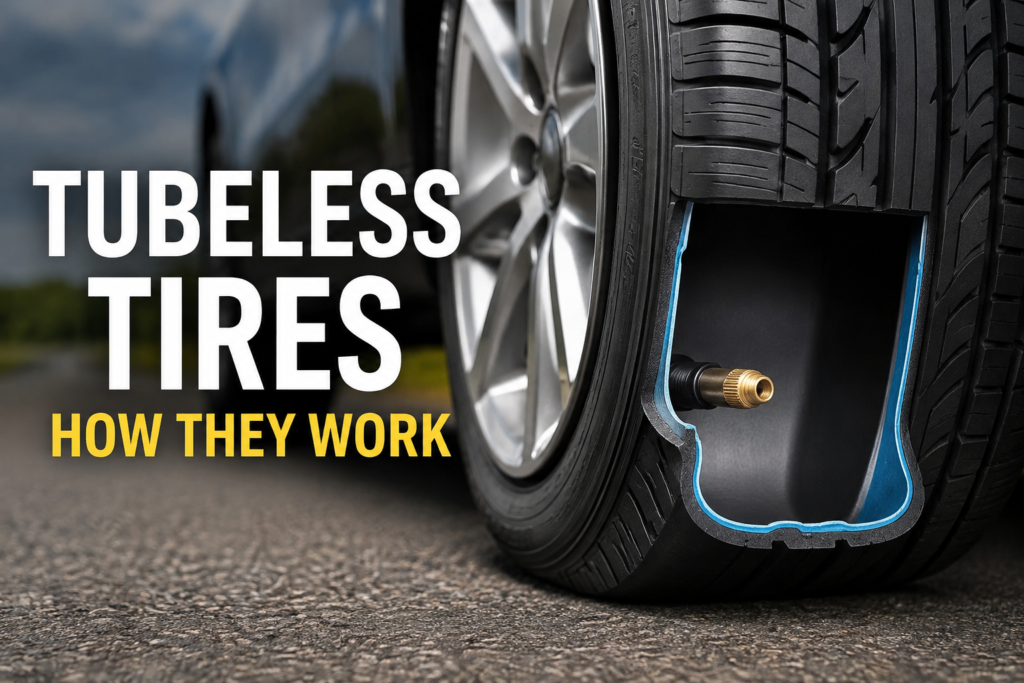
Tubeless tires are tires that do not use a separate inner tube to hold air. Instead, the tire itself works with the wheel rim to create an airtight chamber.
In a traditional tube type tire, an inner tube sits inside the tire. The tube is filled with air and provides the pressure needed to support the vehicle. With tubeless tires, the air stays directly inside the tire and wheel assembly.
The inside of a tubeless tire has a special airtight inner liner. This liner helps prevent air from escaping through the tire material. The tire bead also plays an important role because it creates a tight seal against the wheel rim.
This simple design is the main reason tubeless tires have become so common in modern vehicles.
How Do Tubeless Tires Work?
The working principle of tubeless tires is based on creating and maintaining an airtight space between the tire and the wheel.
When a tubeless tire is installed on a compatible wheel, the tire beads sit firmly against the rim. The valve stem is fitted through a hole in the wheel and provides a controlled way to add or remove air.
Once the tire is inflated, air pressure pushes the tire bead tightly against the rim. This pressure helps maintain the seal between the tire and wheel.
The inner liner of the tire also prevents air from slowly passing through the rubber. Because there is no separate inner tube, the entire tire assembly works as one sealed system.
This is something I think many new drivers misunderstand. A tubeless tire does not mean the tire has no way to contain air. Instead, the tire and wheel are designed to contain the air together.
Main Parts of a Tubeless Tire
Several components work together to make tubeless tires function properly.
Tire Bead
The tire bead is the part of the tire that sits against the wheel rim. It contains strong materials that help keep the tire securely attached to the wheel.
A properly seated bead is extremely important because even a small problem with the seal can cause air leakage.
Inner Liner
The inner liner is a special airtight layer inside the tire. Its main job is to reduce air loss through the rubber.
You can think of it as the replacement for the inner tube in terms of keeping the air contained, although it is built directly into the tire rather than being a separate component.
Wheel Rim
The wheel rim provides the surface against which the tire bead seals. Tubeless tires require wheels that are designed for tubeless use.
The condition of the rim matters because bends, cracks, corrosion, or damage around the bead area can cause air leaks.
Valve Stem
The valve stem allows air to enter and leave the tire. It is mounted directly through the wheel and has a valve mechanism that helps keep the air inside.
A damaged or aging valve stem can sometimes cause a slow leak even when the tire itself is perfectly fine.
What Happens When You Inflate a Tubeless Tire?
Inflating a tubeless tire is quite straightforward.
When air enters the tire through the valve stem, the pressure begins to expand the tire. The tire beads move into their correct position against the wheel rim.
As the air pressure increases, the beads become firmly seated against the rim. The airtight inner liner and the bead seal then work together to keep the air inside.
Once the tire reaches the recommended pressure, it is ready for normal use.
The exact inflation pressure depends on the vehicle and tire setup. I always recommend checking the vehicle manufacturer’s recommended tire pressure rather than simply using the maximum pressure printed on the tire sidewall.
Why Are Tubeless Tires So Popular?
One major reason is convenience.
Without an inner tube, there is one less component inside the tire that can fail. Tubeless tires are also well suited to modern vehicles because they can be manufactured with different tread patterns, compounds, sidewall designs, and performance characteristics.
Another advantage is that certain punctures can be repaired without removing the entire tire from the wheel. For example, a small puncture caused by a nail or screw may result in a gradual air leak rather than an immediate loss of all air.
This can give the driver more time to notice the problem and safely deal with it.
Advantages of Tubeless Tires
There are several important benefits of using tubeless tires.
Better Puncture Behavior
One of the biggest benefits of tubeless tires is how they respond to small punctures.
If a nail goes through the tread, air can escape gradually depending on the size and location of the puncture. In a tube type tire, the inner tube can lose air quickly when punctured.
This does not mean tubeless tires are puncture proof. They can still lose air and become unsafe. However, their construction can make certain punctures easier to manage.
Lower Risk of Pinching
Tube type tires can experience a problem known as a pinch flat when the inner tube becomes trapped between the tire and wheel after a hard impact.
Since tubeless tires do not have an inner tube, this specific type of failure is not an issue.
This can be especially useful for vehicles that regularly travel over rough roads.
Improved Weight
Removing the inner tube can reduce the overall weight of the tire and wheel assembly in some applications.
Lower unsprung weight can potentially help vehicle handling and suspension response. The actual effect depends on the specific tire and wheel combination.
Better Heat Management
Tubeless tires can also have advantages when it comes to heat. There is no inner tube rubbing against the inside of the tire during normal operation.
Less internal friction can help reduce heat buildup compared with some tube type designs.
Heat is important because excessive tire temperature can affect tire performance and durability.
Easier Puncture Repair
Many common tread punctures in tubeless tires can be repaired using appropriate repair methods.
However, not every puncture should be repaired. Damage to the sidewall, large cuts, severe internal damage, or damage outside the repairable area may require tire replacement.
A professional tire technician can inspect the tire and determine whether a repair is safe.
Disadvantages of Tubeless Tires
Although I consider tubeless tires a very practical choice, they are not perfect.
One issue is that they depend heavily on a good seal between the tire and wheel. If the wheel is bent or damaged, air may leak from the bead area.
A damaged valve stem can also cause problems.
Another issue is that installing a tubeless tire properly may require specialized equipment. If the tire bead is not seated correctly, the tire may leak or fail to function as intended.
Tubeless tires can also be more difficult to inflate after the bead has completely separated from the rim. In some cases, professional equipment may be necessary.
Do Tubeless Tires Get Punctures?
Yes. Tubeless tires can absolutely get punctures.
The word tubeless does not mean puncture proof. A sharp object can still penetrate the tread and allow air to escape.
The difference is how the tire handles the damage.
With a small tread puncture, the air loss may be slow enough for the driver to notice a low tire pressure warning before the tire becomes completely flat.
This is why checking tire pressure regularly is so important.
Can You Drive on a Flat Tubeless Tire?
Generally, you should not continue driving on a completely flat standard tubeless tire.
Driving with very low pressure can damage the sidewall and internal structure of the tire. It can also reduce steering control and increase the risk of an accident.
If you notice that a tire has lost significant pressure, the safest approach is to stop in a suitable location and inspect it. Inflate it only if appropriate and if the tire has not suffered structural damage.
If you are unsure, contact a qualified tire professional.
Tubeless Tires vs Tube Type Tires
The biggest difference is the way the air is stored.
Tube type tires use a separate inner tube. Tubeless tires use the tire itself, together with a compatible wheel, to hold the air.
Tubeless tires are now standard on most modern passenger cars because of their practical design. Tube type tires are still used in some applications, including certain motorcycles, bicycles, agricultural equipment, and specialized vehicles.
Neither design is automatically suitable for every application. The correct tire depends on the vehicle, wheel, manufacturer specifications, and intended use.
How to Maintain Tubeless Tires
Proper maintenance can significantly improve the life and safety of your tires.
I recommend checking tire pressure regularly, especially before long trips. Tires naturally lose a small amount of air over time, even when there is no obvious puncture.
You should also inspect the tread for nails, screws, cuts, cracks, and unusual wear.
Pay attention to repeated pressure loss. If you keep adding air to the same tire, there is probably a problem that needs inspection.
Wheel condition is also important. A damaged rim can create an air leak even when the tire looks perfectly normal.
Proper wheel alignment and tire rotation can also help maintain even tread wear.
Are Tubeless Tires Better?
For most modern passenger vehicles, I would say tubeless tires are the more practical option because the vehicle and wheels are designed around them.
They offer a reliable way to maintain tire pressure, handle many common punctures gradually, and eliminate the need for an inner tube.
However, the quality of the tire, correct inflation, wheel condition, driving habits, and maintenance all matter. A good tubeless tire that is poorly maintained can still become unsafe.
Final Thoughts
Tubeless tires may look simple from the outside, but their design combines several important components to create a reliable airtight system. The tire bead seals against the wheel rim, the inner liner helps contain the air, and the valve stem allows the tire to be inflated and maintained.
In my opinion, the biggest advantage of tubeless tires is their practicality. They are easier to manage for modern everyday driving and can handle certain punctures more gradually than traditional tube type designs.
Still, tubeless tires require proper care. Checking tire pressure, inspecting the tread, maintaining the wheels, and dealing with punctures quickly are all important parts of safe driving.
Understanding how tubeless tires work also makes it easier to recognize problems before they become serious. Once you know that the tire, bead, rim, inner liner, and valve all work together, the technology becomes much easier to understand.
For everyday driving, tubeless tires have become a dependable part of modern vehicle technology, and with proper maintenance, they can provide a good balance of safety, comfort, performance, and durability.