Related Articles

When I think about the braking system of a car, the brake rotor is one of the most important parts that deserves more attention. Many drivers know that brake pads help stop the vehicle, but fewer people understand exactly how brake rotors work and why their condition matters so much.
A brake rotor, also called a brake disc, is the large round metal component that rotates with the wheel. When you press the brake pedal, the brake pads press against the rotor. This creates friction, and that friction converts the moving energy of the vehicle into heat. As the rotor slows down, the wheel slows down too, allowing the car to stop safely.
In my view, understanding how brake rotors work makes it much easier to recognize brake problems before they become expensive or dangerous. In this guide, I will explain the brake rotor function, how brake rotors work with brake pads and calipers, common rotor problems, and the signs that indicate a brake rotor may need attention.
What Is a Brake Rotor?
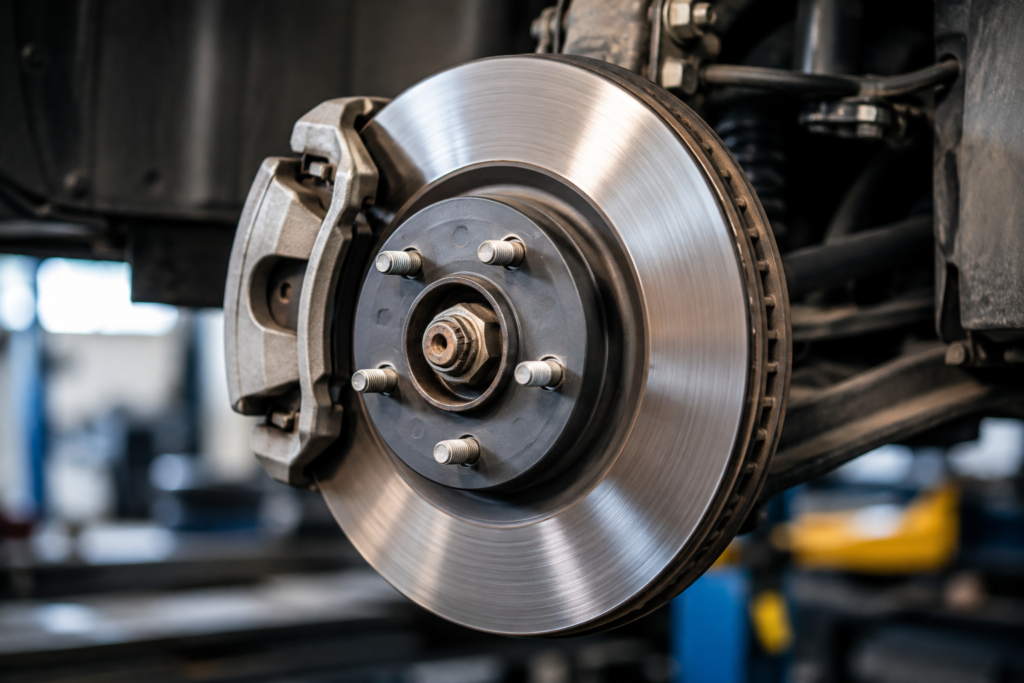
A brake rotor is a flat, circular metal disc connected to the wheel hub. It rotates whenever the wheel rotates. In most modern vehicles, disc brakes use a brake rotor together with brake pads and a brake caliper.
The rotor provides the surface against which the brake pads create friction. When the brake system is operating correctly, the rotor spins smoothly and the pads apply even pressure to both sides of the disc.
Brake rotors are usually made from cast iron because this material can handle high temperatures and repeated braking. Some high performance vehicles use specialized materials and rotor designs to improve heat management and reduce weight.
The size and design of a brake rotor depend on the vehicle. Larger and heavier vehicles generally require stronger braking components because they have more weight and energy that needs to be controlled.
How Brake Rotors Work
The basic operation of a brake rotor is actually quite simple.
When you press the brake pedal, the movement is transferred through the braking system to the brake caliper. Hydraulic brake fluid creates pressure that moves the caliper pistons. These pistons push the brake pads toward the rotating rotor.
The brake pads then squeeze the rotor from both sides. The friction between the pads and the rotor slows the rotation of the rotor. Because the rotor is attached to the wheel hub, slowing the rotor also slows the wheel.
This process happens extremely quickly. The vehicle’s kinetic energy is converted into heat through friction. That heat must then be managed and released so the brakes can continue working effectively.
This is why the condition of the brake rotor is so important. A rotor that is damaged, excessively worn, or unable to dissipate heat properly can affect braking performance.
The Role of Brake Rotors in the Braking System
A brake rotor does not work alone. It is part of a complete braking system that includes several components.
The brake pedal is where the driver starts the braking process. When the pedal is pressed, hydraulic pressure is generated in the braking system.
Brake fluid carries this pressure to the brake caliper. The caliper contains pistons that push the brake pads against the rotor.
The brake pads are the friction material that makes direct contact with the rotor. They gradually wear down because they repeatedly create friction.
The rotor provides the rotating surface for the pads. It also absorbs a large amount of heat generated during braking.
The wheel hub connects the rotor to the wheel assembly. As the wheel turns, the rotor turns with it.
All of these components need to work properly for the vehicle to stop smoothly and safely.
Why Brake Rotors Get Hot
One of the most important things to understand about brake rotors is that braking produces a lot of heat.
Imagine a vehicle traveling at highway speed. The vehicle has considerable kinetic energy because of its speed and weight. When you press the brake pedal, the braking system needs to remove that energy quickly.
The brake pads create friction against the rotor, and this friction changes kinetic energy into thermal energy. The rotor absorbs much of this heat.
During normal driving, the rotor heats up and then cools down as the vehicle continues moving. Air flowing around the rotor helps remove heat.
This is one reason some brake rotors have vents between two metal surfaces. Ventilated brake rotors allow air to move through the rotor, helping improve cooling.
If a vehicle is repeatedly braked hard, such as when driving down a steep mountain road, the rotors can become extremely hot. Excessive heat can eventually cause brake fade and other braking problems.
Solid and Ventilated Brake Rotors
There are different types of brake rotors, but solid and ventilated rotors are two common designs.
A solid brake rotor is made from a single piece of metal. This design is relatively simple and is often used where braking demands are moderate.
A ventilated brake rotor has internal spaces between two surfaces. These spaces allow air to move through the rotor as it spins.
In my experience, ventilated rotors are especially useful for vehicles that experience greater braking demands. The additional airflow can help control temperature and reduce the risk of excessive heat buildup.
Some modern rotors also use special grooves, holes, or other designs. These features can help with heat management and water removal, depending on the application.
However, a more complicated rotor design is not automatically better for every vehicle. The correct brake rotor should always match the vehicle’s braking system and manufacturer specifications.
What Happens When You Press the Brake Pedal?
The entire braking process can happen in a fraction of a second.
First, your foot presses the brake pedal.
The brake system creates hydraulic pressure.
Brake fluid transfers that pressure to the caliper.
The caliper pistons push the brake pads toward the rotor.
The brake pads press against the rotating brake rotor.
Friction develops between the pads and rotor.
The rotor slows down.
Because the rotor is connected to the wheel, the wheel slows down.
The vehicle loses speed and eventually stops.
When you release the brake pedal, hydraulic pressure decreases. The brake pads move away from the rotor slightly, allowing the wheel to rotate freely again.
This simple process is repeated thousands of times during the life of a vehicle.
Common Brake Rotor Problems
Brake rotors are designed to last for a long time, but they are not permanent. Their condition can change because of heat, friction, corrosion, driving habits, and other brake problems.
One common problem is rotor warping. People often use the term warped rotor to describe a brake rotor that causes vibration during braking. Technically, the issue may involve variations in rotor thickness or other forms of unevenness rather than the entire rotor literally bending.
Another problem is scoring. Deep grooves can develop on the rotor surface when brake pads or other components are worn or damaged.
Rust can also appear on brake rotors, especially when a vehicle sits unused for extended periods or is exposed to moisture. A light surface layer of rust can often disappear after normal braking, but heavy corrosion can become a serious problem.
Brake rotors can also become thinner over time. Manufacturers specify a minimum safe thickness. Once a rotor reaches that limit, it should not continue in service.
Signs of a Bad Brake Rotor
There are several signs that may indicate a brake rotor problem.
One of the most noticeable symptoms is steering wheel vibration when braking. If the vibration is particularly noticeable during moderate or high speed braking, the front brake system may need inspection.
A pulsating brake pedal can also indicate uneven rotor thickness or another braking system problem.
Unusual grinding or scraping sounds should never be ignored. A grinding noise may indicate severely worn brake pads or damage involving the rotor.
Visible grooves, cracks, heavy rust, or unusual discoloration on the rotor are also reasons to have the braking system inspected.
Another warning sign is reduced braking performance. If your vehicle takes longer to stop than usual or the brakes feel different, I would recommend having the complete braking system checked rather than assuming the rotor is the only problem.
Can Brake Rotors Wear Out?
Yes, brake rotors wear out over time.
Every time the brake pads contact the rotor, a small amount of material can be removed from the surfaces. The amount of wear depends on many factors, including driving style, vehicle weight, road conditions, brake pad material, and how frequently the brakes are used.
Some drivers may get many years from their brake rotors, while others may need replacement sooner.
There is no single mileage number that applies to every vehicle. Instead, rotor condition and thickness should be checked according to the vehicle manufacturer’s specifications.
How to Maintain Brake Rotors
Good driving habits can help extend brake rotor life.
Avoid unnecessary hard braking when conditions allow. Leave enough distance between your vehicle and the traffic ahead so you can slow down gradually.
If you are driving downhill for a long distance, use appropriate lower gearing when suitable for your vehicle instead of continuously riding the brakes.
Regular brake inspections are also important. During routine maintenance, a technician can inspect the brake pads, rotors, calipers, and other components.
Keeping the vehicle clean can also help reduce the effects of road dirt and contamination. However, brake components naturally experience harsh conditions, so normal wear should always be expected.
Brake Rotor Replacement
When a rotor is below its minimum thickness, badly damaged, cracked, heavily corroded, or otherwise unsuitable for service, replacement may be necessary.
Brake rotors are commonly replaced in pairs on the same axle so that braking performance remains balanced. The exact replacement approach depends on the vehicle and the condition of the components.
When installing new brake rotors, the brake pads should also be inspected. In some cases, replacing worn pads at the same time makes sense because the new components need to work together properly.
After brake work, the braking system should be tested carefully before returning to normal driving.
Brake Rotors vs Brake Drums
Brake rotors are used with disc brakes, while brake drums are used with drum brakes.
A disc brake uses a flat rotor and brake pads. The pads squeeze the rotor from both sides.
A drum brake uses brake shoes that press outward against the inside surface of a rotating drum.
Both systems can provide effective braking, but disc brakes generally offer advantages in heat management and are widely used on modern vehicles, especially at the front wheels.
Some vehicles still use drum brakes at the rear because rear brakes often have different braking requirements.
Final Thoughts
Understanding how brake rotors work gives me a better appreciation of how much work the braking system performs every time a vehicle slows down. The brake rotor is not simply a metal disc behind the wheel. It is a major part of the system that converts the vehicle’s motion into heat through friction.
The rotor works closely with the brake pads, caliper, brake fluid, and wheel hub. When all of these components are in good condition, the braking system can provide smooth and predictable stopping performance.
In my opinion, the best approach to brake maintenance is not to wait until a serious noise or vibration appears. Regular inspection can help identify worn brake pads, damaged rotors, and other problems before they become more expensive.
If you notice brake vibration, unusual sounds, reduced stopping performance, or visible rotor damage, have the braking system inspected by a qualified technician. A healthy brake rotor is an important part of safe and reliable driving.
The main thing to remember is simple. Brake rotors work by providing a rotating friction surface for the brake pads. That friction slows the rotor, reduces wheel speed, and ultimately brings the vehicle to a controlled stop.