Related Articles

Wheel bearings are one of those car parts that most drivers do not think about until something starts going wrong. They are hidden behind the wheels, so it is easy to forget how important they are. From my experience and understanding of basic car maintenance, a wheel bearing may look like a small component, but it plays a major role in keeping the vehicle moving smoothly and safely.
A good wheel bearing allows the wheel to rotate with very little friction. When it starts wearing out, you may notice unusual sounds, vibration, loose steering, or other changes in the way your car drives. Knowing the common signs of a bad wheel bearing can help you identify the problem before it becomes more serious.
In this article, I will explain what wheel bearings do, how they work, the common symptoms of wheel bearing wear, and why replacing a damaged bearing should not be ignored.
What Is a Wheel Bearing?
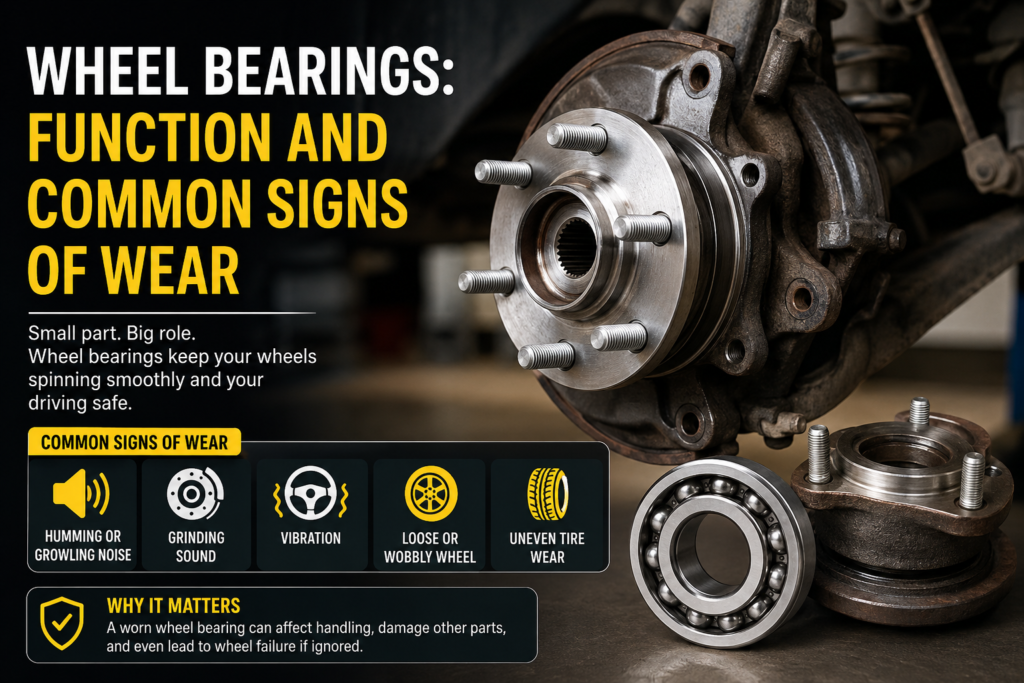
A wheel bearing is a mechanical component located inside the wheel hub or steering knuckle area. Its main job is to allow the wheel to rotate smoothly while supporting the weight of the vehicle.
Most wheel bearings contain small steel balls or rollers that move between metal rings. These components reduce friction between moving parts. Without a properly functioning wheel bearing, the wheel would have difficulty rotating smoothly and could create excessive friction and heat.
Different vehicles use different types of wheel bearings. Some older vehicles have serviceable bearings that can be cleaned and repacked with grease. Many modern vehicles use sealed wheel bearing assemblies that are designed to last for a long time and are replaced as a complete unit when they become damaged.
What Does a Wheel Bearing Do?
The primary function of a wheel bearing is to support the wheel and allow it to rotate freely. It also helps maintain proper wheel alignment and stability while the vehicle is moving.
When you drive, the wheel bearing is constantly working. It has to deal with the weight of the vehicle, road impacts, heat, water, dust, and changing driving conditions. This is why wheel bearings can eventually wear out even when the vehicle is properly maintained.
A healthy wheel bearing should operate quietly and smoothly. You normally should not hear or feel anything unusual coming from the bearing while driving.
Why Do Wheel Bearings Wear Out?
Wheel bearings are designed to be durable, but they are not always lifetime components. Several factors can contribute to wheel bearing wear.
One of the most common causes is normal mileage. As the vehicle travels thousands of kilometers, the bearing continues to rotate and experience pressure. Over time, its internal components can become worn.
Poor road conditions can also shorten bearing life. Potholes, rough roads, and strong impacts can place additional stress on the wheel bearing.
Water and dirt are other potential problems. If the bearing seal becomes damaged, moisture and contaminants can enter the bearing. This can affect the grease inside and eventually cause corrosion and premature wear.
An accident or hard impact against a curb can also damage a wheel bearing. In some cases, incorrect installation or a damaged wheel hub can contribute to bearing problems as well.
Common Signs of a Bad Wheel Bearing
One of the most useful things a car owner can learn is how to recognize the symptoms of wheel bearing wear. A failing bearing usually gives some warning before it completely fails.
1. Humming or Growling Noise
A humming, growling, or rumbling sound coming from one side of the vehicle is one of the most common signs of a bad wheel bearing.
The noise may become louder as you increase speed. Unlike normal tire noise, wheel bearing noise often changes when you turn the steering wheel.
For example, if the noise becomes more noticeable while turning in one direction, it can give a mechanic a clue about which wheel bearing may be affected.
However, tire wear can sometimes create similar sounds, so it is important not to assume that every humming noise is caused by a wheel bearing.
2. Grinding Sound
A grinding noise can be a more serious warning sign. If the internal parts of a wheel bearing have become badly damaged, the metal components may no longer move smoothly.
Grinding can become especially noticeable when driving at low speeds or when turning. If you hear a strong grinding sound from a wheel area, I would recommend having the vehicle inspected as soon as possible.
Continuing to drive with a severely damaged bearing can create additional problems.
3. Wheel Vibration
A worn wheel bearing can sometimes cause vibration that you can feel through the steering wheel, seat, or floor of the vehicle.
The vibration may become stronger as the vehicle gains speed. However, wheel imbalance, damaged tires, suspension problems, and alignment issues can also cause vibration.
This is why proper diagnosis is important. A mechanic should inspect the wheel, tire, suspension, and bearing before replacing any parts.
4. Loose or Wobbly Wheel
A worn wheel bearing can develop excessive play. In simple terms, this means the wheel may not remain as firmly positioned as it should.
During an inspection, a mechanic may raise the vehicle and check the wheel for unwanted movement. If there is noticeable looseness, the bearing or another suspension component may need attention.
A loose wheel should never be ignored because wheel stability is directly related to driving safety.
5. Uneven Tire Wear
Wheel bearing problems can sometimes contribute to unusual tire wear. If the bearing develops excessive movement, the wheel may not maintain its proper position.
You might notice uneven tread wear or wear that does not match the other tires.
Still, uneven tire wear can have many causes, including incorrect tire pressure, poor wheel alignment, worn suspension components, and unbalanced wheels. A complete inspection is therefore necessary.
6. Steering Changes
In some cases, a damaged wheel bearing can affect how the vehicle feels while steering.
You may notice that the steering feels less precise or that the vehicle does not feel as stable as it normally does. These symptoms can also be caused by suspension or steering problems, so they should be investigated rather than ignored.
Can You Drive With a Bad Wheel Bearing?
This is a question I often think about when discussing car maintenance. The answer depends on how badly the bearing is damaged.
If you only notice a mild humming noise, the vehicle may still be drivable for a short period, but that does not mean the problem should be ignored. A bearing that is already showing symptoms can continue to deteriorate.
If you experience severe grinding, significant wheel play, strong vibration, or obvious instability, driving the vehicle can become unsafe. In that situation, getting the car inspected immediately is the better decision.
A wheel bearing is directly connected to the wheel and hub assembly, so a serious failure can affect vehicle control.
How Do Mechanics Check Wheel Bearings?
A professional inspection usually involves several checks. The mechanic may raise the vehicle and rotate the wheel by hand. They can listen for unusual sounds and feel for roughness.
They may also check for excessive wheel movement by testing the wheel for play.
A road test can provide additional information because bearing noise often changes with vehicle speed and steering direction.
Modern vehicles may also use wheel hub assemblies that contain the bearing along with other components. In those cases, the entire assembly may need to be replaced rather than repairing only the internal bearing.
How Long Do Wheel Bearings Last?
There is no single mileage figure that applies to every vehicle. Wheel bearing life depends on vehicle design, driving conditions, road quality, load, weather, installation quality, and maintenance.
Some wheel bearings can last well over 100,000 kilometers, while others may develop problems earlier because of harsh driving conditions or damage.
Instead of replacing wheel bearings based only on mileage, I believe it is better to pay attention to symptoms and have the vehicle inspected when something changes.
How Much Does Wheel Bearing Replacement Cost?
The cost of wheel bearing replacement varies depending on the vehicle, bearing design, labor rates, and the location of the repair.
Some vehicles have relatively simple bearing designs, while others use complete hub assemblies that can cost more.
The location of the bearing also matters. A front wheel bearing may require different labor compared with a rear bearing depending on the vehicle’s suspension and drivetrain design.
When getting a repair estimate, it is a good idea to ask whether the quoted price includes the bearing or hub assembly, labor, and any additional parts that may need replacement.
How to Help Wheel Bearings Last Longer
You cannot prevent every wheel bearing failure, but good driving and maintenance habits can help reduce unnecessary stress.
Avoid hitting potholes and curbs whenever possible. Keep tires properly inflated and have unusual tire wear checked. If the vehicle has experienced a strong impact, have the wheels and suspension inspected.
It is also important to use quality replacement parts and ensure that bearings are installed correctly. A poor installation can create problems even when the replacement bearing itself is good.
Regular vehicle inspections are another simple way to catch developing problems early.
Wheel Bearings vs Other Wheel Problems
One reason wheel bearing problems can be confusing is that several other components can create similar symptoms.
A worn tire can produce humming or roaring sounds. A wheel alignment problem can cause uneven tire wear. A damaged suspension component can cause looseness or vibration. An unbalanced wheel can also create vibration at certain speeds.
Because of these similarities, replacing a wheel bearing based only on a noise is not always the best approach.
A proper diagnosis can prevent unnecessary repairs and help identify the actual source of the problem.
Final Thoughts
Wheel bearings may not be the most noticeable parts of a vehicle, but they are extremely important for smooth and stable wheel movement. They support the vehicle’s weight while allowing the wheels to rotate with minimal friction.
From my point of view, the biggest lesson is not to ignore unusual wheel noises or changes in driving behavior. A humming sound, grinding noise, vibration, loose wheel, or unusual tire wear can be a warning that something needs inspection.
A wheel bearing does not always fail suddenly. In many cases, it provides noticeable signs before the problem becomes severe. Paying attention to these signs can help you deal with the repair earlier and potentially avoid more expensive problems later.
If you hear a new noise coming from one of your wheels, the safest approach is to have the vehicle inspected by a qualified mechanic. Finding a worn wheel bearing early is much better than waiting until the problem affects the safety and stability of the vehicle.