Related Articles
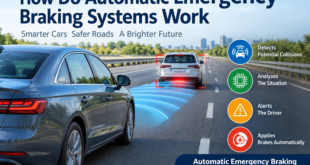
When I think about modern car safety, one of the most useful technologies that comes to mind is Forward Collision Warning. Many drivers have heard this term, but they may not know exactly what it means or how it works. In simple words, Forward Collision Warning is a vehicle safety system that monitors the road ahead and alerts the driver when it detects a possible collision with another vehicle or obstacle.
I believe this technology is especially helpful because even careful drivers can sometimes become distracted or fail to notice a vehicle slowing down ahead. A warning at the right moment can give the driver additional time to react.
In this article, I will explain what Forward Collision Warning is, how it works, what sensors it uses, its benefits and limitations, and how it differs from Automatic Emergency Braking.
What Is Forward Collision Warning?
Forward Collision Warning, commonly called FCW, is an advanced driver assistance system designed to warn drivers about a potential collision ahead.
The system continuously monitors the area in front of the vehicle. If it detects that your car is approaching another vehicle or certain obstacles too quickly, it can provide a warning.
The warning may appear as a message on the dashboard, a visual symbol, an audible alert, a vibration, or a combination of these methods.
The main purpose of Forward Collision Warning is not to control the vehicle. Instead, it is designed to make the driver aware of a dangerous situation so the driver can take action.
For example, imagine you are driving on a highway and traffic suddenly slows down. If you do not notice the vehicle ahead immediately, the Forward Collision Warning system may detect the closing distance and alert you.
How Does Forward Collision Warning Work?
Forward Collision Warning works by using sensors to observe the road ahead. Depending on the vehicle, these sensors may include cameras, radar sensors, or a combination of both.
The system collects information about objects in front of the car and estimates their position, movement, and distance.
The vehicle’s computer then analyzes this information. If the system determines that a collision could occur, it calculates whether the situation is serious enough to warn the driver.
This process happens very quickly.
For example, if a vehicle ahead is traveling at a similar speed, the system may not issue a warning. However, if that vehicle suddenly slows down while your car continues moving quickly toward it, the system can recognize the increasing risk.
The exact operation varies between manufacturers and vehicle models, but the basic idea remains the same.
Sensors Used in Forward Collision Warning
Different vehicles use different technologies for Forward Collision Warning. The most common systems rely on cameras and radar.
Camera Based Systems
A camera can be mounted near the windshield, usually around the rearview mirror area. It looks at the road ahead and helps identify vehicles, pedestrians, lane markings, and other objects.
Camera based systems can provide detailed visual information, which can be useful for recognizing different types of objects.
However, cameras can be affected by poor visibility. Heavy rain, fog, snow, dirt, glare, or a blocked windshield area may reduce their ability to detect objects.
Radar Based Systems
Radar sensors use radio waves to detect objects and estimate their distance and movement.
One advantage of radar is that it can work in conditions where visibility is not perfect. It can measure how far an object is from the vehicle and how quickly the distance is changing.
Some modern vehicles combine radar and camera information. This approach can provide the vehicle with a more complete understanding of the road ahead.
What Does Forward Collision Warning Detect?
The exact detection abilities depend on the vehicle and its manufacturer.
In many modern vehicles, Forward Collision Warning can detect cars and other vehicles traveling or stopped ahead.
Some advanced systems can also recognize pedestrians, cyclists, motorcycles, and other objects.
However, drivers should not assume that every Forward Collision Warning system can detect every possible obstacle.
This is an important point in my opinion. Drivers should always read the vehicle owner’s manual to understand exactly what their particular system is designed to recognize.
How Does the Warning Appear?
Forward Collision Warning can alert the driver in several ways.
A visual warning may appear on the instrument cluster or head up display. Some vehicles display a red vehicle symbol or another warning message.
An audible warning may also sound inside the cabin. In some vehicles, the driver’s seat or steering wheel may vibrate to attract attention.
Manufacturers use different warning designs, so the experience can vary from one vehicle to another.
The goal is simple. The driver should immediately understand that something ahead requires attention.
Forward Collision Warning vs Automatic Emergency Braking
One common question is the difference between Forward Collision Warning and Automatic Emergency Braking.
Although these systems are related, they do different jobs.
Forward Collision Warning primarily warns the driver about a potential collision.
Automatic Emergency Braking, often called AEB, can go a step further. If the system determines that a collision is likely and the driver has not reacted sufficiently, it may automatically apply the brakes.
I think the easiest way to remember the difference is this:
Forward Collision Warning tells you to react.
Automatic Emergency Braking can react by braking for you.
Some vehicles offer both systems as part of a broader safety package.
Benefits of Forward Collision Warning
There are several reasons why I consider Forward Collision Warning a useful safety feature.
It Can Reduce Driver Reaction Time
Human reaction time is limited. Even when we are paying attention, it takes a moment to recognize danger and respond.
An early warning can bring the driver’s attention back to the road.
It Can Help During Traffic
Stop and go traffic can become tiring, especially during long drives. A driver may briefly lose concentration.
If traffic suddenly slows, Forward Collision Warning can provide an additional alert.
It Can Help Prevent Some Rear End Collisions
Rear end collisions can happen when a driver fails to notice that the vehicle ahead has stopped or slowed down.
Forward Collision Warning is designed to address this type of situation by monitoring the road ahead.
It Provides an Extra Layer of Safety
I would not consider FCW a replacement for responsible driving. Instead, I see it as another safety layer.
Seat belts, proper following distance, attentive driving, good tires, and functioning brakes are still extremely important.
Limitations of Forward Collision Warning
Despite its benefits, Forward Collision Warning is not perfect.
The system depends on sensors and software. If the sensors cannot correctly identify an object or the road conditions are difficult, the system may not work as expected.
Heavy rain, fog, snow, dust, dirt, direct sunlight, and sensor blockage can affect performance.
The system may also have difficulty with unusual objects or situations that were not designed into its detection capabilities.
Another issue is false warnings. Sometimes the system may detect a situation as potentially dangerous even though the driver believes there is no real risk.
This can happen because the system is designed to be cautious.
Drivers should never ignore repeated warnings simply because they have experienced unnecessary alerts before.
Can Forward Collision Warning Stop the Car?
Generally, Forward Collision Warning itself does not stop the vehicle.
Its main purpose is to alert the driver.
If a vehicle also has Automatic Emergency Braking, that separate system may apply the brakes when certain conditions are met.
This distinction is important because some drivers may assume that their car will automatically prevent every collision. That is not how these systems should be understood.
The driver remains responsible for controlling the vehicle.
Why Driver Attention Still Matters
Advanced safety technology can be extremely helpful, but I believe drivers should never become overly dependent on it.
Forward Collision Warning is designed to assist the driver, not replace the driver.
You should still watch the road, maintain a safe following distance, obey speed limits, and remain prepared to brake or steer when necessary.
Technology can make driving safer, but good driving habits remain the foundation of road safety.
What Happens When the System Is Not Available?
Sometimes Forward Collision Warning may temporarily become unavailable.
This can happen when a camera or radar sensor is blocked or when environmental conditions make detection difficult.
For example, snow or mud covering a sensor can interfere with its operation.
Many vehicles display a message telling the driver that the system is unavailable or requires attention.
If this happens, I would recommend checking the owner’s manual and making sure the relevant sensor areas are clean. If the warning continues under normal conditions, professional inspection may be appropriate.
Does Every Modern Car Have Forward Collision Warning?
No, Forward Collision Warning is not available on every vehicle.
Its availability depends on the vehicle’s model, year, trim level, market, and safety package.
Many newer vehicles include advanced driver assistance systems, but the exact features can vary significantly.
When buying a car, I recommend checking the manufacturer’s specifications rather than assuming that a vehicle has FCW simply because it is a newer model.
Is Forward Collision Warning Worth Having?
In my view, Forward Collision Warning is a valuable safety feature, especially for drivers who frequently travel on busy roads and highways.
It does not make a vehicle completely safe, but it can provide an additional warning when a driver may not immediately recognize a developing hazard.
The biggest advantage is the extra awareness it can provide.
A warning that arrives even a short time before a possible collision may give the driver an opportunity to brake, slow down, or change direction.
Final Thoughts
Forward Collision Warning is an important part of modern vehicle safety technology. It uses cameras, radar, or both to monitor the road ahead and identify situations where a collision may be possible.
The system can warn drivers through visual, audible, or physical alerts. Some vehicles combine FCW with Automatic Emergency Braking, creating a more comprehensive collision avoidance system.
From my perspective, the most important thing to understand is that Forward Collision Warning is an assistance system, not a substitute for attentive driving.
Drivers should continue watching the road, maintaining a safe distance, and staying prepared to respond to unexpected situations.
As automotive technology continues to improve, systems such as Forward Collision Warning are becoming an increasingly common part of vehicle safety. Used correctly, they can provide drivers with another valuable layer of protection and help make everyday driving safer.