Related Articles
Modern cars are becoming smarter every year. When I look at the latest vehicle safety technology, one feature that I find particularly useful is driver attention monitoring. Unlike systems that only watch the road or control the vehicle, driver attention monitoring focuses on the person behind the steering wheel.
A driver may be physically present in the car but still not be paying enough attention to the road. Fatigue, distraction, long journeys, mobile phone use, stress, or simple lack of concentration can affect driving performance. Driver attention monitoring is designed to recognize signs that the driver may not be fully focused and provide a warning when necessary.
In this article, I will explain what driver attention monitoring is, how it works, what technology it uses, its benefits, its limitations, and why I believe it is becoming an important part of modern car safety systems.
What Is Driver Attention Monitoring?
Driver attention monitoring is a vehicle safety system that observes the driver’s behavior and looks for signs of reduced attention, distraction, or fatigue.
The system can use different types of information to understand whether the driver is focused on driving. Depending on the vehicle, it may monitor steering behavior, driving patterns, eye movement, head position, facial activity, and other signals.
The main purpose is simple. If the vehicle believes that the driver is becoming distracted or tired, it can provide an alert asking the driver to pay attention or take a break.
I think of it as an additional safety assistant rather than a replacement for the driver. The system does not mean that a driver can stop paying attention. Instead, it is designed to provide another layer of protection when human attention starts to decrease.
Why Is Driver Attention Important?
Driving requires continuous attention. Even when a road looks empty, conditions can change within seconds.
A tired driver may react more slowly to a vehicle braking ahead. A distracted driver may fail to notice a pedestrian, traffic signal, motorcycle, or road hazard. On long journeys, concentration can gradually decrease without the driver realizing it.
This is one reason driver attention monitoring has become increasingly important.
From my point of view, one of the biggest advantages of this technology is that it can identify changes in driving behavior before the situation becomes dangerous. A driver may think they are fine, but repeated lane movement, unusual steering corrections, or signs of tiredness may tell a different story.
How Does Driver Attention Monitoring Work?
The exact operation depends on the vehicle and manufacturer, but most systems follow a similar process.
First, the vehicle collects information about the driver and the way the car is being driven. Sensors and cameras may observe different aspects of driving.
The system then analyzes this information using software and algorithms. It looks for patterns that could indicate distraction or fatigue.
For example, the system may notice that the driver is frequently looking away from the road. It may also detect unusual steering behavior or repeated changes in lane position.
If the system decides that the driver’s attention has dropped below a certain level, it can provide a warning through the dashboard, instrument display, sound system, steering wheel, or another alert method.
Some advanced vehicles may provide increasingly noticeable warnings if the driver does not respond.
Cameras and Driver Monitoring
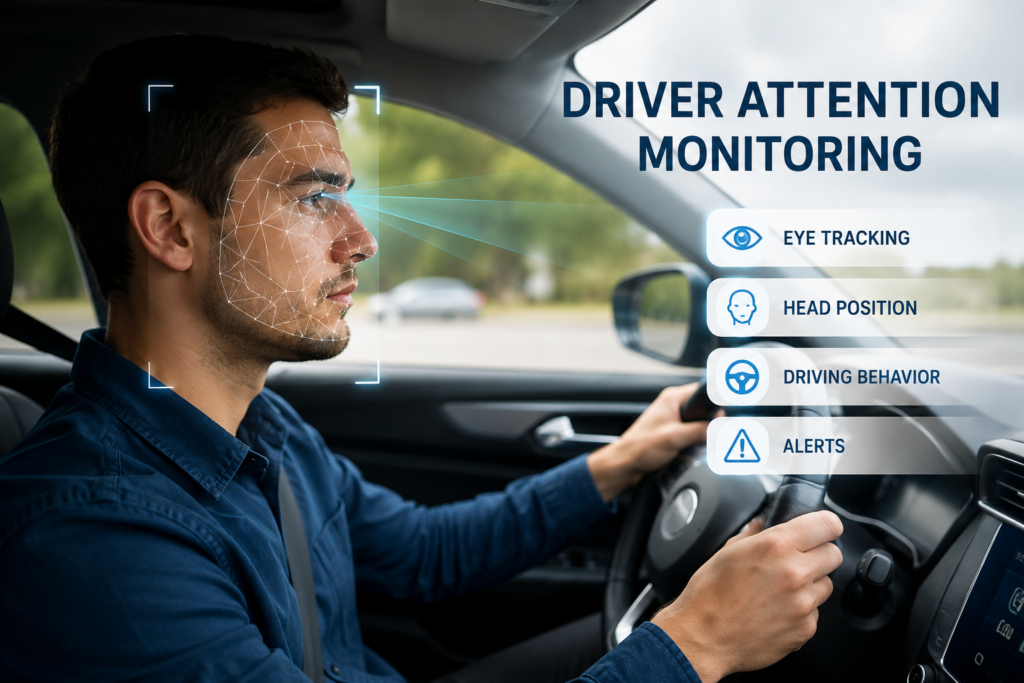
Many modern driver attention monitoring systems use an interior camera.
The camera is usually positioned somewhere around the steering column, dashboard, or instrument panel. Its purpose is to observe the driver’s face and head position.
The system can analyze where the driver is looking and whether their eyes appear to be open or closed. It may also monitor how frequently the driver looks away from the road.
This technology can be especially useful for identifying distraction.
For example, if a driver spends too much time looking toward a mobile phone or another area of the cabin, the system may determine that the driver is not paying sufficient attention.
Modern cameras can work with advanced image processing software to recognize facial features and estimate the driver’s direction of attention.
Eye Tracking Technology
Eye tracking is another important part of some driver monitoring systems.
The system can estimate where the driver’s eyes are directed. If the driver’s gaze remains away from the road for too long, an alert may be generated.
Eye tracking can also help identify signs of fatigue. Frequent blinking, prolonged eye closure, or changes in gaze behavior can sometimes indicate that a driver is becoming tired.
However, I would not consider eye tracking perfect. Sunglasses, poor lighting, unusual seating positions, or other conditions can affect how accurately the system reads the driver’s eyes.
This is why manufacturers often combine several sources of information instead of depending on one measurement alone.
Steering Behavior and Driving Patterns
Not every driver attention monitoring system depends on an interior camera.
Some systems estimate driver attention by studying how the vehicle is being controlled.
Steering behavior is particularly useful. A tired or distracted driver may make frequent small steering corrections or show unusual changes in steering input.
The vehicle can compare current driving behavior with expected patterns. If the system identifies behavior associated with reduced attention, it may issue a warning.
This approach can be useful because it does not require the system to understand exactly where the driver’s eyes are looking.
Signs of Driver Fatigue
Driver fatigue is one of the major problems that attention monitoring systems are designed to address.
Fatigue can develop gradually. A person may start a journey feeling completely alert and become tired after several hours of driving.
Some common signs include frequent blinking, heavy eyelids, reduced head movement, delayed reactions, inconsistent steering, and difficulty maintaining a steady position on the road.
A driver attention monitoring system can look for some of these patterns and warn the driver when the system believes that a break may be necessary.
The warning might appear as a message suggesting that the driver take a rest. Some vehicles may also display a coffee cup or similar symbol on the dashboard.
Driver Attention Monitoring vs Driver Drowsiness Monitoring
These terms are sometimes used together, but they can describe slightly different functions.
Driver drowsiness monitoring mainly focuses on signs that the driver may be becoming sleepy or fatigued.
Driver attention monitoring can have a broader purpose. It may consider fatigue as well as distraction and whether the driver is actually looking toward the road.
For example, a driver who is awake but repeatedly looking at a mobile phone may not be drowsy, but they are still distracted.
A more advanced driver monitoring system can potentially address both situations.
Benefits of Driver Attention Monitoring
There are several reasons why I think driver attention monitoring can be valuable.
Helps Reduce Distraction
One of the biggest benefits is its ability to warn drivers when their attention moves away from driving.
A timely warning may encourage the driver to look back at the road before a dangerous situation develops.
Helps Identify Fatigue
Long distance driving can be exhausting. Driver attention monitoring can recognize certain signs associated with tiredness and encourage the driver to take a break.
Adds Another Safety Layer
No safety system can replace responsible driving. However, combining driver attention monitoring with features such as lane departure warning, automatic emergency braking, and adaptive cruise control can create a more comprehensive safety environment.
Supports Safer Long Distance Driving
For people who regularly travel long distances, fatigue can become a serious issue. An attention monitoring system can act as an additional reminder that concentration needs to remain high throughout the journey.
Limitations of Driver Attention Monitoring
Although the technology is useful, it is not perfect.
The biggest limitation is that the system can sometimes misunderstand the driver’s behavior.
For example, a driver may look away from the road briefly to check a mirror, dashboard display, or side traffic. The system needs to distinguish between normal driving behavior and genuine distraction.
Camera based systems can also face challenges caused by sunglasses, darkness, reflections, unusual seating positions, or objects blocking the driver’s face.
Another important point is that drivers should never depend completely on this technology. A warning system may fail to recognize a problem, or it may react later than expected.
The responsibility for safe driving always remains with the person behind the wheel.
Does Driver Attention Monitoring Record the Driver?
This is a question many people may have when they learn about interior driver cameras.
The answer depends on the specific vehicle and system design.
Some systems process information locally within the vehicle without needing to store or transmit video. Other systems may have different data handling practices.
Because privacy policies can vary, I believe it is important for car owners to check the vehicle manufacturer’s information about camera use, data processing, storage, and privacy.
Understanding how the system works can make drivers more comfortable with the technology.
Driver Attention Monitoring and Other Safety Features
Driver attention monitoring works particularly well when combined with other advanced driver assistance features.
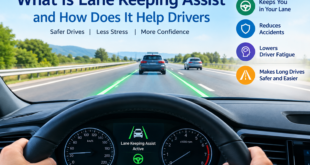
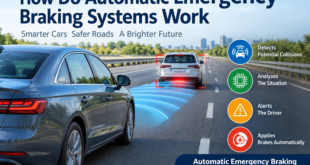
For example, lane keeping assistance can help when the vehicle begins moving away from its lane. Automatic emergency braking can help reduce the severity of some potential collisions. Adaptive cruise control can help maintain speed and distance from vehicles ahead.
Driver attention monitoring adds another dimension because it focuses on the human driver.
In my opinion, this combination represents an important direction for automotive safety. Modern vehicles are not only becoming better at understanding the road but are also becoming better at understanding the driver’s condition.
Is Driver Attention Monitoring Worth Having?
I believe driver attention monitoring is a useful feature, especially for people who frequently drive long distances or spend many hours behind the wheel.
It should not be treated as a guarantee of safety. Instead, I see it as an extra safety assistant that can provide a useful reminder at the right moment.
The best approach is still to remain focused, avoid using a mobile phone while driving, get enough rest before a long journey, and take regular breaks when necessary.
Technology can support good driving habits, but it cannot replace them.
The Future of Driver Attention Monitoring
I expect driver attention monitoring to become more advanced as vehicle technology continues to develop.
Future systems may combine cameras, artificial intelligence, vehicle sensors, steering information, and other data to understand driver behavior more accurately.
The system may also become better at distinguishing normal actions from genuine distraction. Instead of simply producing a warning, future vehicles could potentially adjust other safety systems according to the driver’s condition.
However, privacy will remain an important consideration. As cars collect more information about drivers, manufacturers will need to make data handling clear and transparent.
Final Thoughts
Driver attention monitoring is an important modern car safety technology designed to help identify reduced driver attention, distraction, and fatigue.
It can use cameras, eye tracking, steering behavior, and other vehicle information to understand whether the driver appears to be paying attention. When the system detects a potential problem, it can provide an alert and encourage the driver to refocus or take a break.
From my perspective, the real value of driver attention monitoring is not that it makes driving completely safe. No technology can do that. Its value comes from providing an additional layer of assistance when human attention begins to decline.
As vehicles become more intelligent, I believe systems that monitor both the road and the driver will play an increasingly important role in improving road safety. Still, the most important safety feature remains an alert, responsible, and attentive driver.