
Related Articles



When I think about the important parts inside a car engine, I usually focus on components such as the engine oil, battery, alternator, belts, and sensors. However, there is another simple looking component that plays an important role in keeping several systems working together. This component is the engine pulley.
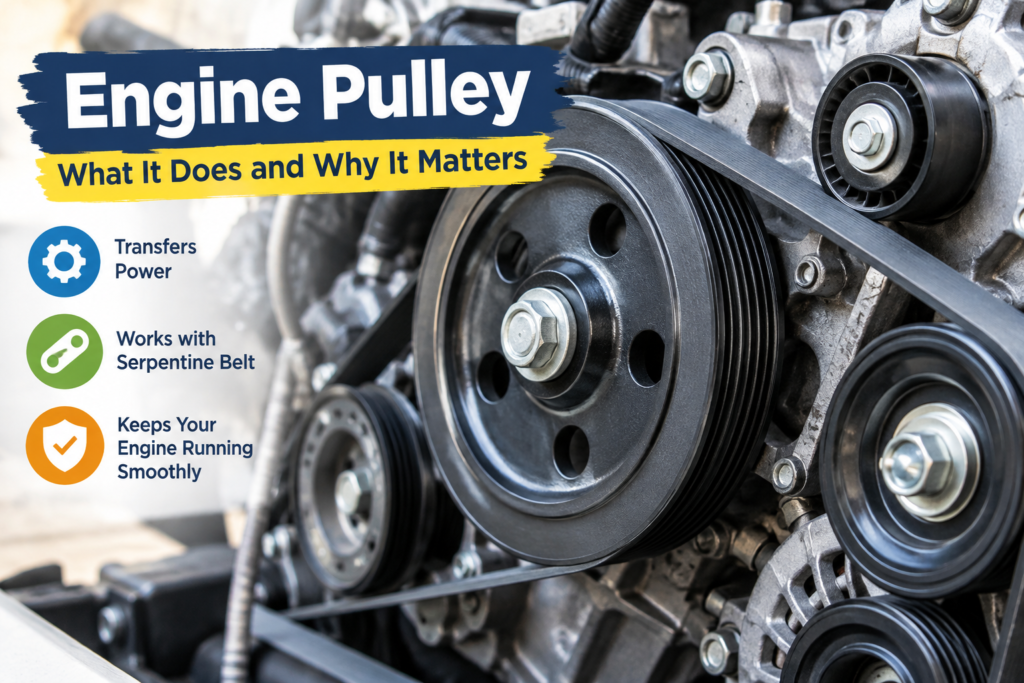
An engine pulley may look like nothing more than a metal or plastic wheel, but it is an important part of the belt drive system. It helps transfer rotational power from the engine to different accessories. Depending on the vehicle, pulleys can work with the serpentine belt, timing system, alternator, water pump, air conditioning compressor, and other engine accessories.
In this article, I will explain what an engine pulley is, how an engine pulley works, the different types of pulleys, common problems, warning signs, and basic maintenance tips. If you are learning about car parts or want to understand your vehicle better, this guide should give you a useful starting point.
What Is an Engine Pulley?
An engine pulley is a wheel that rotates with a belt to transfer or control mechanical power. Most engine pulleys have a grooved surface that allows a belt to grip the pulley while the engine is running.
The pulley itself does not normally create power. Instead, it helps move power from one rotating component to another. The engine produces rotational movement, and the belt and pulley system uses that movement to operate various accessories.
Modern vehicles can have several pulleys around the front of the engine. Each pulley may have a different purpose depending on its location and design.
When I look at an engine pulley system, I see it as a simple way of connecting several components. One rotating component can help drive multiple accessories through a single belt system.
How Does an Engine Pulley Work?
The basic operation of an engine pulley is quite simple. The engine turns a pulley, and the pulley moves the belt. The belt then transfers rotational movement to other pulleys connected to different accessories.
For example, the crankshaft can turn the crankshaft pulley. The serpentine belt then moves around several pulleys. As the belt rotates, it can drive components such as the alternator and air conditioning compressor.
The exact arrangement depends on the vehicle. Some engines use separate belts for different accessories, while many modern engines use a serpentine belt that travels around multiple pulleys.
The pulley needs to rotate smoothly and remain correctly aligned with the belt. If a pulley becomes damaged, loose, or misaligned, the belt may not operate properly.
Main Types of Engine Pulleys
There are several types of pulleys used around an engine. Understanding their differences can make engine maintenance easier.
Crankshaft Pulley
The crankshaft pulley is one of the most important pulleys in the engine belt system. It is connected to the crankshaft and rotates as the engine runs.
The crankshaft pulley can transfer engine rotation to the serpentine belt or other belts. In many vehicles, it also includes a harmonic balancer that helps reduce certain engine vibrations.
Because the crankshaft pulley works whenever the engine is running, it experiences continuous movement and can eventually show signs of wear.
Idler Pulley
An idler pulley does not usually drive an accessory. Instead, it helps guide the belt and maintain the correct belt path.
An idler pulley also helps keep the belt positioned correctly. Its bearing needs to rotate smoothly because excessive resistance or damage can affect the belt system.
Tensioner Pulley
A tensioner pulley is part of the belt tensioning system. Its job is to help maintain the correct amount of tension on the belt.
Correct belt tension is important. If the belt is too loose, it may slip or make noise. If it is too tight, it can put unnecessary stress on bearings and accessories.
Accessory Pulley
Some engine accessories have their own pulleys. The alternator, water pump, power steering pump, and air conditioning compressor can have pulleys depending on the vehicle design.
Each accessory pulley works with the belt system to convert engine rotation into useful mechanical movement.
Why Is the Engine Pulley Important?
The engine pulley is important because it helps keep the accessory drive system working. A modern vehicle depends on several engine accessories, and many of them receive power through belts and pulleys.
For example, the alternator needs to rotate to generate electrical power. The air conditioning compressor needs mechanical power to operate the air conditioning system. Some water pumps are also belt driven.
If the pulley system stops working correctly, these accessories may not operate as intended.
This is why I would not ignore unusual sounds coming from the belt and pulley area. A small pulley problem can sometimes lead to a larger belt problem if it is not addressed.
Common Engine Pulley Problems
Like many mechanical components, engine pulleys can wear out over time. Their condition depends on the vehicle, driving conditions, mileage, and maintenance.
One common issue is bearing wear. Many pulleys use bearings to allow smooth rotation. When a bearing becomes worn, the pulley may produce a whining, grinding, or squealing sound.
Another problem is pulley misalignment. If a pulley is not sitting in the correct position, the belt may move unevenly across its surface.
A damaged pulley can also develop cracks, excessive play, or rough movement.
In some cases, the pulley may appear normal when the engine is switched off but produce noise or vibration when the engine is running.
Signs of a Bad Engine Pulley
There are several signs that may indicate a pulley needs inspection.
Unusual Noise
A squealing, grinding, chirping, or whining noise from the front of the engine can sometimes be related to the belt and pulley system.
Noise alone does not confirm that the pulley is bad because belts and other accessories can create similar sounds. However, unusual noise is a good reason to inspect the system.
Belt Wear
Look at the serpentine belt if it is accessible and safe to inspect. Cracks, fraying, glazing, or unusual wear can indicate a problem.
A damaged pulley can cause the belt to wear unevenly.
Belt Movement Problems
If the belt appears to wobble, move sideways, or jump from its normal path, the pulley system should be checked.
A belt that does not remain properly positioned can eventually become damaged.
Vibration
Excessive vibration around the pulley area may indicate a problem with a pulley, bearing, belt, tensioner, or another rotating component.
It is better to investigate the source rather than assume the pulley is automatically responsible.
Burning Rubber Smell
A slipping belt can generate heat and produce a noticeable rubber smell. A pulley that is not rotating properly can contribute to belt slipping.
If you notice this smell together with belt noise, the vehicle should be inspected as soon as possible.
How to Inspect an Engine Pulley
A basic visual inspection can help identify obvious problems, but safety should always come first.
With the engine switched off and cool, inspect the visible belt and pulley area. Look for damaged belts, cracks, missing material, unusual belt wear, or signs of contamination.
Do not place your hands near moving belts or pulleys while the engine is running.
A trained technician can inspect pulley bearings, alignment, tension, and rotation more thoroughly. Some problems require specialized tools and should not be diagnosed by simply touching the pulley.
Can You Drive With a Bad Engine Pulley?
It depends on the condition of the pulley and the vehicle. A pulley that is making unusual noise may continue working for some time, but there is no reliable way to predict how long it will last.
If a pulley fails completely, the belt can come off or break. Depending on the belt system, this could stop important accessories from operating.
For example, a belt problem can affect the alternator and may eventually leave the vehicle without enough electrical power. In some vehicles, a belt failure can also affect engine cooling if the water pump is belt driven.
Because the consequences can be serious, I would treat a suspected pulley problem as something worth checking rather than continuing to drive until it fails.
Engine Pulley Maintenance Tips
Good maintenance can help extend the life of the belt and pulley system.
First, inspect the serpentine belt according to the vehicle manufacturer’s maintenance recommendations. A belt in poor condition should not be ignored.
Second, pay attention to new noises. If the engine suddenly develops a squealing or grinding sound, find the cause instead of covering it up with other maintenance.
Third, keep an eye on oil and coolant leaks. Fluid contamination can affect belts and some pulley components.
Finally, when replacing a worn belt, it is sensible to have the related pulleys and tensioner inspected. Installing a new belt while leaving a severely worn pulley can result in another problem later.
Engine Pulley vs Crankshaft Pulley
The terms engine pulley and crankshaft pulley are sometimes used interchangeably, but they are not always exactly the same.
Engine pulley is a general term that can describe several pulleys located around the engine. The crankshaft pulley specifically refers to the pulley attached to the crankshaft.
The crankshaft pulley is usually a major part of the belt drive system because it receives rotational movement directly from the engine’s crankshaft.
Understanding this difference can make it easier to discuss repairs with a mechanic or search for the correct replacement part.
Choosing a Replacement Engine Pulley
If an engine pulley needs replacement, I recommend using the vehicle’s exact specifications rather than choosing a pulley based only on appearance.
The correct pulley needs to match the vehicle’s engine and belt system. Important details can include the engine model, vehicle year, pulley design, dimensions, groove configuration, and mounting arrangement.
A wrong pulley can create alignment or belt routing problems.
For this reason, checking the vehicle’s owner’s manual, parts information, or manufacturer specifications is a good idea before buying a replacement.
Final Thoughts
An engine pulley is a small component, but it has an important job in the vehicle’s belt drive system. It helps transfer engine rotation, guide the belt, maintain belt tension, and operate different accessories.
From the crankshaft pulley to idler and tensioner pulleys, each part needs to work correctly for the belt system to operate smoothly. Problems such as unusual noise, belt wear, vibration, or poor belt alignment should be investigated rather than ignored.
In my view, understanding simple parts like engine pulleys makes basic car maintenance much easier. You do not need to be a professional mechanic to recognize warning signs. Learning what these components do can help you notice problems earlier and communicate more clearly when professional service is needed.
The next time you open your hood and see the belt running around several wheels, remember that those pulleys are doing important work every time your engine is running.