Related Articles
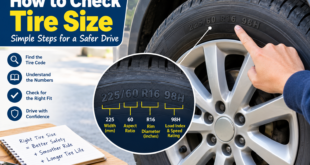
When I first started learning more about car maintenance, tire markings looked like a confusing combination of numbers and letters. You may have seen something like 225/60 R16 98H written on the sidewall of a tire and wondered what all those numbers actually mean. The good thing is that reading tire size is much easier once you understand what each part represents.
In my view, every car owner should know how to read tire size. It can help when buying new tires, checking whether the current tires match the vehicle, comparing different options, or simply understanding the information printed on the tire sidewall.
In this guide, I will explain how to read tire size step by step in simple language. I will also explain tire width, aspect ratio, construction type, rim diameter, load index, and speed rating so you can understand the complete tire size marking.
What Does Tire Size Mean?
A tire size tells you important information about the physical dimensions and capabilities of a tire. The information is normally printed on the tire sidewall.
For example, you might see:
225/60 R16 98H
This marking can be divided into several parts:
225 means tire width in millimeters.
60 means aspect ratio.
R means radial construction.
16 means the wheel rim diameter in inches.
98 is the load index.
H is the speed rating.
Once you understand these six parts, reading most modern passenger car tire sizes becomes much easier.
Step 1: Understand the Tire Width
The first number in a tire size is usually the tire width.
In our example, the first number is 225.
This means the tire has a nominal width of approximately 225 millimeters from sidewall to sidewall when properly mounted and measured according to the tire manufacturer’s specifications.
Tire width can affect several characteristics of your vehicle. A wider tire may provide a different feel during cornering and braking, while a narrower tire can have different handling and road characteristics.
However, I would not recommend choosing a tire simply because it looks wider or more attractive. The correct tire width should match the specifications approved for your vehicle.
When replacing tires, I always think it is better to check the vehicle manufacturer’s recommended tire size before making a decision.
Step 2: Understand the Aspect Ratio
The second number is the aspect ratio.
In 225/60 R16, the number is 60.
The aspect ratio represents the height of the tire sidewall as a percentage of the tire’s width.
So, an aspect ratio of 60 means the sidewall height is approximately 60 percent of the tire’s width.
For a 225 millimeter wide tire:
225 × 0.60 = 135 millimeters
This gives an approximate sidewall height of 135 millimeters.
A lower aspect ratio generally means a shorter sidewall, while a higher aspect ratio means a taller sidewall.
For example, a tire marked 225/50 R16 has a lower aspect ratio than a 225/60 R16 tire. The two tires can therefore have noticeably different sidewall heights even though their width is the same.
The aspect ratio can affect handling, ride comfort, and the overall appearance of the vehicle. This is why changing it without understanding the consequences is not something I would recommend.
Step 3: Understand the Letter R
After the aspect ratio, you may see the letter R.
In 225/60 R16, the R stands for radial construction.
Radial tires are the most common type of tire used on modern passenger vehicles. Their internal construction uses cords arranged in a radial direction across the tire.
You may occasionally see other construction markings on specialized tires, but R is extremely common on everyday passenger cars.
When reading tire size, the R does not represent the rim size. It tells you about the tire’s construction.
This is an important detail because beginners sometimes read the entire marking as one number. Instead, each part has a specific meaning.
Step 4: Understand the Rim Diameter
The number after R tells you the diameter of the wheel rim that the tire is designed to fit.
In our example, 16 means the tire fits a 16 inch rim.
This measurement is in inches rather than millimeters.
This is one of the easiest parts of tire size to understand. If your tire says R16, it is designed for a 16 inch diameter wheel.
A tire designed for a 17 inch wheel cannot simply be installed on a 16 inch wheel. The tire and wheel sizes must match correctly.
When buying tires, checking this number is especially important because installing the wrong tire diameter is not a simple sizing mistake. The tire must physically match the wheel.
Step 5: Understand the Load Index
After the rim diameter, you may see another number.
In our example, that number is 98.
This is called the load index.
The load index represents the maximum load the tire is designed to carry under specified conditions. It is not simply the number of pounds or kilograms that the tire can carry. Instead, it refers to a standardized load rating table.
For example, a load index of 98 corresponds to a maximum load capacity of approximately 750 kilograms, or 1,653 pounds, per tire, under the applicable rating conditions.
This information is important because a vehicle carries passengers, luggage, fuel, and other weight.
When replacing tires, I would always make sure the replacement tire meets the vehicle manufacturer’s required load rating. Choosing a tire with an insufficient load rating can create safety concerns.
Step 6: Understand the Speed Rating
The final letter in our example is H.
This is the tire’s speed rating.
A speed rating indicates the maximum speed capability of a tire under specified test conditions.
For example, an H rated tire is commonly associated with a maximum speed of 130 mph, or approximately 210 km/h, under the relevant testing conditions.
Other letters represent different speed ratings.
It is important to understand that the speed rating is not a recommendation to drive at that speed. It describes the tire’s tested capability under specified conditions.
Actual safe driving speed depends on road conditions, weather, vehicle condition, traffic, tire condition, and many other factors.
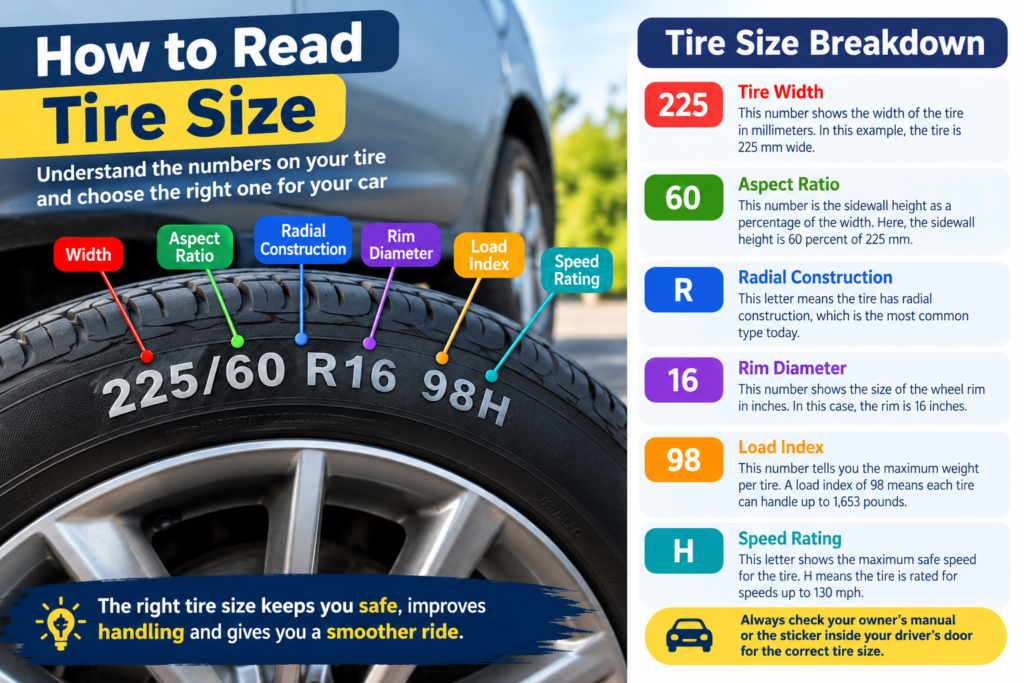
A Complete Example of Reading Tire Size
Let’s put everything together.
Suppose your tire says:
225/60 R16 98H
Here is how I would read it:
225 = approximately 225 millimeters tire width.
60 = sidewall height is approximately 60 percent of tire width.
R = radial construction.
16 = designed for a 16 inch wheel rim.
98 = load index.
H = speed rating.
Once you break the marking into these individual parts, it becomes much less complicated.
Where Can You Find Your Correct Tire Size?
The tire sidewall is one obvious place to find the current tire size, but I would not rely only on the tire that is currently installed.
The vehicle manufacturer normally provides recommended tire information in places such as the driver’s door jamb, door pillar, fuel door area on some vehicles, or the owner’s manual.
The information on the vehicle’s tire information label can be especially useful because it may also show recommended tire pressure and other specifications.
If you are replacing tires, compare the information from the vehicle manufacturer with the information on your current tires.
Why You Should Not Guess Your Tire Size
It can be tempting to look at a tire and buy another tire that appears to have similar dimensions. I would avoid doing this.
Even a small difference in tire size can affect the overall diameter, speedometer readings, ground clearance, handling, and other characteristics.
Changing tire size can sometimes be appropriate when done according to the vehicle manufacturer’s specifications or with professional guidance. However, randomly selecting a different size simply because it is cheaper or looks better can create problems.
The safest approach is to confirm the recommended tire size before purchasing replacement tires.
Tire Size and Tire Pressure Are Different
One common mistake I see is confusing tire size with tire pressure.
They are completely different things.
Tire size describes the dimensions and ratings of the tire.
Tire pressure describes how much air pressure should be maintained inside the tire.
For example, 225/60 R16 is a tire size. A pressure such as 32 PSI is an air pressure measurement.
The recommended tire pressure is normally found on the vehicle information label or in the owner’s manual. It is not necessarily the maximum pressure printed on the tire sidewall.
What About XL and Other Markings?
Sometimes you will see additional letters or markings near the tire size.
For example, XL can indicate an extra load tire. You may also see markings related to temporary use, original equipment fitment, winter performance, or other tire characteristics.
These markings are separate from the basic tire size.
This is another reason I recommend looking at the entire tire sidewall rather than focusing only on the first few numbers.
How to Check a Tire Before Buying
Before purchasing a new set of tires, I would check several things.
First, confirm the tire size recommended for your vehicle.
Second, check the load index.
Third, check the speed rating.
Fourth, make sure the tire is suitable for your driving conditions and climate.
Finally, compare the information with the tire information label on your vehicle.
If you are unsure about compatibility, asking a qualified tire professional is a sensible step.
Final Thoughts
Learning how to read tire size is one of those simple car maintenance skills that can save you from making an expensive mistake. A marking such as 225/60 R16 98H may look complicated at first, but every number and letter has a purpose.
The first number tells you the tire width. The second number gives the aspect ratio. The R identifies radial construction. The number after R tells you the wheel diameter. The following number is the load index, and the final letter represents the speed rating.
In my opinion, understanding these markings makes shopping for tires much less confusing. More importantly, it helps you compare the tire on your vehicle with the specifications recommended by the manufacturer.
Before buying replacement tires, always confirm the correct size and required ratings using your vehicle’s tire information label or owner’s manual. If you are considering a different tire size, it is also a good idea to get professional advice before making the change.