Related Articles
When I look at the tires on a car, I believe they can tell us a lot about how the vehicle is being driven and maintained. Tires do not always wear out evenly, and uneven tire wear is something that should never be ignored. If one part of a tire is wearing faster than another, there is usually a reason behind it.
Uneven tire wear can reduce tire life, affect handling, lower fuel efficiency, and make driving less comfortable. In some situations, it can also create a safety concern because the tire may not maintain proper contact with the road.
The good news is that most causes of uneven tire wear can be prevented with regular maintenance. In this article, I will explain the most common causes of uneven tire wear, what different wear patterns can mean, and the simple steps I recommend to help your tires last longer.
What Is Uneven Tire Wear?
Uneven tire wear means that the tread on a tire is not wearing at the same rate across its surface. A healthy tire should generally wear relatively evenly from one side of the tread to the other.
For example, you might notice that the center of the tire has less tread than the edges. In another situation, the inside edge may look much more worn than the outside edge.
Sometimes the difference is easy to see, while other times you may only notice it by running your hand across the tread. If you feel raised or lowered sections, it can be a sign that the tire is not wearing normally.
In my opinion, checking tire condition regularly is one of the easiest ways to catch a vehicle problem before it becomes expensive.
Improper Tire Pressure
One of the most common causes of uneven tire wear is incorrect tire pressure. Both overinflation and underinflation can change how the tire touches the road.
When a tire is overinflated, the center portion of the tread can carry more of the load. This can cause the center of the tire to wear faster than the edges.
When a tire is underinflated, the outer portions of the tread may experience more pressure and wear faster. An underinflated tire can also create additional rolling resistance and heat.
I recommend checking tire pressure regularly, especially before long trips. Always use the pressure recommended by the vehicle manufacturer rather than simply using the maximum pressure printed on the tire.
The recommended pressure is usually listed on a label inside the driver’s door area or in the owner’s manual.
Wheel Alignment Problems
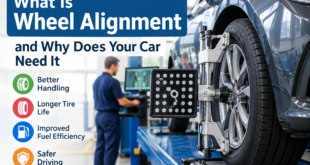
Wheel alignment is another major reason for uneven tire wear. Your vehicle’s wheels need to point in the correct direction and sit at the proper angles.
If the alignment is incorrect, a tire may be dragged slightly across the road instead of rolling smoothly. Over time, this can create noticeable wear on one side of the tread.
A vehicle with an alignment problem may also pull toward one side while driving. You might notice that the steering wheel is not centered when the car is traveling straight.
Hitting potholes, curbs, or other road obstacles can sometimes affect wheel alignment. This is why I think alignment should be checked whenever you notice unusual tire wear or steering behavior.
Worn Suspension Components
The suspension system plays an important role in keeping your tires in contact with the road. Components such as shocks, struts, bushings, and other suspension parts can wear over time.
When suspension components become worn, the tire may not stay firmly planted on the road surface. This can cause irregular tread patterns and faster tire wear.
A worn suspension can sometimes produce additional symptoms such as excessive bouncing, unusual noises, or poor handling.
Simply replacing the tires may not solve the problem if the underlying suspension issue remains. This is why I believe it is important to investigate the cause of unusual tire wear instead of treating only the visible symptom.
Unbalanced Wheels
Wheel imbalance can also contribute to uneven tire wear. When the weight of a wheel and tire assembly is not distributed correctly, the wheel can vibrate as it rotates.
You may notice this vibration more clearly at certain speeds. Continued vibration can contribute to irregular wear and can also make driving uncomfortable.
Wheel balancing is normally performed using specialized equipment. If you feel unusual vibration through the steering wheel or vehicle, it is worth having the wheels inspected by a qualified technician.
Tire Rotation
Another simple way to reduce uneven tire wear is regular tire rotation. The front and rear tires can experience different forces depending on the vehicle’s drivetrain, weight distribution, steering, and driving conditions.
For example, front tires often experience additional stress because they handle steering and, on many vehicles, braking and driving forces as well.
Rotating the tires according to the vehicle manufacturer’s recommended schedule can help distribute wear more evenly.
However, not every tire setup can be rotated in the same way. Directional tires, different front and rear tire sizes, and certain specialized setups may have specific rotation requirements. I recommend following the instructions provided for your vehicle and tires.
Aggressive Driving Habits
Driving style can have a noticeable effect on tire life. Hard acceleration, sudden braking, fast cornering, and frequent sharp turns can put additional stress on the tread.
Hard braking can cause sections of the tread to experience heavy friction, especially if the wheels lock or the vehicle’s braking system is not functioning correctly.
I personally think smooth driving is one of the easiest ways to protect tires. Accelerating gradually, braking smoothly, and taking corners at reasonable speeds can reduce unnecessary stress on the tires.
Smooth driving can also make the overall driving experience more comfortable.
Road Conditions
The roads we drive on also affect tire wear. Rough roads, potholes, gravel, damaged pavement, and uneven surfaces can place additional stress on tires and suspension components.
Regularly driving over potholes can affect wheel alignment or damage suspension parts. Even if the tire looks fine after hitting a pothole, an inspection may be worthwhile if you notice steering changes or vibration afterward.
I always believe that paying attention to how the vehicle feels after hitting a major road obstacle is better than ignoring a new problem.
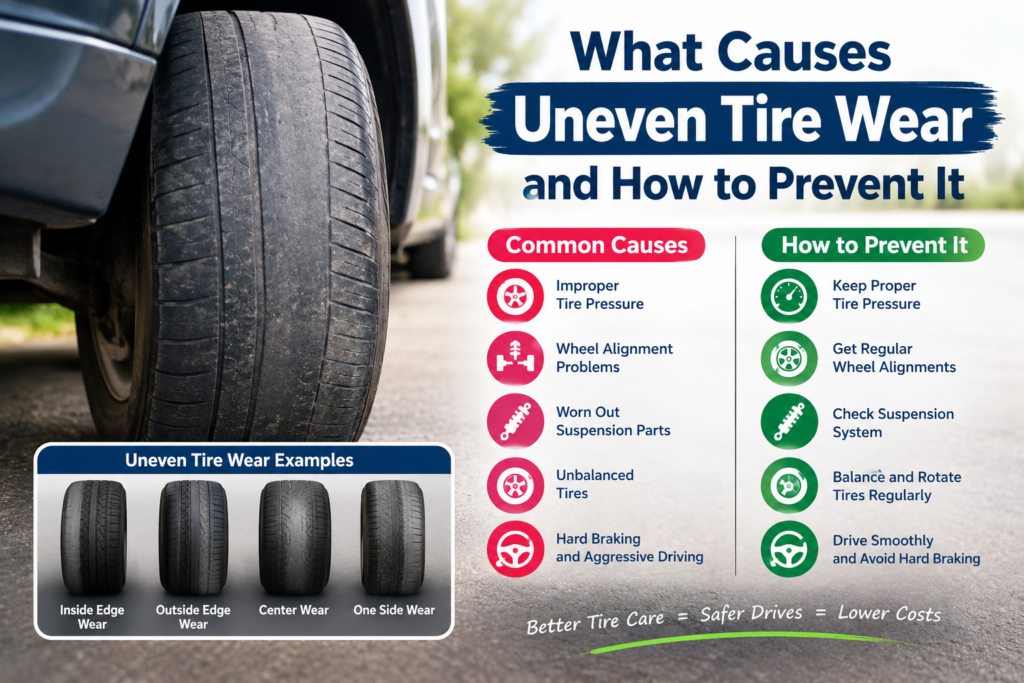
Different Types of Uneven Tire Wear
Understanding tire wear patterns can help you identify possible problems.
Center Tread Wear
If the center of the tire is wearing faster than the edges, overinflation may be one possible cause.
Checking the tire pressure with a reliable pressure gauge is a good first step. If the pressure is correct but the wear continues, the tire should be inspected for other possible causes.
Edge Wear
If both outer edges are wearing faster than the center, underinflation can be a possible reason.
However, it is important not to assume that tire pressure is always the only cause. Alignment, vehicle loading, and other mechanical factors can also influence tire wear.
One Side Wear
If the inside or outside edge of a tire is significantly more worn than the other side, wheel alignment may be involved.
This type of wear deserves attention because it can indicate that the wheel is not sitting at the correct angle.
Cupping or Scalloped Wear
Cupping creates a series of dips or uneven patches around the tread. Suspension problems, wheel imbalance, or other mechanical issues can contribute to this pattern.
If you notice this type of wear, I recommend having the vehicle inspected rather than simply replacing the tire.
How to Prevent Uneven Tire Wear
Preventing uneven tire wear does not always require complicated maintenance. A few regular habits can make a significant difference.
First, check tire pressure regularly. Tires naturally lose some air over time, and temperature changes can also affect pressure.
Second, rotate your tires according to the manufacturer’s recommended schedule.
Third, have the wheel alignment checked when necessary. If your car pulls to one side, the steering wheel is off center, or a tire develops one side wear, an alignment inspection can be useful.
Fourth, have the wheels balanced if you experience vibration or after certain tire services.
Fifth, inspect your suspension system when you notice unusual handling, noises, or irregular tire wear.
Finally, try to drive smoothly and avoid unnecessary hard braking, rapid acceleration, and aggressive cornering.
Check Your Tires Regularly
I think one of the biggest mistakes drivers make is waiting until a tire looks completely worn before checking it. You do not need special equipment to perform a basic visual inspection.
Look across the entire tread and compare the inner, center, and outer sections. Check for unusual patterns, cuts, cracks, bulges, or objects stuck in the tire.
It is also useful to compare the tires with each other. If one tire looks significantly different from the others, there may be an underlying issue that deserves attention.
Remember that tread depth is not the only thing that matters. The condition and wear pattern of the tire can provide important clues about the vehicle.
When Should You Replace a Tire?
Tire replacement depends on several factors, including tread condition, age, damage, wear pattern, and the manufacturer’s recommendations.
A tire with uneven wear may sometimes still have usable tread in certain areas while being dangerously worn in another section. This is why looking only at the deepest part of the tread can give a misleading impression.
If a tire has serious damage, exposed internal material, severe cracking, or unsafe tread wear, it should be professionally evaluated.
When you are unsure about a tire’s condition, I would rather have it inspected than take a chance while driving.
Final Thoughts
Uneven tire wear is more than just a tire problem. It can be a warning sign that something else in the vehicle needs attention. Incorrect tire pressure, poor wheel alignment, worn suspension components, wheel imbalance, tire rotation issues, aggressive driving, and rough roads can all contribute to unusual wear.
The best way to prevent uneven tire wear is to stay consistent with basic maintenance. Check your tire pressure, rotate your tires when appropriate, pay attention to steering and vibration, and have the alignment and suspension inspected when something does not feel right.
From my point of view, taking a few minutes to inspect your tires regularly can save money in the long run and help keep your vehicle safer. Tires are one of the most important parts of any car because they are the only components directly connecting the vehicle to the road.
By identifying unusual tire wear early and addressing the underlying cause, you can help extend tire life, improve driving comfort, and avoid unnecessary repair costs.