Related Articles
When I need to replace tires on a car, one of the first things I check is the tire size. It may look like a simple group of numbers and letters written on the sidewall, but these numbers provide important information about the tire. Choosing the correct tire size helps make sure the tire fits the wheel properly and performs as expected.
If you have never checked your tire size before, there is no need to worry. In my experience, it is actually quite easy once you understand what the numbers mean. In this guide, I will explain how to check tire size, where to find the information, how to read the tire size numbers, and what to check before buying new tires.
Where Can You Find Your Tire Size?
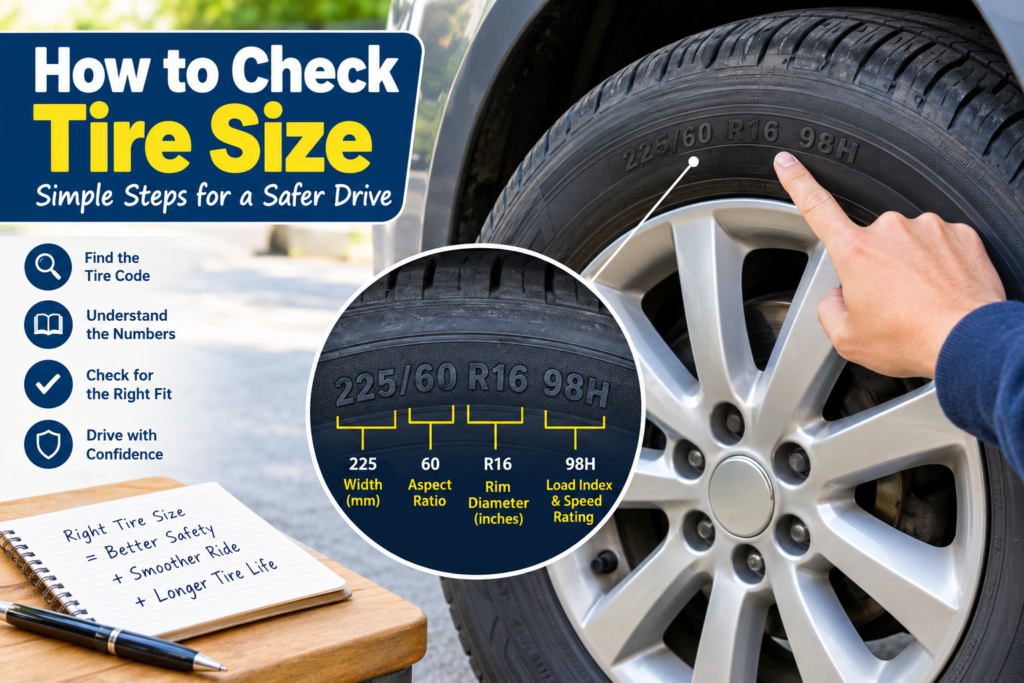
The easiest place to check your tire size is the sidewall of your existing tire. Look closely at the outer side of the tire and you should find a combination of numbers and letters.
For example, you may see something like:
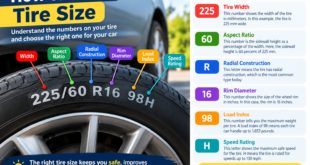
225/60 R16 98H
This is the tire size information. Every part of this code tells you something about the tire.
If the writing on your tire has become difficult to read because of dirt or wear, clean the sidewall carefully and look again. The tire size is usually printed clearly enough to identify.
However, I would not rely only on the current tire when buying replacements. If someone installed the wrong tire size in the past, copying that size could simply repeat the mistake.
How to Read Tire Size Numbers
Understanding the tire size code is the most important part of checking your tires.
Let us use 225/60 R16 98H as an example.
225 Means Tire Width
The first number, 225, represents the approximate width of the tire in millimeters.
So a tire marked 225 has a nominal width of about 225 millimeters.
Tire width affects several characteristics of a vehicle, including handling, road contact, comfort, and fuel consumption. However, wider does not automatically mean better. The correct width depends on the vehicle and wheel specifications.
When checking tire size, I always make sure this number matches the size recommended for the vehicle.
60 Means Aspect Ratio
The number after the slash represents the tire’s aspect ratio.
In our example, the number is 60. This means the sidewall height is approximately 60 percent of the tire’s width.
A lower aspect ratio generally means a shorter sidewall, while a higher aspect ratio means a taller sidewall.
The aspect ratio can affect ride comfort, handling, and the appearance of the vehicle. Changing it without checking the manufacturer’s specifications can affect how the tire and vehicle perform.
R Means Radial Construction
The letter R indicates radial construction.
Most modern passenger vehicle tires use radial construction. It refers to the way the internal tire cords are arranged.
You may occasionally encounter different construction markings, especially with specialized tires, but R is extremely common on modern cars.
16 Means Wheel Diameter
The number after R tells you the wheel diameter in inches.
In R16, the number 16 means the tire is designed for a 16 inch wheel.
This is particularly important because the tire must match the wheel diameter. A tire designed for a 16 inch wheel cannot simply be installed on a 17 inch wheel.
When checking tire size, this is one number I pay close attention to.
What Do the Last Numbers and Letters Mean?
After the main tire size, you may see additional numbers and letters such as 98H.
These markings provide information about the tire’s load capacity and speed rating.
Load Index
The number 98 is the load index.
A load index corresponds to a specific maximum load capacity according to the tire’s rating system. It is not simply the number of kilograms the tire can carry.
For this reason, I recommend checking the manufacturer’s specifications or a reliable tire reference when you need to determine the exact load capacity.
Using a tire with an appropriate load rating is important because tires carry the weight of the vehicle, passengers, and cargo.
Speed Rating
The letter H represents the speed rating.
Different letters correspond to different maximum rated speeds under specified conditions.
It is important to remember that a speed rating is not a recommendation to drive at that speed. It is a technical rating used to describe the tire’s capability under standardized conditions.
When replacing tires, I recommend following the vehicle manufacturer’s requirements for both load index and speed rating.
Check the Driver’s Door Information
Although the tire sidewall is usually the quickest way to check tire size, there is another location that I consider very useful.
Open the driver’s door and look around the door frame or door pillar. Many vehicles have a manufacturer information label there.
This label may include the recommended tire size, recommended tire pressure, and other vehicle information.
This is especially helpful if you are replacing all four tires. Instead of simply copying the tires currently installed, you can compare their size with the vehicle manufacturer’s recommended specifications.
The recommended tire pressure is also important. Remember that the pressure written on the tire itself is generally related to the tire’s maximum pressure or other tire information. It is not necessarily the recommended everyday pressure for your vehicle.
Check Your Owner’s Manual
Your vehicle owner’s manual is another reliable place to check tire size.
The manual may list the original tire sizes for your specific vehicle, along with information about tire pressure and load requirements.
Some vehicles can have different tire sizes depending on the trim level, engine, wheel package, or model year. That is why I would not assume that every version of the same vehicle uses exactly the same tire size.
If you are unsure, comparing the sidewall marking with the information provided by the vehicle manufacturer is a smart step.
Do Not Guess Your Tire Size
One common mistake I see is choosing tires based only on appearance.
A tire can look like it would fit a vehicle, but appearance does not tell you whether the tire has the correct width, aspect ratio, wheel diameter, load index, and speed rating.
Another mistake is choosing a tire simply because it is cheaper.
Price is certainly important, but the tire needs to meet the vehicle’s requirements first. Once you know the correct tire size, you can compare brands, tread patterns, warranties, and prices.
What If the Front and Rear Tires Are Different?
Some vehicles use the same tire size on all four wheels. Others use different sizes on the front and rear.
For example, a vehicle might have a smaller tire size on the front and a wider tire size on the rear.
If your vehicle uses different front and rear tire sizes, make sure you record each size separately.
I recommend checking all four tires rather than looking at only one. You should also check the manufacturer’s specifications before purchasing replacements.
How to Check Tire Size Before Buying New Tires
If I were preparing to buy new tires, I would follow a simple process.
First, I would inspect the tire sidewall and write down the complete tire size.
Second, I would check the driver’s door information label.
Third, I would compare the information with the owner’s manual or the manufacturer’s specifications.
Fourth, I would check whether the vehicle requires the same size on all four wheels or different front and rear sizes.
Finally, I would compare the load index and speed rating, not just the basic tire dimensions.
This process takes only a few minutes but can help prevent an expensive mistake.
Can You Change Your Tire Size?
It is possible to change tire size on some vehicles, but I would not recommend doing it casually.
Changing tire dimensions can affect the vehicle’s handling, ride quality, ground clearance, steering, braking characteristics, and speedometer accuracy.
A different tire size can also create clearance problems if the tire becomes too wide or too tall.
If you want to change from the original tire size, it is better to consult the vehicle manufacturer, a qualified tire professional, or a reputable wheel and tire specialist.
Check the Tire Size on the Spare Tire
Another useful tip is to check your spare tire.
Depending on the vehicle, the spare may have a different size from the regular tires. Temporary spare tires are often designed for limited use and may have specific speed and distance restrictions.
Do not assume that the spare tire should be used as a replacement for a normal tire.
If you have a full size spare, check its markings and compare them with your vehicle’s recommended specifications.
Why Correct Tire Size Matters
The correct tire size is important for more than simply making the tire fit onto the wheel.
The right tire size helps the vehicle maintain the characteristics intended by its manufacturer. It can influence steering response, ride comfort, braking behavior, fuel economy, and overall handling.
Tires are also one of the most important contact points between your vehicle and the road. That is why I believe checking the correct tire size should be part of basic car maintenance.
Final Thoughts
Learning how to check tire size is one of the easiest things a car owner can do. You normally only need to look at the tire sidewall and understand the numbers and letters printed there.
For example, 225/60 R16 98H tells you about the tire width, aspect ratio, construction, wheel diameter, load index, and speed rating.
However, I always recommend checking more than just the tire sidewall. Look at the driver’s door label and owner’s manual as well, especially before purchasing replacement tires.
The most important thing is to choose a tire that matches your vehicle’s recommended specifications. Do not choose a tire only because it looks good or costs less. Taking a few minutes to check your tire size can help you make a more informed purchase and keep your vehicle properly equipped for everyday driving.