Related Articles
Checking your car coolant level is one of those simple maintenance tasks that I believe every car owner should know. You do not always need a mechanic to check whether your engine has enough coolant. With a little knowledge and the right safety steps, you can check the coolant level at home in just a few minutes.
Coolant plays an important role in keeping your engine at the correct operating temperature. It helps prevent the engine from overheating during hot weather and also provides protection against freezing temperatures in colder conditions. If the coolant level becomes too low, your engine may not be able to control its temperature properly.
In this guide, I will explain how to check your car coolant level safely, what to look for, when to add coolant, and what signs may indicate a larger cooling system problem.
What Is Car Coolant?
Car coolant is a liquid that circulates through the engine and cooling system. It absorbs heat produced by the engine and carries that heat toward the radiator, where it can be released.
Most modern vehicles use a mixture of coolant and water. The exact type of coolant your vehicle needs depends on the manufacturer and model.
Coolant is sometimes called antifreeze because it also helps protect the cooling system from freezing in cold temperatures. It contains additives that can also help protect certain cooling system components from corrosion.
Because coolant is important for engine temperature control, I recommend checking the level regularly instead of waiting for an overheating problem.
Why Is Checking Coolant Level Important?
A low coolant level can cause several problems. The most obvious problem is engine overheating. When the cooling system does not contain enough coolant, it may not be able to remove enough heat from the engine.
Overheating can lead to expensive engine damage if the vehicle continues to operate at high temperatures.
Checking the coolant level is also useful because it can help you notice a possible leak early. If you regularly check the reservoir and notice that the level keeps dropping, there may be a leak somewhere in the cooling system.
For me, this is one of the easiest car maintenance checks because it takes very little time and can provide useful information about the condition of the vehicle.
Always Let the Engine Cool Down First
The most important safety rule is to check the coolant only when the engine is completely cool.
Never open a hot radiator cap. The cooling system can become highly pressurized when the engine is hot. Opening the cap while the system is under pressure can release hot coolant or steam and cause serious burns.
If you have recently driven your car, park it in a safe place and switch the engine off. Allow enough time for the engine to cool naturally.
I prefer to check coolant before driving the car, especially in the morning when the engine has been sitting overnight. This makes the inspection safer and gives me a clear reading.
Find the Coolant Reservoir
After the engine has cooled, open the hood and locate the coolant reservoir.
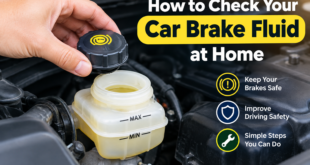
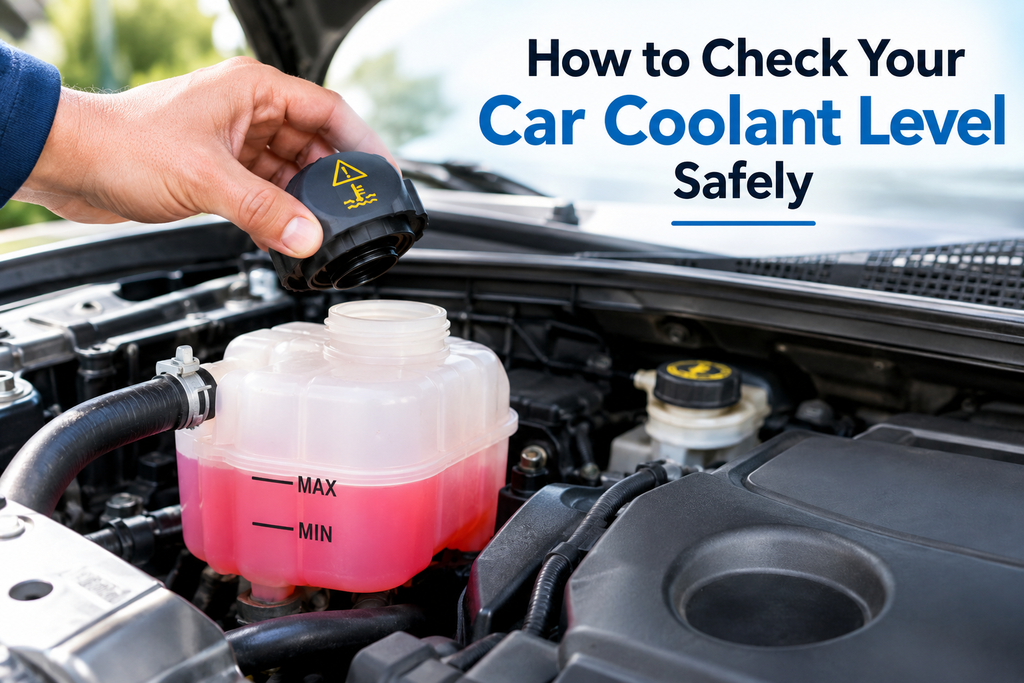
The coolant reservoir is usually a translucent plastic container located inside the engine compartment. Because it is often transparent, you can normally see the coolant level without opening the cap.
Look for markings such as MIN and MAX or LOW and FULL on the side of the reservoir.
The exact location and appearance can vary from one vehicle to another. If you are not sure which container is the coolant reservoir, check your vehicle owner’s manual before touching any cap.
Some cars also have a radiator cap that is separate from the coolant reservoir. Do not assume that every cap under the hood is safe to open.
Check the Coolant Level
Once you have located the coolant reservoir and confirmed that the engine is cold, look at the coolant level through the plastic container.
The coolant should normally be somewhere between the minimum and maximum markings when the engine is cold.
If the level is close to the MAX line, there is generally no need to add anything.
If the level is below the MIN marking, the cooling system may need additional coolant. However, before adding anything, I recommend checking for signs of leakage and confirming which coolant specification your vehicle requires.
The color of coolant can vary. It may be green, pink, orange, blue, yellow, or another color depending on the coolant type and manufacturer. I would not choose coolant based only on color.
How to Add Coolant Safely
If the coolant level is low and your vehicle requires additional coolant, first make sure the engine is completely cool.
Use the coolant recommended by your vehicle manufacturer. The owner’s manual normally provides information about the correct coolant specification and mixture.
Some vehicles use premixed coolant, while others may require coolant concentrate mixed with the correct amount of distilled or deionized water. Follow the manufacturer’s instructions rather than guessing the mixture.
Slowly remove the reservoir cap if your vehicle design allows it and the engine is completely cold.
Add the correct coolant gradually. Do not fill the reservoir beyond the MAX marking.
After adding coolant, securely replace the cap and clean up any spilled liquid.
Keep coolant away from children and pets because antifreeze can be toxic if swallowed.
Should You Add Water Instead of Coolant?
This is a common question among car owners.
In an emergency situation, adding water may sometimes help you reach a safe location or repair facility, but it should not normally replace the correct coolant mixture.
Using plain water for long periods can reduce the protection provided by the cooling system. It may also affect freezing protection and corrosion protection.
If you need to add coolant regularly, I would focus on finding out why the level is dropping rather than simply adding more liquid every few days.
Look for Signs of a Coolant Leak
Checking the coolant level gives you an opportunity to inspect the engine compartment for possible leaks.
Look around the coolant reservoir, hoses, radiator area, and underneath the vehicle for signs of liquid.
You may notice wet areas, dried residue, stains, or a sweet smell around the engine compartment. These signs can indicate a coolant leak.
The exact appearance of leaked coolant depends on the type being used, so I would not rely on color alone.
If your coolant level continues to fall after you refill it, have the cooling system inspected by a qualified mechanic.
Signs Your Car May Have a Cooling Problem
A low coolant level is not the only sign of a cooling system problem.
You should pay attention if the temperature gauge regularly moves higher than normal. An overheating warning light or temperature warning message should also be taken seriously.
Other possible warning signs include steam from the engine compartment, coolant leaking underneath the vehicle, an unusual coolant smell, or repeated low coolant levels.
If your car begins overheating while driving, safely pull over as soon as possible and switch off the engine. Do not open the radiator cap while the engine is hot.
Allow the vehicle to cool before inspecting the system.
How Often Should You Check Your Coolant?
There is no single schedule that applies perfectly to every vehicle, but I think checking the coolant level once a month is a practical habit for many drivers.
It is also worth checking before a long road trip, especially if you have not inspected the engine compartment recently.
If you notice that the coolant level changes significantly between checks, do not ignore it.
A healthy cooling system should not normally require frequent coolant top ups. A repeated drop in level can indicate a leak or another cooling system problem that needs attention.
Common Mistakes to Avoid
One mistake I often recommend avoiding is checking coolant immediately after driving. A hot cooling system can be dangerous.
Another mistake is opening the radiator cap without knowing whether the engine is cool.
It is also important not to mix different coolant products simply because their colors look similar. Coolant chemistry can vary between products, so always follow the vehicle manufacturer’s recommendation.
Another common mistake is overfilling the reservoir. The MAX line is there for a reason, so avoid filling far above it.
Finally, never ignore a coolant warning simply because the car still seems to drive normally. Cooling problems can become much more serious if they are left untreated.
What If the Coolant Level Is Low Again?
If you add coolant and notice that the level becomes low again shortly afterward, I would not continue topping it up without investigating the reason.
The vehicle could have a leaking hose, radiator problem, reservoir issue, water pump problem, thermostat problem, or another cooling system fault.
Some leaks may be easy to see, while others may only occur when the engine is hot or the system is pressurized.
A qualified mechanic can perform a cooling system inspection and pressure test when necessary.
Final Thoughts
Learning how to check your car coolant level safely is a simple skill that can help you take better care of your vehicle. The most important part is making safety your first priority.
Always check the coolant when the engine is completely cool. Locate the correct coolant reservoir, check the level against the MIN and MAX markings, and use only the coolant recommended for your vehicle.
I also believe that the most useful part of this inspection is not simply seeing whether the reservoir is full. It is noticing changes over time. If the coolant level keeps dropping, the vehicle may have a problem that needs professional attention.
A few minutes spent checking the coolant can help you identify potential issues before they become more expensive problems. Regular checks, proper coolant, and attention to warning signs can all contribute to a healthier cooling system and a more reliable car.