Related Articles
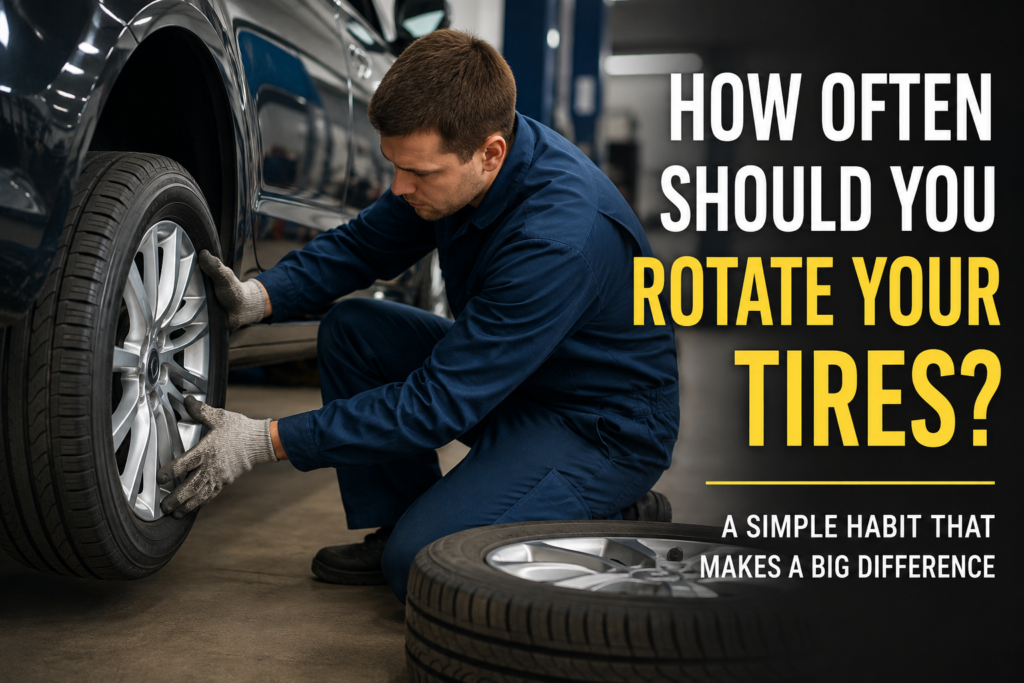
Tire rotation is one of those simple maintenance tasks that many drivers remember only when something starts to feel wrong. In my opinion, it is one of the easiest ways to protect your tires, improve driving performance, and get better value from the money you spend on a new set of tires. Many people ask, how often should you rotate your tires? The general recommendation is to rotate tires about every 5,000 to 8,000 miles, or roughly every 8,000 to 13,000 kilometers. However, the exact interval can depend on your vehicle, tire type, driving habits, and the recommendation from the tire or vehicle manufacturer.
Regular tire rotation helps distribute wear more evenly across all four tires. Since each tire carries a different amount of weight and performs a slightly different job, some tires naturally wear faster than others. Rotating them at the right time can help balance that wear and extend the useful life of the entire set.
Why Is Tire Rotation Important?
Every tire on a vehicle experiences different forces while driving. Front tires, for example, often wear faster on front wheel drive vehicles because they handle steering, acceleration, and much of the braking. Rear tires may wear differently because their responsibilities are not exactly the same.
This is why I consider tire rotation an important part of basic car maintenance. Without regular rotation, you may notice that two tires still have plenty of tread while the other two are becoming worn much sooner.
Uneven tire wear can affect handling, braking, road noise, and traction. It can also force you to replace tires earlier than expected. A regular tire rotation schedule helps reduce these problems by moving each tire to a different position on the vehicle.
How Often Should You Rotate Your Tires?
For most vehicles, a good starting point is to rotate the tires every 5,000 to 8,000 miles. If you prefer to think in terms of time rather than distance, checking them every six months can be a practical habit for drivers who do not drive very far.
Still, there is no single number that applies perfectly to every vehicle. Some manufacturers recommend different intervals, so I always believe it is worth checking the owner’s manual before choosing a schedule.
If you drive frequently, travel long distances, carry heavy loads, or regularly drive on rough roads, your tires may experience more stress. In these situations, checking tire condition more often is a smart idea.
Another easy habit is to have your tires rotated when you get an oil change if the service interval is close to the recommended tire rotation interval. This makes tire maintenance easier to remember.
Does Driving Style Affect Tire Rotation?
Yes, driving style can have a noticeable effect on tire wear. Aggressive acceleration, hard braking, fast cornering, and frequent driving on rough roads can increase the amount of stress placed on your tires.
From my experience, smooth driving is not only more comfortable but can also help tires last longer. Gentle acceleration, controlled braking, and avoiding unnecessary hard cornering can reduce excessive wear.
If you mostly drive in city traffic, your tires may experience frequent braking and acceleration. Highway driving can be easier on some components, but long journeys still put many miles on the tires.
That is why I would not rely only on a calendar. Pay attention to your mileage and regularly inspect the tread condition.
Tire Rotation Patterns
Tire rotation is not simply a matter of moving every tire to the next position. The correct tire rotation pattern depends on the vehicle and tire design.
For some vehicles, the front tires move to the rear while the rear tires move to the front. In other cases, the tires may cross from one side to the other.
There are also tires designed specifically for one side of the vehicle. These are called directional tires. Their rotation options can be more limited because the tread pattern is designed to rotate in a particular direction.
Some vehicles also use different tire sizes on the front and rear axles. This setup is sometimes called a staggered fitment. In such cases, normal front to rear rotation may not be possible.
Because of these differences, I would recommend checking the owner’s manual or asking a qualified tire professional before changing the positions of your tires.
Signs Your Tires Need Attention
Even if you follow a regular tire rotation schedule, you should still inspect your tires between rotations. Tire rotation does not fix every tire problem.
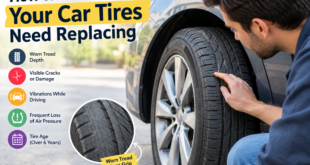
One of the clearest warning signs is uneven tread wear. If one side of a tire looks significantly more worn than the other, there may be an alignment, suspension, inflation, or tire related issue.
You should also pay attention to vibrations while driving. A vibration through the steering wheel or vehicle can sometimes indicate wheel balance or tire problems.
Another sign is unusual road noise. Some tire wear patterns can create a humming or uneven sound that becomes more noticeable as speed increases.
If you notice cracks, bulges, cuts, exposed cords, or other visible damage, do not simply wait for your next tire rotation. Have the tire inspected as soon as possible.
Tire Rotation and Wheel Alignment
Tire rotation and wheel alignment are two different maintenance services, although they are often discussed together.
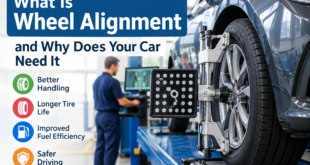
Tire rotation changes the position of the tires on the vehicle to promote more even wear. Wheel alignment involves adjusting the angles of the wheels so they are positioned correctly according to the vehicle manufacturer’s specifications.
If your car has an alignment problem, rotating the tires will not solve it. The tires may continue wearing unevenly after the rotation.
This is why I think tire inspections are useful. If a tire professional notices unusual wear during a rotation, it can be a good opportunity to check the alignment and suspension as well.
Should You Rotate Tires on a Front Wheel Drive Car?
Front wheel drive vehicles often benefit greatly from regular tire rotation because the front tires usually handle several major driving tasks. They steer the vehicle, provide traction during acceleration, and contribute heavily during braking.
As a result, front tires can wear faster than rear tires. Regular rotation helps distribute this wear more evenly.
If you drive a front wheel drive vehicle, I would pay particular attention to the condition of the front tires. However, the recommended rotation pattern should still follow the vehicle and tire manufacturer’s instructions.
What About All Wheel Drive Vehicles?
All wheel drive vehicles can require extra attention because all four tires work together to provide traction.
Keeping tire wear reasonably consistent can be particularly important for these systems. A significant difference in tire size caused by uneven wear may not be ideal for the vehicle’s drivetrain.
For an all wheel drive vehicle, I would follow the manufacturer’s tire rotation schedule closely rather than relying on a general rule.
The same principle applies to vehicles with four wheel drive systems. Check the owner’s manual for the recommended maintenance schedule and tire requirements.
Can Tire Rotation Make Tires Last Longer?
Yes, regular tire rotation can help extend the overall service life of a tire set by encouraging more even tread wear.
Imagine buying four tires and having the front two wear out much sooner than the rear two. You might end up replacing only two tires early, while the remaining tires still have usable tread. Regular rotation can help reduce this difference.
However, tire rotation cannot make a tire last forever. Tire age, tread depth, road conditions, inflation pressure, alignment, driving style, weather, and tire quality all affect tire life.
Good maintenance can help you get the most useful service from your tires, but it cannot replace proper tire inspection.
Do New Tires Need to Be Rotated?
Yes. New tires should be included in your normal tire rotation schedule. In fact, establishing a rotation routine from the beginning is one of the best ways to encourage even wear.
When you install a new set of tires, ask the tire shop about the recommended rotation interval. You can then keep a record of the mileage and schedule the next rotation in advance.
I find this much easier than waiting until the tires look worn. By the time uneven wear becomes obvious, the damage may already have progressed.
How to Make Tire Rotation Easier to Remember
One of the easiest methods is to connect tire rotation with another regular maintenance task. For example, if your vehicle is serviced every few thousand miles, ask the technician to check the tires at the same time.
You can also write down the mileage after each rotation. This gives you a simple record that can help you stay on schedule.
Another useful habit is checking your tire pressure regularly. Correct tire pressure can help support even tread wear and proper handling.
It only takes a few minutes to inspect the tires, but that small effort can help you identify problems before they become expensive repairs.
Final Thoughts
So, how often should you rotate your tires? For many vehicles, every 5,000 to 8,000 miles is a reasonable general guideline, but the owner’s manual and tire manufacturer’s recommendations should always come first.
In my view, tire rotation is one of those small maintenance jobs that is easy to overlook but can make a meaningful difference. It helps promote even tire wear, supports handling, and can help you get more useful mileage from your tires.
The important thing is not simply remembering a number. Make tire rotation part of your regular vehicle maintenance routine. Check your tread, maintain the correct tire pressure, watch for unusual wear, and take action if something does not look right.
A few minutes of attention at the right time can help protect your tires and make every mile of driving more predictable and comfortable.