Related Articles

When I think about comfortable and controlled driving, the power steering system is one of those systems that deserves more attention than it usually gets. Most drivers simply turn the steering wheel and expect the vehicle to respond smoothly. What many people do not realize is that several important components work together behind the scenes to make steering easier and more precise.
In this article, I will explain the main power steering system parts, what each component does, and how they work together. I will focus mainly on hydraulic power steering because it is still found in many older and widely used vehicles. Understanding these parts can also make it easier to recognize common steering problems and understand what a mechanic is talking about during a repair.
What Is a Power Steering System?
A power steering system helps reduce the physical effort required to turn a vehicle. Without power assistance, turning the steering wheel, especially at low speeds or while parking, can require considerably more effort.
A traditional hydraulic power steering system uses fluid pressure to assist the driver. When I turn the steering wheel, the steering input is transferred through the steering column to the steering gear or steering rack. The hydraulic system then provides additional force to help move the steering mechanism and front wheels.
Modern vehicles may use electric power steering instead, but the basic purpose remains the same. The system is designed to make steering easier while maintaining proper control and road response.
Main Power Steering System Parts
There are several components involved in a hydraulic power steering system. Each part has a specific job, and a problem with one component can affect the performance of the entire system.
1. Steering Wheel
The steering wheel is the part the driver interacts with directly. When I turn the steering wheel, that movement becomes the starting point for the entire steering process.
Although the steering wheel itself is relatively simple, it connects to the steering column and ultimately controls the direction of the front wheels. A loose or damaged steering wheel connection can create serious handling concerns, so this component should never be ignored.
2. Steering Column
The steering column connects the steering wheel to the steering gear or steering rack. It transfers the rotational movement created by the driver.
Inside or around the steering column, there can be shafts, joints, bearings, and other components depending on the vehicle design. These parts allow the steering system to operate smoothly while accommodating the movement and layout of the vehicle.
From my point of view, the steering column is one of the easiest parts to overlook because most of it is hidden. However, it plays an important role in transferring steering input accurately.
3. Power Steering Pump
The power steering pump is one of the most important components in a hydraulic power steering system. Its job is to create hydraulic pressure using power supplied by the engine.
In many vehicles, the pump is driven by a belt connected to the engine. As the engine runs, the pump circulates power steering fluid through the system.
When you turn the steering wheel, the hydraulic pressure generated by the pump helps provide the extra force needed to turn the wheels. If the pump becomes weak or damaged, the steering may become noticeably harder, especially during parking.
A failing pump can also produce whining or groaning noises. Low power steering fluid can sometimes cause similar symptoms, which is why checking the fluid level is a useful first step when steering suddenly feels different.
4. Power Steering Fluid Reservoir
The power steering fluid reservoir stores the hydraulic fluid used by the system. It provides a supply of fluid for the pump and allows the fluid level to be checked.
Many reservoirs have markings showing minimum and maximum fluid levels. I recommend checking the level according to the vehicle manufacturer’s instructions because different vehicles can use different procedures.
If the fluid level keeps dropping, I would not simply continue adding fluid. A repeated loss of power steering fluid usually indicates that there may be a leak somewhere in the system.
5. Power Steering Fluid
Power steering fluid is the working medium that allows hydraulic pressure to be transferred through the system. The pump pressurizes the fluid and sends it toward the steering gear.
The correct type of fluid is important. Some vehicles require a specific power steering fluid, while others may specify an approved automatic transmission fluid. Using the wrong fluid can potentially damage seals or other components.
Dirty or contaminated fluid can also affect system performance. Regular inspection and following the manufacturer’s maintenance recommendations can help keep the hydraulic system working properly.
6. Pressure Hose
The power steering pressure hose carries high pressure fluid from the pump toward the steering gear.
Because this hose operates under pressure, it needs to be in good condition. Cracks, damaged fittings, or worn seals can cause fluid leaks.
A pressure hose leak may leave fluid around the engine compartment or underneath the vehicle. In some cases, the leak can become more noticeable when the steering wheel is turned because system pressure changes.
7. Return Hose
The return hose carries lower pressure fluid back toward the reservoir after the fluid has passed through the steering system.
Compared with the pressure hose, the return hose generally operates under much lower pressure. However, it is still an important part of the hydraulic circuit.
A damaged return hose can allow fluid to escape and eventually cause the system to run with insufficient fluid. That can place additional stress on the power steering pump.
8. Steering Rack
The steering rack is responsible for converting the driver’s steering input into movement that turns the front wheels.
In a rack and pinion system, the steering wheel rotates the pinion gear. The pinion then moves the rack from side to side. The rack is connected to the steering linkage, which transfers this movement to the front wheels.
Hydraulic power assistance is incorporated into the steering rack in many designs. When hydraulic pressure is applied, it helps the rack move with less effort from the driver.
A worn steering rack can cause symptoms such as steering play, fluid leakage, unusual noises, or inconsistent steering response.
9. Rack and Pinion
The rack and pinion steering system is widely used in passenger vehicles because it offers a relatively simple and direct method of steering.
The pinion is connected to the steering shaft, while the rack is a long toothed bar. When the driver turns the steering wheel, the pinion rotates and moves the rack sideways.
This side to side movement is then transferred through the tie rods to the steering knuckles and wheels.
In my experience, understanding this basic movement makes the entire power steering system much easier to understand. The hydraulic system does not replace the mechanical steering connection. Instead, it assists the mechanical movement.
10. Tie Rods and Tie Rod Ends
Tie rods connect the steering rack to the steering knuckles. They transfer the movement of the rack to the front wheels.
The tie rod end contains a joint that allows movement as the suspension travels and the steering changes direction.
Wear in the tie rod ends can cause looseness or play in the steering. You may also notice uneven tire wear, poor alignment, or knocking sounds over rough roads.
Because tie rods directly influence wheel direction, worn components should be inspected and repaired promptly.
11. Drive Belt
On many hydraulic systems, the power steering pump is driven by an engine belt. Depending on the vehicle, this may be a serpentine belt or another belt arrangement.
The belt transfers engine power to the pump so it can generate hydraulic pressure.
If the belt becomes loose, cracked, worn, or broken, the power steering pump may not operate correctly. Some vehicles share the same serpentine belt with other accessories, so a belt failure can potentially affect more than just steering assistance.
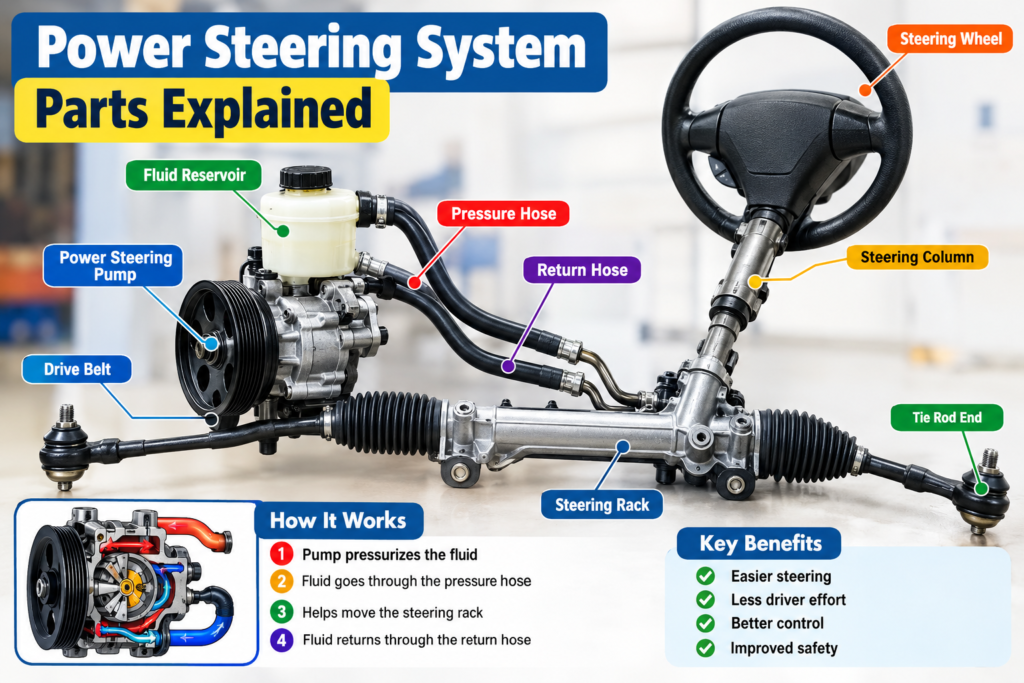
How the Power Steering System Works
The operation of a hydraulic power steering system is easier to understand when the process is viewed as a complete cycle.
First, the engine drives the power steering pump. The pump draws fluid from the reservoir and pressurizes it.
When I turn the steering wheel, the steering column transfers that movement to the steering gear. A control valve inside the steering system directs hydraulic pressure to the appropriate side of the steering mechanism.
The pressurized fluid then assists the movement of the steering rack. The rack moves sideways and pushes or pulls the tie rods.
The tie rods move the steering knuckles, which changes the direction of the front wheels.
After providing assistance, the fluid returns through the return circuit to the reservoir. The process continues while the engine is running and the driver is using the steering.
Common Power Steering Problems
Power steering problems can appear in several different ways. One common warning sign is a whining noise when turning the steering wheel. This may be related to low fluid, air in the system, or a problem with the pump.
Hard steering is another important symptom. If the steering suddenly becomes difficult, the system should be inspected rather than ignored.
Fluid leakage is also common in older hydraulic systems. Leaks may develop around hoses, seals, the pump, or the steering rack.
A loose or worn tie rod can create steering play and may affect wheel alignment. Uneven tire wear can sometimes be another indication that steering or suspension components need attention.
Hydraulic Power Steering vs Electric Power Steering
It is also worth mentioning that not every modern vehicle uses a hydraulic power steering system. Many newer vehicles use electric power steering.
Hydraulic systems use a pump, fluid, hoses, and hydraulic pressure to provide assistance. Electric systems use an electric motor and electronic controls instead.
Electric power steering can reduce mechanical losses because it does not require an engine driven hydraulic pump running continuously. It can also allow manufacturers to adjust steering assistance through electronic programming.
However, if you are working on an older vehicle, understanding hydraulic power steering system parts remains extremely useful.
Why Regular Inspection Matters
The steering system is directly connected to vehicle control, so I believe it should never be treated as a system that only needs attention after something fails.
Checking fluid levels, looking for leaks, listening for unusual noises, and inspecting steering components can help identify problems before they become more serious.
If the steering suddenly feels heavy, loose, or inconsistent, it is better to have the vehicle inspected. Continuing to drive with a damaged steering component can create unnecessary safety risks.
Final Thoughts
The power steering system parts may look complicated when viewed individually, but their purpose becomes much clearer when you understand how they work together.
The steering wheel provides the driver’s input. The steering column transfers that input. The power steering pump creates hydraulic pressure, while the reservoir stores the fluid. The pressure and return hoses move the fluid through the system. The steering rack converts the input into side to side movement, and the tie rods transfer that movement to the front wheels.
Once you understand these basic components, diagnosing common steering symptoms becomes much easier. Whether you are a vehicle owner, automotive enthusiast, or someone who simply wants to understand how a car works, learning about the power steering system is a useful part of understanding modern vehicle operation.
Frequently Asked Questions
What are the main parts of a power steering system?
The main parts include the steering wheel, steering column, power steering pump, fluid reservoir, power steering fluid, pressure hose, return hose, steering rack, rack and pinion mechanism, tie rods, and tie rod ends.
What does a power steering pump do?
A power steering pump generates hydraulic pressure that helps reduce the effort required to turn the steering wheel.
What happens when power steering fluid is low?
Low power steering fluid can cause hard steering, whining noises, and poor steering assistance. It can also indicate a leak that needs to be investigated.
How does the steering rack work?
The steering rack converts the rotational movement from the steering wheel into side to side movement. This movement is transferred through the tie rods to turn the front wheels.
Are all vehicles equipped with hydraulic power steering?
No. Many newer vehicles use electric power steering instead of a hydraulic system. Electric systems use an electric motor and electronic controls rather than hydraulic fluid and an engine driven pump.