Related Articles

When I look at a tire, the first thing I notice is usually its overall condition, but the tread pattern is something that deserves much more attention. Many drivers know that tires need enough tread depth, yet fewer people understand why tires have different tread designs in the first place. The pattern across the surface of a tire is not simply there for appearance. It is carefully designed to influence grip, water evacuation, handling, braking, comfort, and overall driving performance.
In my view, understanding tire tread patterns can make it much easier to choose the right tires for a vehicle. Different driving conditions require different characteristics, and the tread pattern plays an important role in providing those characteristics. Whether you drive mainly on city roads, highways, wet streets, or rough surfaces, knowing what the tread is designed to do can help you make a better decision.
What Is a Tire Tread Pattern?
A tire tread pattern is the arrangement of grooves, blocks, ribs, channels, and small cuts found on the part of the tire that touches the road. These elements work together to provide traction and control.
The tread is the only part of the tire that normally makes direct contact with the road. Because of this, its design has a major effect on how the vehicle behaves.
Tire manufacturers spend a great deal of time developing tread patterns for specific purposes. Some designs are focused on quiet highway driving, while others are designed to improve grip on snow, mud, rain, or loose surfaces.
The tread pattern also affects how efficiently water moves away from the tire. This is particularly important during rain because standing water between the tire and road can reduce traction.
Why Tire Tread Patterns Matter
I think the easiest way to understand tread patterns is to think about the conditions in which you normally drive. A tire that performs well on a dry highway may not provide the same level of performance on deep mud or snow.
The tread pattern influences several important areas of driving performance.
First, it helps provide traction. The shape and arrangement of the tread blocks determine how the tire interacts with the road.
Second, the grooves help move water away from the contact area. This can improve wet road performance and help reduce the risk of losing traction in heavy rain.
Third, tread design affects handling. A tire with strong, stable tread blocks can provide a more responsive feel when steering.
Finally, tread patterns can influence road noise and ride comfort. Larger tread blocks and aggressive designs can sometimes produce more noise, while highway focused designs are often designed to provide a quieter ride.
Symmetric Tire Tread Patterns
Symmetric tread patterns are among the most common designs found on passenger vehicles. In this design, the tread pattern is generally the same across both sides of the tire.
One advantage of a symmetric tread pattern is its versatility. These tires are often suitable for everyday driving and can provide a balanced combination of comfort, handling, and durability.
Another benefit is that symmetric tires are generally straightforward to maintain and rotate. Their design makes them a practical option for drivers who use their vehicles primarily on normal roads.
For everyday city driving, I consider this type of tread pattern a sensible choice when the tire is matched correctly to the vehicle and local weather conditions.
Asymmetric Tire Tread Patterns
Asymmetric tread patterns use different designs on the inner and outer portions of the tire. Each section has a specific purpose.
The outer part may have larger tread blocks to improve cornering stability, while the inner section may contain more grooves to help remove water from the road surface.
This design can provide a good balance between dry road handling and wet weather performance. Many modern performance and premium passenger tires use asymmetric tread patterns.
When installing asymmetric tires, it is important to follow the directional markings and inside and outside markings printed on the sidewall. Correct installation allows the tread design to work as intended.
Directional Tire Tread Patterns
Directional tires have a tread pattern designed to rotate in one specific direction. The pattern often looks like a V or arrow when viewed from above.
The main purpose of this design is efficient water evacuation. As the tire rotates, the grooves can help move water away from the contact area.
Directional tread patterns can be useful for drivers who frequently deal with wet roads. They are also commonly found on performance oriented tires.
However, these tires need to be installed in the correct direction. If a directional tire is mounted incorrectly, the intended tread design may not perform properly.
All Season Tire Tread Patterns
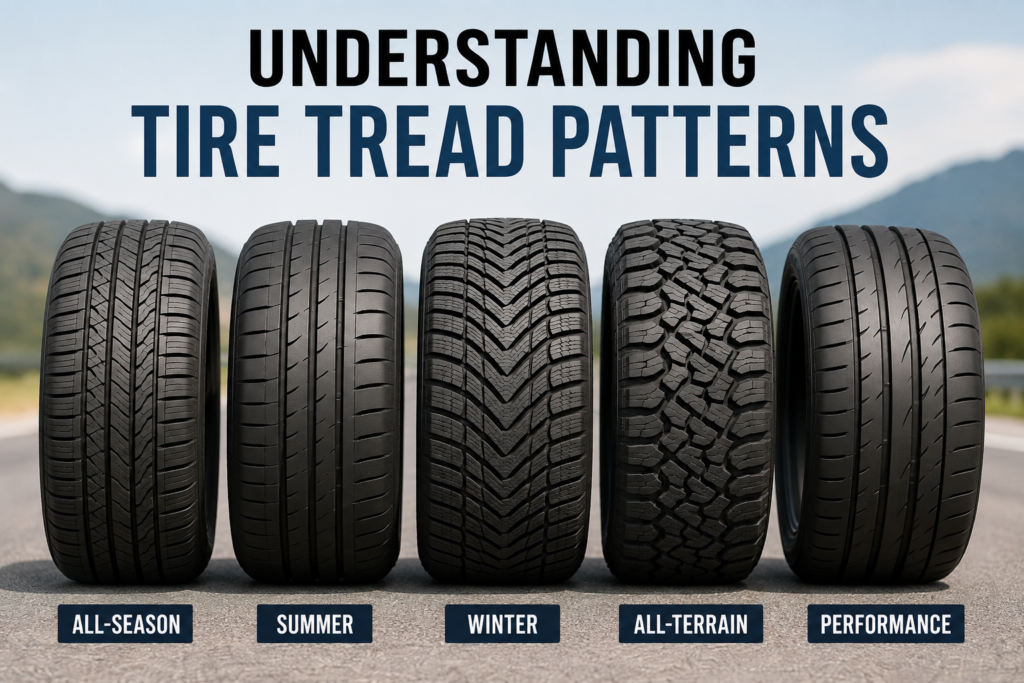
All season tires are designed to provide balanced performance across a variety of normal driving conditions. Their tread patterns usually combine grooves, channels, and smaller tread elements.
The goal is to provide acceptable performance on dry roads, wet roads, and in moderate seasonal conditions.
In my opinion, all season tires make sense for drivers who want one set of tires that can handle everyday driving without being designed for one specific extreme condition.
However, the term all season does not mean that the tire is perfect for every weather condition. In areas with severe winter conditions, dedicated winter tires can offer better performance.
Summer Tire Tread Patterns
Summer tires are designed primarily for warm weather performance. Their tread patterns often have fewer small cuts compared with winter tires and may use larger tread blocks.
The design focuses on maintaining strong contact with dry and wet roads during warmer temperatures.
Summer performance tires can provide good steering response and cornering ability. They are often selected by drivers who prioritize handling and road feel.
However, their performance can decrease significantly in very cold conditions. Choosing tires based only on performance without considering local weather can therefore be a mistake.
Winter Tire Tread Patterns
Winter tires have tread patterns specifically developed for cold weather and winter road conditions. They often feature many small grooves called sipes.
These small cuts help create additional biting edges that can improve traction on snow and cold surfaces.
Winter tire tread blocks are also designed to remain flexible at lower temperatures. This is important because tire rubber can become harder in cold weather.
If someone regularly drives in areas with heavy snow and freezing temperatures, I would strongly consider dedicated winter tires instead of relying on normal all season tires.
All Terrain Tire Tread Patterns
All terrain tires usually have larger tread blocks and deeper grooves than standard passenger tires. Their design is intended to handle a combination of paved roads and rough surfaces.
These tires can be useful for SUVs, pickup trucks, and other vehicles that occasionally travel on gravel, dirt, sand, or light off road terrain.
The larger tread elements can provide additional grip on loose surfaces. However, aggressive tread designs may produce more road noise and can sometimes affect fuel economy.
For someone who spends most of their time on highways, a very aggressive all terrain pattern may not always be necessary.
Mud Terrain Tire Tread Patterns
Mud terrain tires have some of the most aggressive tread patterns available. They typically feature large blocks and wide spaces between them.
These spaces help the tire clear mud and loose material as it rotates. The open design can allow the tread to continue gripping instead of becoming completely packed with mud.
Mud terrain tires are especially useful for serious off road driving. However, their aggressive design can create more noise and less comfortable road manners compared with highway focused tires.
How Tread Patterns Help in Rain
One of the most important jobs of a tire tread pattern is moving water away from the contact area.
When a road becomes wet, the tire needs to maintain contact with the pavement. Grooves and channels provide pathways for water to escape.
If water cannot move away quickly enough, the tire can lose contact with the road. This condition is known as hydroplaning.
Tread pattern is only one factor involved in wet weather safety. Tire condition, speed, tire pressure, road surface, and water depth also matter.
This is why I never look at tread depth alone when judging a tire. The overall condition and design also deserve attention.
What Tread Depth Tells You
Tread depth is another important part of tire condition. As a tire wears, the grooves become shallower and the tire can gradually lose some of its ability to move water and provide traction.
Most tires have tread wear indicators built into the grooves. These indicators help drivers identify when the tread has reached a worn condition.
Uneven tread wear can also provide useful information. If one part of the tire is wearing faster than another, it may indicate incorrect tire pressure, wheel alignment problems, suspension issues, or other mechanical concerns.
Checking your tires regularly can therefore help you identify problems before they become more serious.
How to Choose the Right Tread Pattern
Choosing the right tire tread pattern starts with understanding your normal driving conditions.
If you mainly drive around a city, a comfortable passenger tire with a balanced tread design may be appropriate.
If you frequently travel on highways, you may prefer a tire designed for stability, comfort, and low road noise.
For areas with heavy rainfall, wet weather performance should be an important consideration.
If you regularly drive on snow and ice, winter tires may be a better choice.
For off road driving, all terrain or mud terrain tires can provide characteristics that ordinary road tires cannot.
I believe the biggest mistake is choosing a tire simply because it looks aggressive or because someone else recommends it. Your driving environment should be the main factor.
Tread Pattern and Tire Rotation
Tire rotation can help promote more even tread wear, but the correct rotation method depends on the tire design.
Some tires can be moved between different positions, while directional tires need to maintain their specified direction of rotation. Asymmetric tires also need to remain correctly positioned according to their sidewall markings.
Because of these differences, I recommend checking the tire manufacturer’s instructions or asking a qualified tire professional before changing tire positions.
Final Thoughts
Understanding tire tread patterns may seem complicated at first, but the basic idea is simple. Different tread designs exist because different driving conditions require different types of traction and control.
Symmetric patterns can provide balanced everyday performance. Asymmetric designs can combine handling and wet weather characteristics. Directional patterns are designed around specific rotation and water evacuation behavior. Winter, summer, all season, all terrain, and mud terrain tires each have their own purposes.
From my perspective, the best tire is not necessarily the one with the most aggressive looking tread. It is the tire whose tread pattern matches the roads, weather, vehicle, and driving style you actually experience.
Before buying new tires, I would always look beyond appearance and consider tread design, tire size, speed rating, load rating, weather conditions, expected mileage, and manufacturer recommendations. A good understanding of tire tread patterns can help you make a more informed decision and get better performance from your vehicle.