Related Articles
When I first heard the term wheel alignment, I assumed it simply meant adjusting the tires. After learning more about vehicle maintenance, I realized it is much more than that. Wheel alignment is one of the most important services for keeping a car safe, comfortable, and efficient. Even if your tires are brand new, poor alignment can reduce their lifespan, affect handling, and increase fuel consumption.
Many drivers ignore wheel alignment until they notice their car pulling to one side or their tires wearing unevenly. In my opinion, understanding how wheel alignment works helps every car owner make better maintenance decisions and avoid unnecessary repair costs.
In this article, I will explain what wheel alignment is, why it matters, the different alignment angles, common warning signs, and how proper alignment improves your driving experience.
What Is Wheel Alignment?
Wheel alignment is the process of adjusting the angles of your vehicle’s wheels so they match the manufacturer’s specifications.
The goal is not simply to make the wheels straight. Instead, alignment ensures that all four wheels work together correctly while keeping maximum contact with the road.
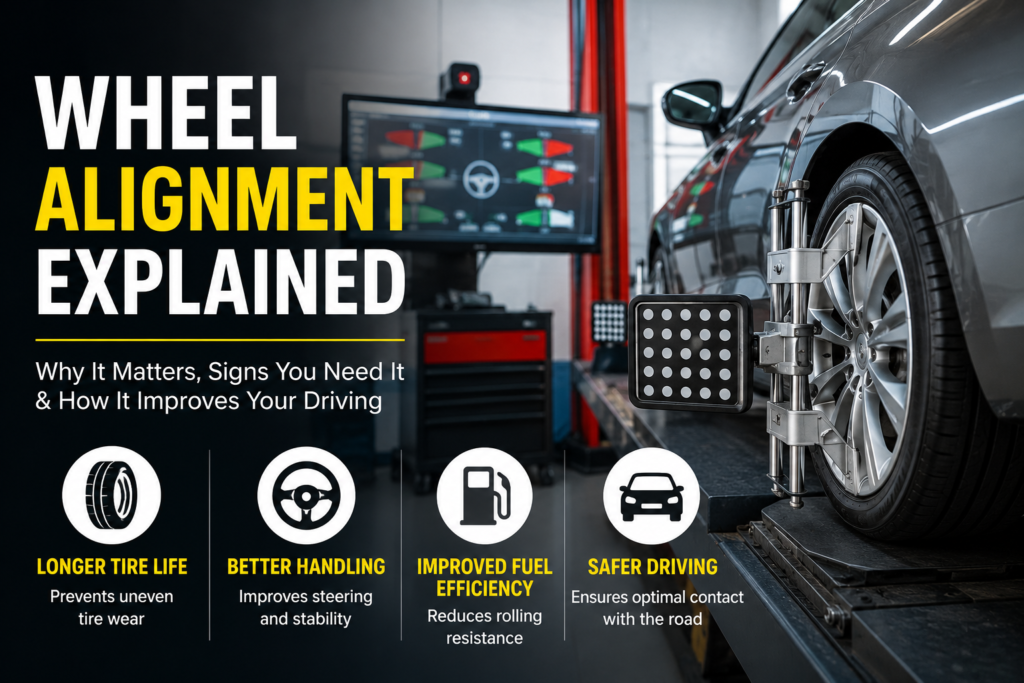
Proper alignment improves steering accuracy, tire life, fuel efficiency, and overall driving stability.
It is important to remember that wheel alignment adjusts the suspension angles rather than changing the tires themselves.
Why Wheel Alignment Is Important
Many people think alignment only affects steering, but its benefits go much further.
Correct wheel alignment keeps the tires rolling smoothly without unnecessary resistance.
It helps maintain even tire wear.
It improves fuel economy.
It provides better handling during turns.
It reduces stress on suspension components.
It creates a smoother and safer driving experience.
Ignoring alignment problems can shorten tire life and increase maintenance expenses.
How Wheel Alignment Works
Wheel alignment involves carefully measuring and adjusting specific suspension angles.
Special computerized alignment equipment checks the position of each wheel.
A technician compares these measurements with the manufacturer’s recommended specifications.
If any angle falls outside the acceptable range, adjustments are made until everything is correctly aligned.
The entire process usually takes less than an hour on most vehicles.
The Three Main Alignment Angles
Wheel alignment focuses on three primary angles.
Understanding these angles makes it easier to appreciate why alignment is so important.
Camber
Camber refers to the inward or outward tilt of the wheel when viewed from the front of the vehicle.
If the top of the tire leans outward, it is called positive camber.
If it leans inward, it is negative camber.
Too much positive or negative camber causes uneven tire wear and may reduce cornering performance.
Correct camber helps distribute tire pressure evenly across the road surface.
Caster
Caster is the angle of the steering axis when viewed from the side of the vehicle.
Positive caster improves straight line stability and helps the steering wheel return to its center position after turning.
Most modern vehicles use positive caster because it provides better highway stability.
Incorrect caster may cause poor steering feel or difficulty maintaining a straight path.
Toe
Toe describes whether the front edges of the tires point toward each other or away from each other when viewed from above.
If the front edges point inward, it is called toe in.
If they point outward, it is called toe out.
Incorrect toe settings are one of the most common causes of rapid tire wear.
Proper toe adjustment helps maintain straight tracking and predictable steering.
Signs Your Car Needs Wheel Alignment
Your vehicle often provides warning signs when alignment is no longer correct.
One of the most obvious symptoms is the car pulling to one side while driving on a straight road.
Another common sign is uneven tire wear.
You may also notice the steering wheel sitting off center even though the vehicle is moving straight.
Loose steering, poor handling, and increased road vibration may also indicate alignment issues.
If you notice any of these symptoms, scheduling an alignment inspection is a smart decision.
What Causes Wheel Alignment Problems?
Wheel alignment gradually changes over time.
Several factors contribute to misalignment.
Hitting potholes.
Driving over speed bumps too quickly.
Striking curbs while parking.
Suspension component wear.
Minor accidents.
Replacing suspension parts.
Even normal daily driving can slowly change alignment settings over thousands of miles.
Benefits of Proper Wheel Alignment
Maintaining correct alignment provides several important advantages.
Your tires wear more evenly, helping them last longer.
Fuel efficiency improves because rolling resistance decreases.
Steering becomes more accurate and predictable.
The vehicle tracks straight without constant steering corrections.
Ride comfort often improves because the suspension operates as intended.
Proper alignment also reduces unnecessary stress on steering and suspension components.
Wheel Alignment and Tire Life
One of the biggest reasons I recommend regular alignment checks is tire protection.
Tires represent a significant investment.
Poor alignment may destroy a new set of tires long before they reach their expected lifespan.
Even a small alignment problem can gradually create uneven tread wear.
Correct alignment helps maximize every mile you drive.
Wheel Alignment and Fuel Economy
Many drivers are surprised to learn that alignment affects fuel consumption.
When wheels are not aligned correctly, the tires create additional rolling resistance.
The engine must work harder to move the vehicle.
Proper alignment reduces this resistance, allowing the vehicle to use fuel more efficiently.
Although the improvement may seem small, it adds up over time.
Wheel Alignment and Suspension
The suspension system and wheel alignment work together.
Worn ball joints, tie rod ends, control arms, bushings, or shock absorbers may prevent accurate alignment.
This is why technicians often inspect suspension components before performing an alignment.
Replacing damaged suspension parts first ensures accurate alignment results.
Two Wheel vs Four Wheel Alignment
Some vehicles require only front wheel alignment.
Most modern vehicles benefit from complete four wheel alignment.
Four wheel alignment checks all wheels and ensures the vehicle tracks properly.
For cars with independent rear suspension, four wheel alignment usually provides the best results.
How Often Should Wheel Alignment Be Checked?
There is no single rule that applies to every vehicle.
I generally recommend checking wheel alignment at least once a year.
It should also be inspected after installing new tires, replacing suspension parts, hitting a large pothole, or noticing unusual steering behavior.
Routine inspections help identify small problems before they become expensive repairs.
Common Wheel Alignment Myths
One common myth is that alignment is only necessary after replacing tires.
In reality, alignment should be checked regularly regardless of tire age.
Another misconception is that wheel balancing and wheel alignment are the same service.
They are completely different.
Wheel balancing corrects weight distribution around the tire and wheel assembly.
Wheel alignment adjusts suspension angles.
Both services are important, but they solve different problems.
Tips to Maintain Proper Wheel Alignment
Although some alignment changes are unavoidable, a few habits help extend alignment life.
Drive carefully over potholes.
Slow down for speed bumps.
Avoid hitting curbs.
Maintain proper tire pressure.
Inspect suspension components regularly.
Rotate tires according to the recommended schedule.
These simple habits help protect both your alignment and your tires.
Professional Wheel Alignment
Modern alignment equipment uses advanced computer technology and precision sensors.
Professional technicians adjust alignment according to factory specifications.
Attempting wheel alignment without proper equipment is extremely difficult.
For accurate results, I always recommend having alignment performed by experienced professionals using modern alignment machines.
Is Wheel Alignment Worth the Cost?
Some drivers hesitate to pay for wheel alignment because they cannot immediately see the adjustment.
However, in my opinion, alignment is one of the best maintenance investments available.
It protects expensive tires, improves fuel economy, enhances steering, and reduces suspension wear.
The money spent on alignment often saves much more by extending tire life and preventing additional repairs.
Final Thoughts
In my opinion, wheel alignment is one of the most overlooked yet valuable maintenance services for any vehicle. Although it is not something drivers can easily see, its effects are noticeable every time the car moves. Proper alignment improves steering precision, keeps the vehicle stable, reduces tire wear, increases fuel efficiency, and makes every drive more comfortable. Understanding the importance of camber, caster, and toe angles also helps explain why even a small alignment issue can have a significant impact on overall performance.
Regular alignment inspections should be part of every vehicle owner’s maintenance routine. Whether you have installed new tires, replaced suspension components, or simply drive on rough roads every day, keeping your wheels properly aligned will protect your investment and improve road safety. A properly aligned vehicle not only performs better but also provides a smoother, more enjoyable driving experience for many miles to come.