Related Articles
When it comes to choosing the right tires for a vehicle, most people focus on the brand, size, or tread pattern. However, one important difference that often gets overlooked is whether the tire is tubeless or tube type. From my experience, understanding this difference can help drivers make better decisions about safety, maintenance, and overall driving performance.
Both tubeless and tube tires have been used for many years, and each has its own advantages and disadvantages. While tubeless tires have become the standard choice for most modern cars, motorcycles, and SUVs, tube tires are still commonly used in certain vehicles and specific driving conditions.
In this article, I will explain the differences between tubeless vs tube tires, how each type works, their benefits, drawbacks, and which option may be the better choice for your vehicle.
Why Tires Matter
Tires are the only part of a vehicle that stays in direct contact with the road. They affect braking, steering, fuel efficiency, ride comfort, and overall safety.
Choosing the right type of tire is just as important as selecting the correct size or tread pattern. A well maintained tire improves vehicle stability while reducing the chances of accidents and unexpected breakdowns.
Understanding the construction of tubeless and tube tires helps drivers make informed decisions.
What Are Tube Tires
Tube tires use a separate rubber tube placed inside the tire.
The tube holds compressed air while the outer tire provides grip, strength, and protection against road surfaces.
For many decades, nearly every vehicle used tube type tires because they were simple to manufacture and repair.
Even today, some motorcycles, bicycles, agricultural equipment, and older vehicles continue using this design.
What Are Tubeless Tires
Tubeless tires do not require a separate inner tube.
Instead, the tire itself forms an airtight seal against the wheel rim.
Air remains trapped between the tire and the rim, allowing the tire to maintain pressure without an internal tube.
Most modern passenger cars now use tubeless tires because they offer several safety and performance advantages.
How Tube Tires Work
In a tube tire, the inner tube stores the compressed air.
The outer tire simply protects the tube from road damage.
If the outer tire is punctured, the sharp object may also damage the tube, allowing air to escape rapidly.
This sudden loss of pressure increases the risk of losing vehicle control.
How Tubeless Tires Work
Tubeless tires seal tightly against specially designed wheel rims.
If a nail or screw punctures the tire, air usually escapes much more slowly because the object often remains lodged inside the tire.
This slower pressure loss gives drivers more time to stop safely and repair the puncture.
That safety advantage is one of the biggest reasons tubeless tires have become so popular.
Main Differences Between Tubeless and Tube Tires
Although both perform the same basic function, their construction differs significantly.
The main differences include:
Internal design
Air retention
Puncture safety
Heat generation
Maintenance
Repair methods
Ride comfort
Fuel efficiency
Understanding these differences makes choosing the right tire much easier.
Safety Comparison
From my point of view, safety is the biggest advantage of tubeless tires.
When a tubeless tire is punctured, air generally escapes slowly.
This allows the driver to maintain better control while finding a safe place to stop.
With tube tires, punctures often result in rapid air loss because the inner tube tears immediately.
This sudden deflation increases the possibility of losing control, especially at higher speeds.
Heat Generation
Heat is one of the biggest enemies of tire life.
Tube tires create additional friction between the tire and the inner tube while driving.
This generates extra heat.
Tubeless tires eliminate this internal friction, allowing them to run cooler.
Lower operating temperatures help improve durability and reduce the risk of tire failure.
Puncture Repairs
Repairing tubeless tires is generally simple.
Many small punctures can be repaired using a tire plug without removing the wheel from the vehicle.
Tube tires usually require:
Wheel removal
Tire removal
Tube inspection
Tube repair or replacement
Reinstallation
The repair process often takes more time and effort.
Weight Difference
Tubeless tires are usually lighter because they do not contain a separate inner tube.
Reducing vehicle weight slightly improves:
Fuel economy
Acceleration
Handling
Ride quality
Although the weight difference may seem small, every reduction contributes to better overall efficiency.
Ride Comfort
Both tire types provide comfortable driving when properly inflated.
However, tubeless tires generally offer a smoother ride because they operate with lower internal friction and better heat management.
Modern suspension systems are also designed to work efficiently with tubeless tires.
Fuel Efficiency
Rolling resistance directly affects fuel consumption.
Tubeless tires often produce slightly lower rolling resistance than tube tires.
This allows the engine to work a little less while maintaining speed.
Over time, this can contribute to improved fuel economy.
Durability
Tubeless tires generally last longer under normal driving conditions.
Their cooler operating temperature reduces rubber deterioration.
Tube tires may experience additional wear because of friction between the tube and the tire.
Proper maintenance remains essential regardless of tire type.
Cost Comparison
Tube tires are often less expensive to purchase.
However, tubeless tires may provide better long term value because they:
Require fewer repairs
Last longer
Improve fuel efficiency
Offer greater safety
Reduce maintenance costs
When long term ownership costs are considered, tubeless tires are frequently the more economical option.
Vehicles That Use Tube Tires
Although less common today, tube tires are still found on:
Older motorcycles
Classic vehicles
Bicycles
Agricultural machinery
Certain off road vehicles
Some vintage cars
These applications continue using tube tires because of wheel design or specific operating requirements.
Vehicles That Use Tubeless Tires
Nearly all modern passenger vehicles now use tubeless tires.
These include:
Cars
SUVs
Pickup trucks
Crossovers
Luxury vehicles
Sports cars
Many modern motorcycles
Manufacturers choose tubeless designs because they improve safety, comfort, and reliability.
Maintenance Tips for Both Tire Types
Regardless of tire type, proper maintenance extends service life.
I always recommend following these simple habits.
Check tire pressure regularly.
Inspect tires for cuts and punctures.
Rotate tires according to schedule.
Maintain proper wheel alignment.
Avoid overloading the vehicle.
Replace worn tires promptly.
Inspect valve stems during servicing.
These practices improve both safety and tire lifespan.
Common Mistakes Drivers Make
Several common mistakes reduce tire performance.
Driving with low tire pressure.
Ignoring small punctures.
Skipping tire rotations.
Using damaged wheels.
Overloading the vehicle.
Ignoring uneven tread wear.
Correcting these habits helps maximize tire life.
Which Tire Should You Choose
For most modern drivers, tubeless tires are the better option.
They provide:
Improved safety
Slower air loss after punctures
Longer lifespan
Lower maintenance
Better fuel economy
Enhanced ride comfort
Tube tires remain useful for older vehicles and certain specialized applications, but they no longer offer the same advantages for everyday driving.
Are Tubeless Tires Worth the Extra Cost
In my opinion, yes.
Although tubeless tires may cost slightly more initially, their long term benefits usually outweigh the difference.
Improved safety alone makes them a worthwhile investment.
The reduced risk of sudden deflation, fewer repairs, and better durability provide additional value over time.
Final Thoughts
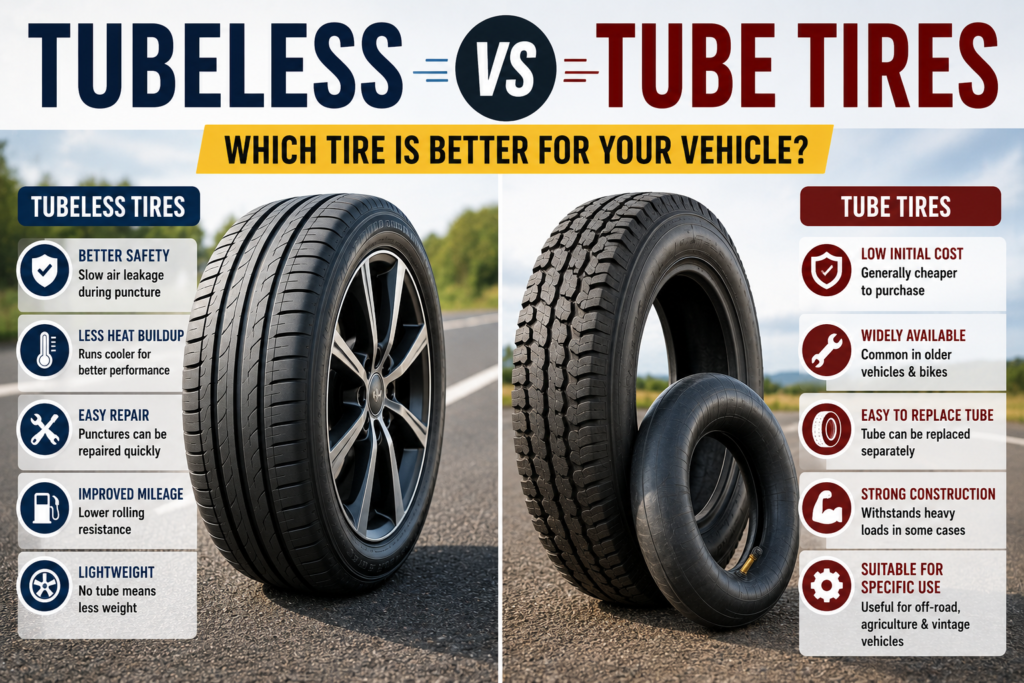
The comparison between tubeless vs tube tires clearly shows why tubeless technology has become the standard for modern vehicles. Tubeless tires offer better safety, improved fuel efficiency, longer service life, easier puncture repairs, and greater driving comfort. Their ability to lose air gradually after a puncture gives drivers valuable time to react safely, making them a superior choice for most cars and motorcycles.
While tube tires still have their place in certain vehicles and specialized applications, they require more maintenance and carry a higher risk of sudden air loss after a puncture. I always believe that choosing the right tire is an investment in both safety and performance. Understanding the strengths and weaknesses of each type helps every driver make a confident and informed decision for their vehicle.