Related Articles

Modern cars are becoming more like connected computers than traditional machines. Along with engines, brakes, sensors, and mechanical parts, today’s vehicles can have powerful software that controls many important functions. One of the most useful technologies in this area is called Over the Air car software updates, commonly known as OTA updates.
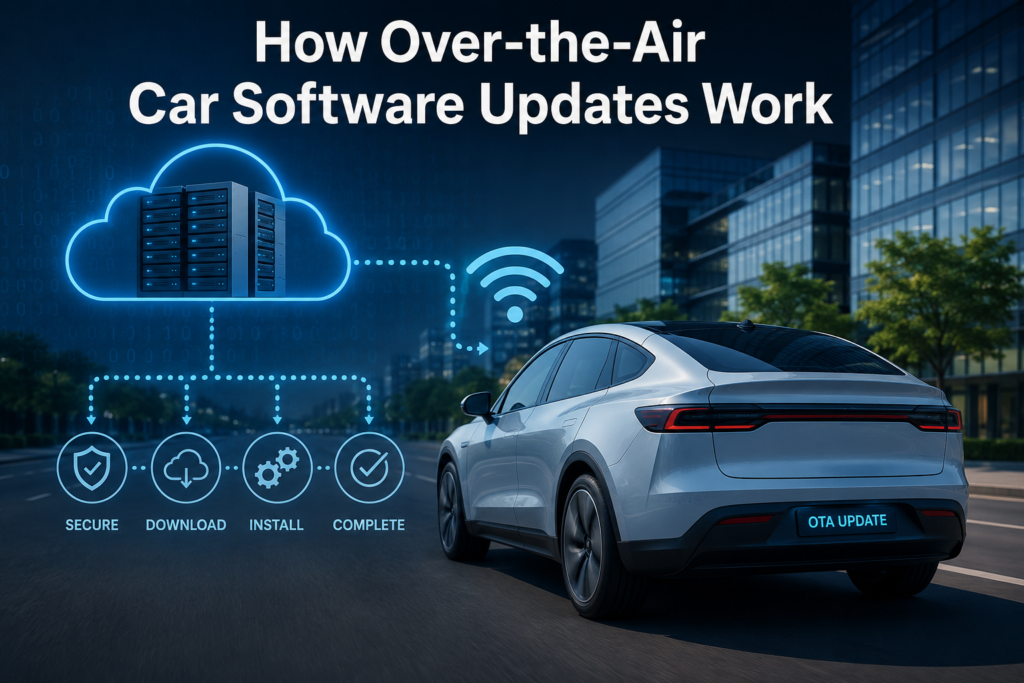
From my point of view, OTA updates are one of the biggest changes in modern automotive technology because they allow manufacturers to improve certain vehicle systems without requiring the owner to visit a dealership every time new software becomes available. A connected car can receive software through an internet connection, download the update, verify it, and install it while sitting in the driveway or parked in a safe location.
In this article, I will explain how over the air car software updates work, what they can change, why manufacturers use them, and what drivers should know before installing an update.
What Are Over the Air Car Software Updates?
An Over the Air car software update is a method of sending new software directly to a vehicle through a wireless connection. The process is similar to updating a smartphone, tablet, or computer.
Instead of connecting the car to a computer at a service center, the vehicle communicates with the manufacturer’s servers through an available internet connection. Depending on the vehicle, this connection may use a built in cellular network, WiFi, or another connected service.
The update can contain improvements, bug fixes, security changes, performance adjustments, or new features. Some updates are small and take only a short time to install, while larger updates may require more storage and several stages of installation.
Why Do Cars Need Software Updates?
Modern vehicles contain many electronic control units and software systems. These systems can control everything from infotainment and navigation to battery management, driver assistance, climate control, and communication features.
Like any computer software, automotive software can sometimes have problems. Engineers may discover bugs after a vehicle has been released. They may also find ways to improve the performance or reliability of a system.
This is where OTA updates become useful.
For example, a manufacturer may release an update that improves the operation of the infotainment system. Another update might improve battery management in an electric vehicle. A security update could also help protect connected vehicle systems from newly discovered digital threats.
In my opinion, the biggest advantage is convenience. Drivers do not always have to schedule a service appointment for software related improvements.
How Does an OTA Car Update Start?
The process normally begins when the manufacturer makes a new software version available for a particular vehicle.
The vehicle identification information and current software version can be checked against the manufacturer’s update system. If a compatible update is available, the car may notify the driver through the infotainment screen or mobile application.
Some vehicles allow the driver to start the update immediately, while others provide options to schedule it for a later time.
Before an update begins, the vehicle may perform several checks. It can verify that the battery has enough charge, that the vehicle is parked safely, and that other important conditions are satisfied.
These checks are important because software installation should not be interrupted during critical stages.
The Download Process
Once the update is approved, the vehicle downloads the required software package from the manufacturer’s servers.
The download usually happens through the vehicle’s connected communication system. The amount of data depends on the size of the update.
A small software correction may require relatively little data, while a major operating system update can be considerably larger.
The vehicle may allow the download to happen in the background while the car is being driven or parked. However, downloading and installing are usually treated as separate stages.
This is important because the car may continue operating normally while the software is being downloaded, but installation can require the vehicle to remain stationary.
How Security Protects OTA Updates
Security is one of the most important parts of Over the Air car software updates.
Manufacturers need to make sure that the software being installed is genuine and has not been modified by an unauthorized person. This is why secure communication, authentication, encryption, and digital verification can be used during the update process.
Before installation, the vehicle can check whether the software package is intended for that particular vehicle or system. It can also verify the integrity of the downloaded files.
From my perspective, this security layer is essential because connected cars are computers on wheels. If software can control important vehicle functions, manufacturers need strong protection against unauthorized software.
How the Installation Works
After the software has been downloaded and verified, the vehicle can begin installation.
The driver is normally informed that the installation is about to start. Depending on the vehicle and update type, the car may need to be parked, switched off, or placed in a specific state.
During installation, the existing software may be replaced or updated with the new version. Some modern systems are designed with backup software partitions so that the vehicle can maintain a usable software version if something goes wrong.
The installation process can take several minutes or longer depending on the vehicle and update size.
During this time, certain vehicle functions may not be available. This is why drivers should never begin an OTA update when they need to drive immediately.
What Can an OTA Update Change?
The capabilities of OTA updates depend heavily on the manufacturer and vehicle.
Many updates focus on infotainment features. They can improve menus, navigation, Bluetooth connectivity, smartphone integration, voice controls, and media functions.
Other updates can affect driver assistance systems, charging management, battery software, digital displays, communication systems, and vehicle settings.
Some manufacturers can also introduce new features through software.
This is one of the most interesting aspects of connected vehicles. A car can potentially receive improvements after it has already left the factory.
However, drivers should understand that software cannot magically upgrade every physical component. If a vehicle does not have the necessary hardware, an OTA update may not be able to provide a feature that depends on that hardware.
OTA Updates and Electric Vehicles
OTA technology is particularly important for electric vehicles.
Electric cars rely heavily on software for battery management, charging, energy consumption, thermal management, and range calculations.
An update could improve how the vehicle manages battery temperature or charging behavior. It could also improve the accuracy of range estimates or enhance the charging interface.
Software improvements can therefore have a noticeable effect on the daily driving experience.
I think this is one reason why software has become such an important part of electric vehicle development.
OTA Updates and Vehicle Safety
Not every OTA update is about entertainment or convenience. Some updates can address important technical problems.
If engineers discover a software issue that affects a vehicle system, an update may provide a correction. In some situations, software updates can reduce the need for a physical service visit.
However, drivers should never assume that every vehicle problem can be fixed through an OTA update. Mechanical failures, damaged components, worn brakes, tire problems, and many other physical issues still require proper inspection and repair.
Software is powerful, but it does not replace traditional vehicle maintenance.
What Happens If an Update Fails?
Manufacturers design OTA systems with different recovery methods, but software installation can still involve risks.
A vehicle may stop an installation if it detects a problem. It may also retry the process or return to a previous software version depending on the system design.
This is why manufacturers normally provide specific instructions before an update begins.
Drivers should follow the instructions shown on the vehicle screen or provided by the manufacturer. They should also make sure the vehicle has sufficient battery power and is parked in an appropriate location.
For major updates, it is a good idea to read the release notes and understand what the update is designed to change.
Advantages of Over the Air Car Software Updates
There are several major advantages of OTA updates.
The first is convenience. Drivers can receive certain improvements without visiting a service center.
The second advantage is speed. When a manufacturer identifies a software issue, a digital update can potentially be distributed to many compatible vehicles without requiring every owner to make an appointment.
Another advantage is continuous improvement. A vehicle can receive new software after purchase, which can help keep its digital systems current.
OTA updates can also reduce the workload for service centers when a problem can be solved entirely through software.
Possible Disadvantages of OTA Updates
Despite the advantages, OTA technology is not perfect.
The update process depends on reliable connectivity. If the vehicle has a poor connection, downloading an update may take longer.
Large updates can also consume significant data.
Another concern is cybersecurity. Connected vehicles need strong security because they communicate with external networks.
There is also the possibility that a new software version could introduce unexpected bugs. This is why manufacturers normally test updates before releasing them widely.
Drivers should also understand that software updates can sometimes change menus, settings, or vehicle behavior. Reading the update information before installation can help avoid surprises.
Do OTA Updates Replace Dealership Service?
No. OTA updates can reduce the need for some software related service visits, but they do not eliminate traditional maintenance.
Cars still need inspections, oil changes where applicable, tire service, brake maintenance, fluid checks, battery inspections, and repairs.
If a physical component is damaged or worn, a software update cannot fix it.
I see OTA technology as an additional maintenance tool rather than a complete replacement for professional automotive service.
The Future of Connected Car Software
I believe OTA updates will become even more important as vehicles become increasingly connected.
Future vehicles may depend on software for more functions, which means manufacturers will need reliable systems for delivering improvements and security updates.
We may also see cars receive more personalized features through software. Connected vehicle technology could allow manufacturers to improve certain functions throughout the vehicle’s ownership period.
This does not mean every future car will receive unlimited features through updates. Hardware limitations, subscription models, regulations, and manufacturer policies will still play important roles.
Final Thoughts
Over the Air car software updates have changed the way modern vehicles can be maintained and improved. Instead of relying entirely on physical service visits, connected cars can receive compatible software updates through wireless communication.
The basic process involves checking for an available update, downloading the software, verifying its authenticity, preparing the vehicle, and installing the new version. Security checks and system protections help make the process safer.
From my point of view, the most valuable part of OTA technology is that a vehicle can continue improving after it leaves the factory. It makes cars more connected and gives manufacturers a faster way to address certain software problems.
At the same time, drivers should remember that software updates are not a replacement for regular maintenance. A modern car still needs proper mechanical care, inspections, and responsible driving.
As automotive technology continues to develop, Over the Air car software updates will likely become a normal part of vehicle ownership. For anyone interested in connected cars, understanding how OTA updates work is becoming just as important as understanding the engine, sensors, and electronic control systems inside the vehicle.