Related Articles
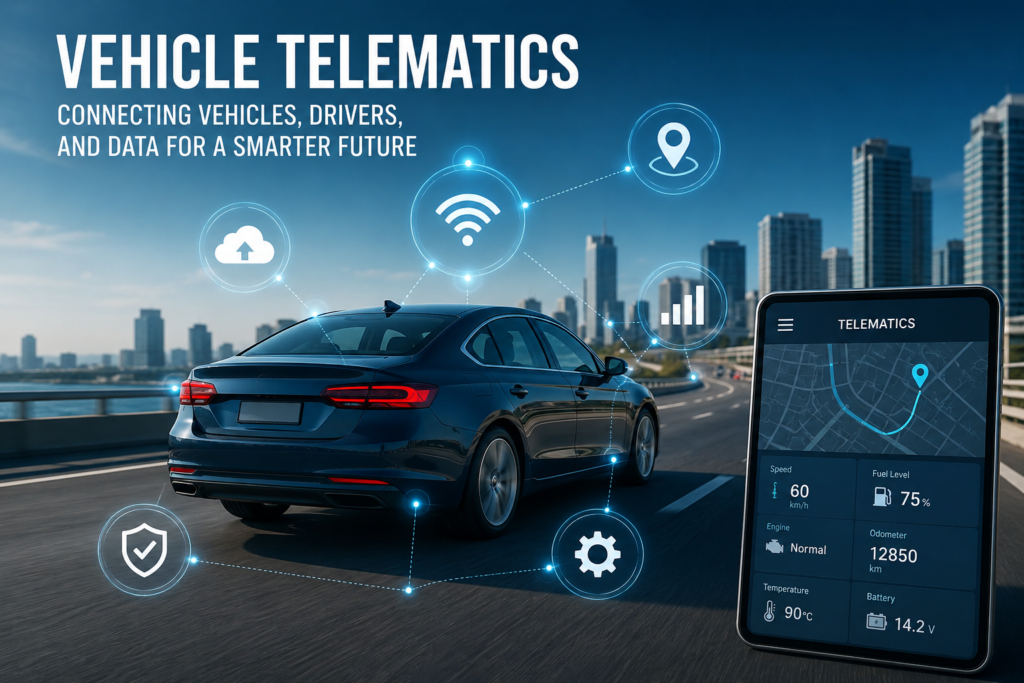
Vehicle telematics is one of the technologies that has changed the way modern vehicles communicate, operate, and interact with drivers. If you have ever used a vehicle tracking app, received a maintenance alert on your phone, or checked the location of a car remotely, there is a good chance that telematics technology was involved.
In simple words, vehicle telematics combines telecommunications and vehicle information technology to collect, send, and receive data from a vehicle. This data can include location, speed, fuel level, engine condition, driving behavior, battery status, and many other details.
In my view, vehicle telematics is becoming an important part of modern transportation because cars are no longer just mechanical machines. They are now connected devices that can communicate with drivers, manufacturers, fleet managers, and cloud based services.
What Is Vehicle Telematics?
Vehicle telematics is a technology system that allows a vehicle to collect information and transmit it through wireless communication networks. The system normally uses devices, sensors, GPS, mobile networks, software, and cloud platforms to manage vehicle data.
A telematics system can monitor where a vehicle is located, how fast it is moving, how it is being driven, and whether there are problems that require attention. Depending on the vehicle and system, it may also collect information about fuel consumption, engine performance, braking behavior, tire pressure, battery condition, and maintenance requirements.
The main purpose of vehicle telematics is to turn vehicle information into useful data. Instead of relying only on what a driver can see on the dashboard, telematics can provide a much broader picture of what is happening with a vehicle.
How Does Vehicle Telematics Work?
Vehicle telematics works through several technologies that communicate with each other. The process may look complicated, but the basic idea is quite simple.
First, sensors and vehicle control systems collect information from the vehicle. Modern cars already contain many electronic control units and sensors that monitor different systems. These components can provide information about speed, engine operation, fuel level, temperature, braking, and other vehicle conditions.
A telematics control unit then receives relevant information and prepares it for transmission. GPS technology can determine the vehicle location, while a cellular connection can send the collected information to a remote server.
The data is usually processed through software or a cloud platform. Drivers or authorized users can then access useful information through a mobile application, website, or fleet management dashboard.
This process can happen continuously or at selected intervals depending on how the telematics system is designed.
Main Components of a Vehicle Telematics System
A vehicle telematics system usually includes several important components.
GPS Technology
GPS is responsible for determining the vehicle location. It allows the system to track where a vehicle is and can also help calculate movement, travel distance, and route information.
GPS tracking is particularly useful for businesses that operate several vehicles. Fleet managers can see vehicle locations and understand how their vehicles are being used.
Vehicle Sensors
Modern vehicles contain numerous sensors that monitor different systems. Telematics technology can use information from these sensors to understand vehicle performance.
For example, sensors can provide information related to engine temperature, fuel level, wheel speed, battery voltage, and other important conditions.
Communication Network
The collected data needs a way to reach a remote server. Cellular networks are commonly used for this purpose. Depending on the system, other wireless communication technologies may also be involved.
The communication system allows the vehicle to send information to a cloud platform where it can be stored and analyzed.
Telematics Control Unit
The telematics control unit acts as an important communication point inside the vehicle. It can collect information from different vehicle systems and transmit relevant data to an external platform.
In many modern vehicles, this technology is integrated into the vehicle rather than being a separate device.
Cloud Software
Cloud software receives and processes telematics data. It can convert raw vehicle information into reports and useful insights.
For example, instead of showing thousands of individual data points, a fleet management system may simply report that a vehicle exceeded a selected speed limit or requires maintenance.
What Information Can Vehicle Telematics Collect?
The exact information depends on the vehicle and telematics system, but many systems can collect a wide range of information.
Common examples include vehicle location, speed, travel distance, fuel consumption, engine information, battery condition, driving behavior, and maintenance data.
Some advanced systems can also provide information about harsh acceleration, sudden braking, cornering, idling time, and other driving patterns.
This information can help drivers and businesses understand how a vehicle is being used.
For example, if a company notices that one vehicle spends a large amount of time idling, it may be able to reduce fuel consumption by changing the driver’s routine.
Benefits of Vehicle Telematics
One of the biggest advantages of vehicle telematics is improved visibility. When a vehicle is connected, it becomes easier to understand what is happening with it.
Better Vehicle Tracking
Vehicle tracking is one of the most common uses of telematics. Owners and fleet managers can see the current or recent location of a vehicle.
This can be useful for delivery companies, transportation businesses, rental companies, and individuals who want additional visibility over their vehicles.
Improved Fleet Management
For businesses with multiple vehicles, telematics can make fleet management much easier. Instead of depending on drivers to provide information manually, managers can receive data directly from the vehicles.
This can help with route planning, vehicle utilization, driver performance, and maintenance scheduling.
Maintenance Monitoring
Telematics can also help identify vehicle problems earlier. When certain vehicle information indicates a possible issue, the system may generate an alert.
This does not replace professional vehicle inspection, but it can help drivers become aware of potential problems before they become more serious.
In my opinion, this is one of the most useful applications because regular maintenance can help improve reliability and reduce unexpected downtime.
Better Fuel Efficiency
Fuel consumption is another important area where telematics can help. Businesses can analyze driving patterns and identify unnecessary idling, aggressive acceleration, or inefficient routes.
By improving these habits, it may be possible to reduce fuel consumption and operating costs.
Improved Driver Safety
Some telematics systems monitor driving behavior. Sudden braking, excessive acceleration, speeding, and sharp cornering can be recorded and analyzed.
This information can help businesses identify risky driving habits and provide appropriate driver training.
The goal should not simply be to monitor drivers. Instead, the information should be used responsibly to encourage safer driving.
Vehicle Telematics for Personal Cars
Telematics is not limited to commercial fleets. Personal vehicles are also becoming increasingly connected.
Many newer cars can provide information through smartphone applications. Depending on the manufacturer and vehicle model, drivers may be able to check vehicle location, fuel level, battery condition, service information, or other vehicle details remotely.
Some connected cars can also send automatic notifications when a maintenance issue is detected.
This makes vehicle ownership more convenient because important information can be available even when the driver is away from the car.
Vehicle Telematics and Connected Cars
Vehicle telematics is closely connected with the development of connected cars. A connected car can communicate with external services and systems through wireless networks.
Telematics is one of the technologies that makes this communication possible.
For example, a connected vehicle may send information to a manufacturer’s cloud platform. The platform can process the information and provide services through a mobile application.
As vehicles become more software focused, I believe telematics will become even more important in the future.
Is Vehicle Telematics the Same as GPS Tracking?
Vehicle telematics and GPS tracking are related, but they are not exactly the same thing.
GPS tracking mainly focuses on location. It answers questions such as where a vehicle is and where it has been.
Vehicle telematics can provide much more information. It may combine GPS location with vehicle performance, driving behavior, maintenance information, fuel consumption, and other data.
So, GPS tracking can be considered one part of a broader telematics system.
Privacy and Data Security
Because telematics systems collect vehicle information, privacy and security are important considerations.
Vehicle data can reveal where a vehicle has traveled, how it has been driven, and when it was used. This means telematics providers need to take appropriate steps to protect collected information.
Users should understand what information is being collected, how it is stored, who can access it, and how it may be used.
For businesses, clear policies can help employees understand how vehicle information is monitored. Responsible data handling is essential for maintaining trust.
The Future of Vehicle Telematics
The future of vehicle telematics looks closely connected to the development of connected and intelligent vehicles.
As cars gain more sensors, software, and communication capabilities, the amount of available vehicle data will continue to increase.
Telematics may become more closely integrated with predictive maintenance, advanced driver assistance systems, smart city infrastructure, insurance services, electric vehicle management, and fleet automation.
Electric vehicles can also benefit from telematics by providing information about battery condition, charging status, energy consumption, and charging locations.
In the future, vehicles may communicate more frequently with cloud services and surrounding infrastructure, creating a transportation environment where information can move quickly between vehicles, drivers, roads, and service providers.
Final Thoughts
Vehicle telematics is essentially a communication system that connects a vehicle with digital services and turns vehicle information into useful insights. It combines technologies such as GPS, sensors, wireless communication, vehicle computers, and cloud software.
From my point of view, the biggest value of vehicle telematics is not simply tracking a vehicle. Its real value comes from understanding vehicle data and using that information to improve safety, maintenance, efficiency, and convenience.
For businesses, telematics can make fleet management more organized and efficient. For individual drivers, it can provide useful information about vehicle location, condition, and maintenance.
As vehicles continue becoming smarter and more connected, vehicle telematics will likely become an even more important part of everyday transportation. Understanding how this technology works today can help us better understand where the automotive industry is heading tomorrow.