Related Articles
When I bought my first car, I remember looking at the numbers printed on the side of the tires and wondering what they actually meant. At first, they looked like a random combination of letters and numbers, but after learning about them, I realized they provide important information about a tire’s size, performance, and compatibility. Understanding tire size is useful for every vehicle owner because choosing the wrong tires can affect handling, fuel efficiency, ride comfort, and even safety.
Many people simply ask a tire shop for replacements without checking the tire specifications themselves. While there is nothing wrong with getting professional advice, I believe every driver should understand the basics of reading tire sizes. It helps you make informed decisions and ensures you purchase the correct tires for your vehicle.
In this article, I will explain how to read tire size, what each number and letter means, and why these markings are important when buying new tires.
Why Tire Size Is Important
Tires are carefully designed to match your vehicle’s suspension, braking system, steering, and weight. Every number printed on the sidewall serves a specific purpose.
Using the correct tire size helps maintain proper handling, improves braking performance, protects the suspension system, supports fuel efficiency, and ensures the speedometer remains accurate.
Installing the wrong tire size may negatively affect your vehicle’s performance and safety.
Where to Find Tire Size
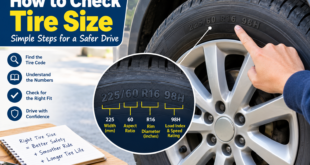
The easiest place to find your tire size is on the sidewall of your current tires.
You can also find the recommended size inside the driver’s door frame, in the owner’s manual, or on the vehicle information sticker.
The manufacturer’s recommended size is usually the best choice unless you are making approved upgrades.
Understanding a Tire Size Example
A common tire size looks like this:
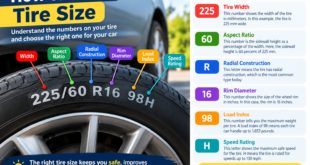
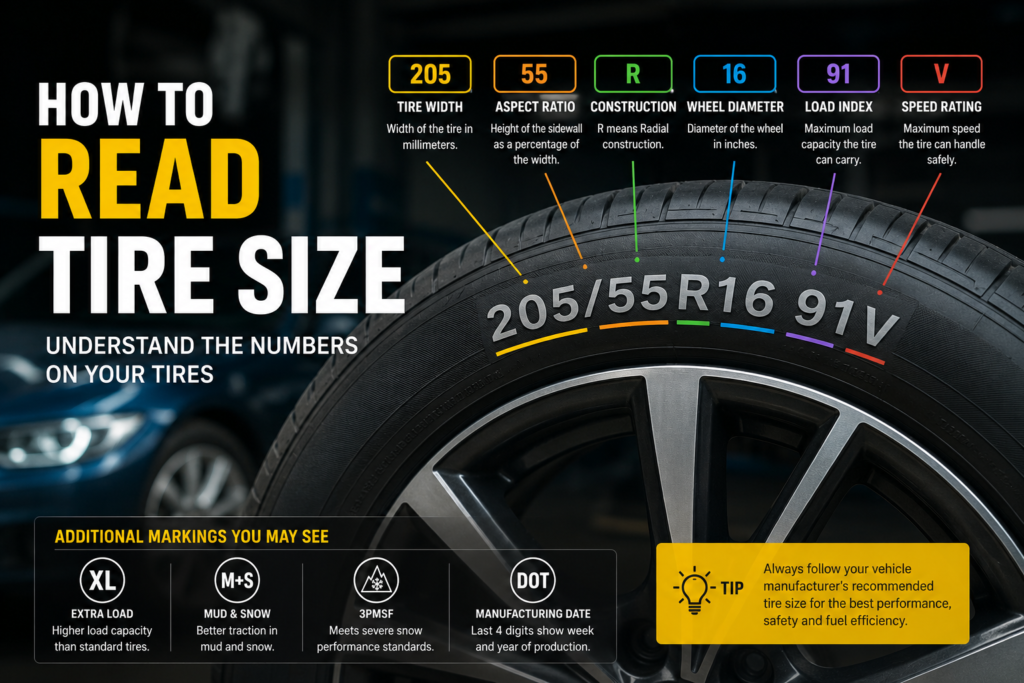
205/55R16 91V
Although it may seem confusing at first, every part of this code has a specific meaning.
Once you understand each section, reading tire sizes becomes very simple.
Tire Width
The first number is the tire width.
In our example, the number 205 means the tire is 205 millimeters wide.
The width is measured from one sidewall to the other.
Wider tires generally provide more road contact, which may improve grip and cornering.
However, they can also increase rolling resistance and slightly reduce fuel efficiency.
Choosing the width recommended by the manufacturer provides the best balance.
Aspect Ratio
The second number is the aspect ratio.
In the example, 55 means the sidewall height is 55 percent of the tire’s width.
This number is expressed as a percentage rather than an actual measurement.
Lower aspect ratios usually provide sharper handling because the sidewalls are shorter.
Higher aspect ratios often deliver a smoother and more comfortable ride.
Tire Construction
After the aspect ratio comes a letter.
Most modern passenger vehicles use the letter R.
The R stands for radial construction.
Radial tires contain internal cords arranged perpendicular to the direction of travel.
Nearly all modern cars use radial tires because they provide excellent durability, comfort, and fuel efficiency.
Older vehicles may occasionally use different construction types, but radial tires dominate today’s market.
Wheel Diameter
The next number represents the wheel diameter.
In our example, 16 means the tire fits a 16 inch wheel.
This measurement must exactly match the wheel size.
A tire designed for a 16 inch wheel cannot be installed on a 17 inch wheel.
Always verify wheel diameter before purchasing replacement tires.
Load Index
Following the wheel diameter is the load index.
In the example, 91 represents the maximum load capacity assigned to that tire.
The actual weight depends on a standardized load index chart.
Choosing the correct load index is important because it ensures the tire can safely support your vehicle.
Using tires with a lower load rating than recommended may create safety risks.
Speed Rating
The final letter is the speed rating.
In our example, V indicates the maximum speed the tire is designed to handle safely.
Different letters represent different speed capabilities.
Most everyday drivers never reach these limits, but using the correct speed rating ensures the tire matches the vehicle’s design.
Always follow the manufacturer’s recommendation.
What Does XL Mean?
Some tires include additional markings such as XL.
XL stands for Extra Load.
These tires are designed to carry heavier loads while maintaining proper performance.
They are commonly used on SUVs, crossovers, and vehicles that regularly transport passengers or cargo.
What Does M Plus S Mean?
You may also notice the letters M+S on certain tires.
This stands for Mud and Snow.
These tires are designed to provide improved traction in light snow and muddy conditions compared to standard tires.
However, they are not the same as dedicated winter tires.
Three Peak Mountain Snowflake Symbol
Some winter and all weather tires display a mountain symbol with a snowflake inside.
This marking indicates the tire has passed official winter performance testing.
Drivers living in areas with heavy snowfall should look for this symbol when purchasing winter tires.
Tire Manufacturing Date
Every tire includes a DOT code followed by four numbers.
For example, 3525 means the tire was manufactured during the 35th week of 2025.
Checking the manufacturing date helps ensure you purchase fresh tires.
Even unused tires gradually age over time.
Tire Pressure Information
Many people believe the maximum pressure printed on the tire is the correct inflation pressure.
In reality, the recommended tire pressure is determined by your vehicle manufacturer.
You can usually find it on the driver’s door sticker.
Maintaining proper pressure improves tire life, handling, and fuel economy.
Why Tire Size Should Match Your Vehicle
Manufacturers spend years testing tire sizes for each vehicle.
The recommended size provides the ideal balance between comfort, braking, steering response, fuel efficiency, and suspension performance.
Changing tire sizes without proper planning may affect speedometer accuracy, wheel clearance, ride quality, and fuel consumption.
If you plan to upgrade wheels or tires, consult a qualified professional first.
Common Tire Size Mistakes
One mistake I often see is purchasing tires based only on price.
Another common error is choosing wider tires without checking wheel compatibility.
Some drivers ignore the load index or speed rating entirely.
Others buy old tires that have been sitting in storage for several years.
Understanding tire markings helps avoid these costly mistakes.
Can You Change Tire Size?
Many enthusiasts upgrade to larger wheels or wider tires for appearance or improved handling.
While this can be done successfully, the new tires should maintain the overall rolling diameter as closely as possible.
Incorrect sizing may affect speedometer readings, electronic safety systems, and suspension performance.
Professional guidance is recommended before making significant changes.
Tips for Buying New Tires
Always compare the tire size with your current tires or the manufacturer’s recommendation.
Choose a trusted tire brand.
Check the manufacturing date.
Verify the load index and speed rating.
Inspect the warranty.
Read customer reviews.
Purchase from reputable dealers.
These simple steps help ensure you receive high quality tires that perform well for years.
Maintain Your Tires Properly
Understanding tire size is only part of proper tire care.
Check tire pressure regularly.
Rotate tires according to the maintenance schedule.
Inspect tread depth.
Balance the wheels when installing new tires.
Have wheel alignment checked if uneven tire wear appears.
Proper maintenance helps maximize tire performance and lifespan.
Final Thoughts
In my opinion, learning how to read tire size is one of the most useful skills every vehicle owner should have. Those numbers and letters printed on the tire sidewall are not random. They provide valuable information about the tire’s width, aspect ratio, construction type, wheel diameter, load capacity, speed rating, and manufacturing date. Understanding these markings makes it much easier to choose the correct replacement tires and avoid costly mistakes.
The right tire size helps your vehicle perform exactly as the manufacturer intended. It improves handling, enhances safety, increases fuel efficiency, and extends tire life. By taking a few minutes to understand tire markings and following the recommended specifications, you can make smarter purchasing decisions and enjoy a safer, smoother, and more comfortable driving experience every time you hit the road.