
Related Articles


When I talk about modern car safety features, one system that I think deserves more attention is Vehicle Stability Control. Many drivers see a stability control warning light on the dashboard but do not fully understand what it means or how the system actually works. Vehicle Stability Control, often called VSC, is designed to help a vehicle stay on its intended path when the car starts to lose traction or stability.
In my view, this is one of those safety technologies that works quietly in the background. Most of the time, drivers do not even notice it. However, during a sudden turn, slippery road conditions, or an emergency maneuver, Vehicle Stability Control can become extremely important.
In this article, I will explain what Vehicle Stability Control is, how it works, why it is important, what the warning light means, and how it differs from traction control and anti lock braking systems.
What Is Vehicle Stability Control?
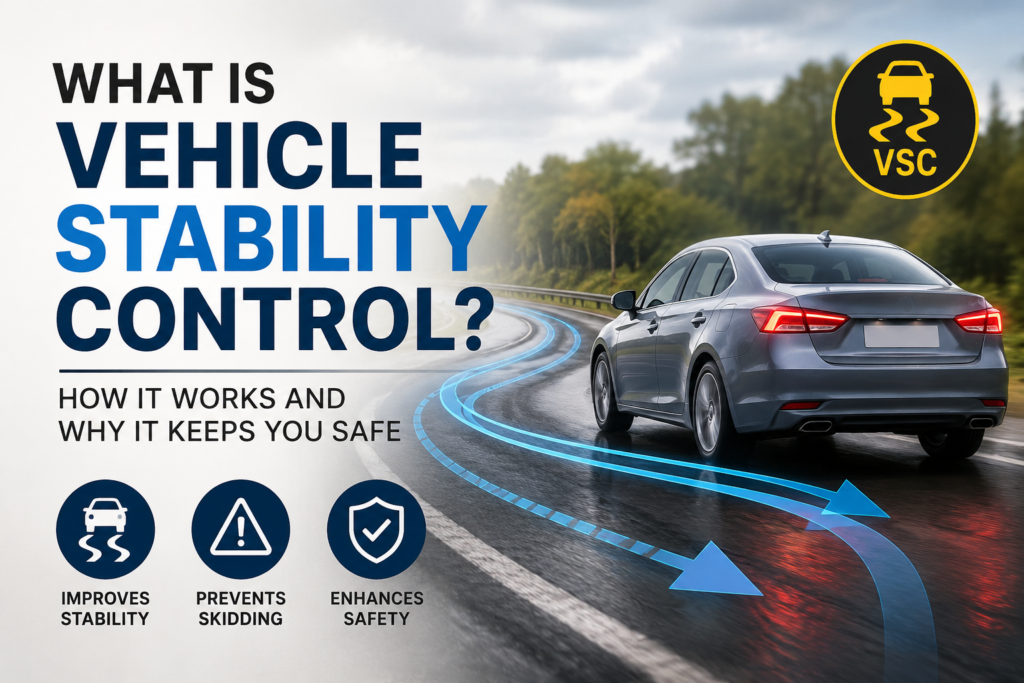
Vehicle Stability Control is an electronic safety system that helps a vehicle maintain stability and directional control. It monitors the movement of the vehicle and compares that movement with the direction the driver wants to travel.
For example, imagine you are driving around a corner and the road suddenly becomes wet. The tires may lose grip, causing the vehicle to move wider than the direction you intended. The Vehicle Stability Control system can detect this change and take corrective action.
Depending on the situation, the system may automatically apply braking force to one or more wheels and reduce engine power. These small corrections can help bring the vehicle back toward its intended path.
Different vehicle manufacturers use different names for this technology. Toyota commonly uses Vehicle Stability Control or VSC, while other manufacturers may call similar systems Electronic Stability Control, Electronic Stability Program, or Dynamic Stability Control.
Although the names are different, the basic purpose is similar. The system is designed to help prevent loss of control.
How Does Vehicle Stability Control Work?
Vehicle Stability Control works through a combination of sensors, the vehicle computer, brakes, and engine management system.
The system continuously collects information about the vehicle. Some important information includes steering wheel movement, wheel speed, vehicle rotation, and sideways movement.
One important sensor is the steering angle sensor. It tells the system which direction the driver wants the vehicle to go.
Wheel speed sensors monitor how quickly each wheel is rotating. These sensors are also important for the anti lock braking system and traction control system.
Another important component is the yaw rate sensor. It monitors how much the vehicle is rotating around its vertical axis. The system can use this information to determine whether the vehicle is turning as expected.
The control computer compares all of this information. If it detects that the vehicle is not following the driver’s intended direction, it can respond very quickly.
For instance, if the vehicle begins sliding toward the outside of a corner, the system may apply braking to a specific wheel to help stabilize the vehicle. It may also reduce engine power if necessary.
From my point of view, the impressive part of Vehicle Stability Control is how quickly these decisions can happen. The driver may only feel a small braking sensation or notice a flashing dashboard light while the system is making corrections.
Why Is Vehicle Stability Control Important?
The main purpose of Vehicle Stability Control is to reduce the possibility of losing control.
A vehicle can become unstable for many reasons. Wet roads, loose gravel, snow, ice, sudden steering movements, excessive speed, and unexpected obstacles can all affect vehicle stability.
Without electronic stability assistance, a driver may have to react completely on their own. Even an experienced driver may not always be able to correct a sudden skid.
Vehicle Stability Control does not make a vehicle impossible to crash, but it can provide an additional layer of protection.
I consider it especially useful during emergency situations because drivers may not have enough time to think about every correction. The system can react automatically based on sensor information.
Vehicle Stability Control and Traction Control
Vehicle Stability Control and traction control are related, but they are not exactly the same.
Traction control mainly focuses on preventing the drive wheels from spinning excessively during acceleration. If a driven wheel begins spinning on a slippery surface, the system can reduce engine power or apply braking to help restore traction.
Vehicle Stability Control has a broader purpose. It focuses on the overall stability and direction of the vehicle.
For example, traction control can help when your tires spin while accelerating on a wet road. Vehicle Stability Control can help when the entire vehicle begins moving away from the direction you are steering.
Both systems often work together. Modern vehicles use several electronic safety systems at the same time to improve control.
Vehicle Stability Control and ABS
Anti lock braking systems, commonly known as ABS, are another important part of modern vehicle safety.
ABS helps prevent the wheels from locking during hard braking. When a wheel is about to lock, the ABS system can rapidly adjust brake pressure so the driver can maintain steering control.
Vehicle Stability Control can use the ABS braking hardware to apply braking to individual wheels.
This means these technologies are closely connected, but they have different purposes. ABS is primarily designed to maintain wheel rotation during heavy braking, while Vehicle Stability Control is designed to help maintain directional stability.
What Does the VSC Warning Light Mean?
If the VSC warning light appears on your dashboard, the meaning can depend on the vehicle and the circumstances.
In many vehicles, a flashing stability control light means the system is actively working. For example, if you accelerate on a slippery road and the tires begin to lose grip, the stability control indicator may flash while the system attempts to correct the situation.
A warning light that remains illuminated may indicate that the system has been turned off or that there is a fault that needs attention.
Some vehicles may display messages such as VSC OFF, Check VSC, or Stability Control System.
I would not recommend ignoring a persistent warning light. Even if the vehicle seems to drive normally, an electronic safety system may not be working correctly.
Can You Drive With the VSC Light On?
Whether you can continue driving depends on why the warning light is illuminated.
If the light flashes briefly while driving on a slippery road, that can simply mean the system is operating.
If the light stays on continuously, it is better to check the owner’s manual and have the vehicle inspected if necessary.
A problem with the stability control system does not always mean the vehicle will immediately become unsafe to drive. However, it may mean that an important safety feature is unavailable.
If several warning lights appear together, especially ABS or brake related warnings, I would take the situation more seriously and arrange an inspection as soon as possible.
Should Vehicle Stability Control Be Turned Off?
Some vehicles allow the driver to temporarily turn off or reduce stability control intervention.
There can be situations where turning the system off is useful. For example, a vehicle stuck in deep snow or loose material may sometimes need controlled wheel spin to get moving.
However, for normal road driving, I recommend leaving Vehicle Stability Control turned on.
The system is designed to help during situations where traction and stability are compromised. Turning it off unnecessarily removes an important layer of electronic safety assistance.
Drivers should also remember that stability control cannot overcome the laws of physics. If a vehicle is traveling too fast for the road conditions, the system cannot guarantee that the vehicle will remain under control.
Common Causes of Stability Control Problems
Several issues can cause a stability control warning to appear.
A faulty wheel speed sensor is one possible cause. Since wheel speed information is important for stability control, a sensor problem can affect the entire system.
A steering angle sensor problem can also cause a warning. The system needs to know where the driver is steering so it can compare the intended direction with the actual movement of the vehicle.
Other possible causes include problems with the ABS system, wiring, brake components, battery voltage, or other electronic sensors.
Sometimes the warning may appear after work has been performed on the vehicle. For example, certain repairs or wheel alignment procedures may require sensors to be checked or recalibrated.
Because there can be many possible causes, scanning the vehicle with appropriate diagnostic equipment is usually a better approach than simply replacing parts.
How Can You Maintain Vehicle Stability Control?
There is no special daily maintenance routine for Vehicle Stability Control, but normal vehicle maintenance can help keep the system working correctly.
I recommend checking tire pressure regularly because tire condition has a major effect on vehicle stability. Tires should also have adequate tread and should be replaced when they become excessively worn.
Keeping the wheels properly aligned is also important. Incorrect alignment can affect how the vehicle responds to steering inputs.
Brake maintenance matters as well because the stability control system may use individual wheel braking to help control the vehicle.
It is also important not to ignore dashboard warning lights. A small electronic problem can affect several connected safety systems.
Does Vehicle Stability Control Replace Safe Driving?
Absolutely not.
This is something I believe every driver should understand. Vehicle Stability Control is an assistance system, not a replacement for good driving habits.
It cannot make bald tires safe. It cannot make excessive speed safe. It cannot guarantee control on ice or standing water.
The best approach is to combine electronic safety technology with responsible driving.
Maintain a safe speed, keep your tires in good condition, leave enough following distance, and pay attention to road and weather conditions.
Final Thoughts
Vehicle Stability Control is an important safety feature that helps drivers maintain control when a vehicle begins to lose stability. It uses sensors and electronic controls to monitor the vehicle and can apply individual wheel braking or reduce engine power when necessary.
In my opinion, the biggest benefit of Vehicle Stability Control is that it provides an extra layer of assistance during situations that can happen unexpectedly. A wet corner, slippery road, sudden obstacle, or emergency steering maneuver can quickly change the behavior of a vehicle.
Understanding what Vehicle Stability Control does can also help drivers react appropriately when the warning light appears.
The most important thing to remember is that VSC is designed to assist the driver, not replace the driver. Good tires, proper maintenance, sensible speed, and careful driving are still essential.
When these habits are combined with modern safety technology, Vehicle Stability Control can play an important role in making everyday driving safer and more controlled.
I can also create an AdSense friendly featured image for WordPress based on this Vehicle Stability Control article.