
Related Articles



When it comes to regular car maintenance, motor oil is one of those things that should never be ignored. The right engine oil helps keep moving parts lubricated, controls heat, reduces friction, and protects the engine from unnecessary wear. However, when it is time for an oil change, many drivers find themselves asking the same question: synthetic vs conventional motor oil, which one should I choose?
In my view, both types of motor oil have their place. Synthetic oil offers several advantages in performance and protection, while conventional motor oil can still be a practical option for certain vehicles and driving conditions. The important thing is understanding the difference and choosing the oil that matches your vehicle manufacturer’s recommendations.
What Is Conventional Motor Oil?
Conventional motor oil is made from crude oil that is refined and processed to produce a lubricant suitable for use inside an engine. It has been used for decades and remains a common choice for many vehicles.
Conventional oil provides the basic protection an engine needs. It creates a lubricating layer between moving components, helping reduce direct metal to metal contact. This is particularly important because engine components can move at very high speeds and operate under significant heat and pressure.
One reason many drivers choose conventional motor oil is its affordability. It is generally less expensive than synthetic oil, making it attractive for people who want to keep routine maintenance costs lower.
Conventional oil can work very well when used in an engine that is designed for it. However, it can break down more quickly under extreme heat and demanding driving conditions compared with many modern synthetic formulations.
What Is Synthetic Motor Oil?
Synthetic motor oil is specially formulated using chemically engineered base oils and additives. Instead of relying mainly on refined crude oil, synthetic oil is designed to provide more consistent performance across different temperatures and operating conditions.
One of the biggest advantages I notice with synthetic motor oil is its ability to maintain its protective properties under demanding conditions. Modern engines can operate at high temperatures, and synthetic oil is generally better suited to handling those conditions.
Synthetic oil also tends to flow more effectively during cold starts. When an engine has been sitting for several hours, especially in cold weather, the oil needs to circulate quickly. Faster oil circulation can help provide lubrication to engine components sooner after startup.
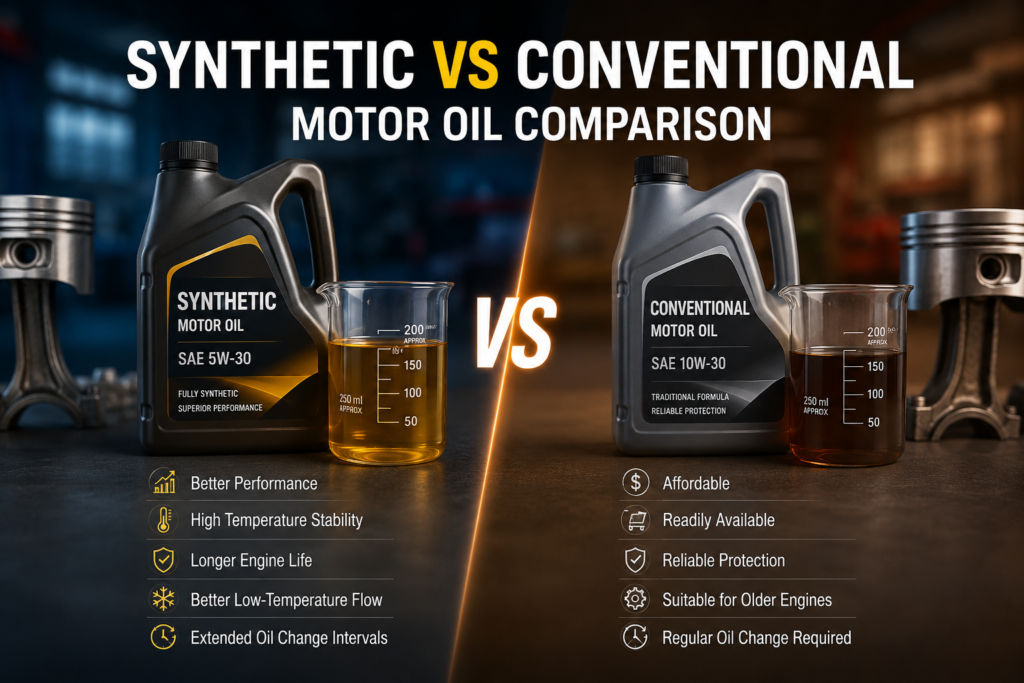
Synthetic vs Conventional Motor Oil: Main Difference
The biggest difference between synthetic and conventional motor oil is how they are formulated and how consistently they perform under changing conditions.
Conventional oil is a traditional petroleum based lubricant. Synthetic oil is engineered to provide more controlled molecular characteristics and enhanced performance.
Synthetic oil generally offers better resistance to oxidation and thermal breakdown. It can also provide strong protection during extreme temperatures. Conventional oil can still provide dependable protection, but its performance may decline faster when an engine regularly experiences severe heat or demanding operating conditions.
Another difference is cost. Synthetic oil usually costs more, although the price difference varies depending on the brand, viscosity, vehicle, and oil change service.
Performance in High Temperatures
Engine temperature is one of the most important factors affecting motor oil. During normal driving, the oil is exposed to considerable heat. Under heavy loads, long highway trips, towing, or aggressive driving, temperatures can become even more demanding.
Synthetic motor oil generally performs well in these situations because it is designed to resist thermal breakdown. It can maintain its protective characteristics for longer under high temperature conditions.
Conventional motor oil can also handle normal engine temperatures effectively. However, if a vehicle regularly operates under severe conditions, synthetic oil may provide an additional level of protection.
For drivers who frequently tow, drive long distances, or operate vehicles in very hot environments, I would consider synthetic motor oil a strong option, provided it meets the vehicle manufacturer’s specifications.
Cold Weather Performance
Cold weather is another area where the difference between synthetic and conventional oil can become noticeable.
Motor oil becomes thicker as temperatures fall. When the engine starts, thick oil may take longer to circulate through the engine. This is one reason cold starts can be harder on an engine.
Synthetic oil is generally formulated to maintain better flow characteristics at low temperatures. This allows it to circulate more quickly during startup.
Conventional motor oil can still perform properly in cold weather when the correct viscosity is selected. The key is using the oil grade recommended by the manufacturer.
For example, a vehicle might require a specific viscosity such as 5W 30 or 0W 20. The numbers indicate how the oil behaves at different temperatures. Choosing the correct viscosity is more important than simply choosing synthetic because synthetic oil is not automatically suitable for every engine.
Engine Protection and Wear
The main purpose of motor oil is to protect the engine from friction and wear. Both conventional and synthetic oils are designed to create a lubricating film between moving components.
Synthetic motor oil can offer strong protection because of its formulation and resistance to breakdown. It can remain stable under a wider range of operating conditions and may help maintain consistent lubrication.
Conventional motor oil also provides effective engine protection when it is the correct specification and changed according to the recommended schedule.
In my opinion, the biggest mistake is assuming that expensive oil can compensate for poor maintenance. Even the best synthetic motor oil cannot protect an engine properly if the oil level is too low or the oil is left in the engine far beyond the recommended service interval.
Oil Change Intervals
Another common question in the synthetic vs conventional motor oil debate involves oil change intervals.
Synthetic oil often has the ability to remain stable for longer periods. Some vehicles using synthetic oil can have longer manufacturer recommended oil change intervals. However, this does not mean every synthetic oil should automatically be used for extremely long intervals.
The vehicle manufacturer’s maintenance schedule should always come first. The recommended interval can depend on the engine, oil specification, driving conditions, vehicle age, and other factors.
Conventional motor oil may require more frequent changes in some applications. Regular oil changes are essential because oil becomes contaminated over time with combustion byproducts, moisture, and other particles.
Changing oil on schedule is one of the simplest ways to support long term engine reliability.
Fuel Economy Considerations
Synthetic motor oil may also have an advantage when it comes to fuel economy. Some synthetic oils are designed to reduce internal friction, allowing engine components to move more efficiently.
The actual fuel economy difference can vary considerably from one vehicle to another. I would not choose synthetic oil solely because I expect a dramatic reduction in fuel consumption.
However, when the manufacturer recommends a low viscosity synthetic oil for a modern engine, using the correct product can help the engine operate as intended.
Which Oil Is Better for Older Cars?
Older vehicles can make the choice slightly more complicated.
Some older engines were designed around conventional motor oil, while others can benefit from modern synthetic formulations. Synthetic oil is not automatically bad for an older engine, but the engine’s condition and manufacturer’s recommendations should be considered.
For an older vehicle with significant oil consumption or existing leaks, switching oil types without understanding the condition of the engine may not be the best approach.
If I were choosing oil for an older vehicle, I would first check the owner’s manual and consider the engine’s mileage, condition, oil consumption, and operating environment rather than choosing based only on price.
Is Synthetic Motor Oil Worth the Extra Cost?
For many drivers, synthetic motor oil is worth the additional cost. Its advantages can include better temperature performance, strong resistance to breakdown, improved cold weather flow, and consistent lubrication.
However, that does not mean conventional motor oil is a poor choice.
If your vehicle manufacturer allows conventional oil, your driving conditions are normal, and you follow the recommended maintenance schedule, conventional oil can be a perfectly reasonable option.
The value of synthetic oil becomes more obvious when a vehicle operates under demanding conditions or when the manufacturer specifically requires or recommends synthetic oil.
Can You Mix Synthetic and Conventional Oil?
In many situations, synthetic and conventional motor oils can be mixed if they have the correct viscosity and performance specifications. However, intentionally mixing different types of oil is usually not something I would recommend when you have access to the correct product.
If you accidentally add a small amount of conventional oil to an engine containing synthetic oil, it generally does not mean the engine is immediately damaged. Modern motor oils are formulated to work together in many circumstances.
Still, the best practice is to follow the manufacturer’s oil specification and use one appropriate product during routine maintenance.
How to Choose the Right Motor Oil
Choosing the right motor oil should start with your vehicle owner’s manual. Look for the recommended viscosity and performance specification.
You should also consider your driving conditions. Frequent short trips, extreme temperatures, heavy traffic, towing, and long highway journeys can place different demands on engine oil.
Oil quality also matters. I would rather use the correct specification from a reputable manufacturer than simply choose the most expensive oil available.
The label on the oil container contains important information about viscosity and performance standards. Make sure the product meets the requirements listed by your vehicle manufacturer.
Synthetic vs Conventional Motor Oil: Final Verdict
After comparing synthetic vs conventional motor oil, I would say that synthetic oil generally provides more advantages for modern driving conditions. It offers strong temperature stability, good cold start performance, resistance to breakdown, and dependable protection under demanding conditions.
At the same time, conventional motor oil should not be dismissed. It can still be a practical and economical choice for vehicles that are designed to use it.
For me, the most important rule is simple: use the oil specification recommended by the vehicle manufacturer and maintain the correct oil change schedule. The best motor oil is not necessarily the most expensive one. It is the oil that meets your engine’s requirements and is maintained properly.
If your car specifically requires synthetic motor oil, I would not switch to conventional oil simply to save money. Likewise, if your vehicle is approved for conventional oil and your driving conditions are normal, paying extra for synthetic may not always be necessary.
Ultimately, understanding the difference between synthetic and conventional motor oil helps you make a smarter maintenance decision. A little attention to the oil you use today can go a long way toward keeping your engine running smoothly and reliably for years to come.