Related Articles
Choosing the right tire size for your car is more important than many drivers realize. I have found that people often focus on tire brands, prices, and tread patterns while forgetting one of the most basic things, the tire size. A tire may look perfect for your vehicle, but if the size is not correct, it can affect handling, comfort, fuel economy, braking, and even safety.
The good thing is that understanding tire size is not as difficult as it first appears. Once you know what the numbers and letters mean, you can make a much better decision when buying replacement tires.
In this guide, I will explain how to choose the right tire size for your car, where to find your recommended tire size, what the numbers mean, and what you should consider before buying new tires.
Why Choosing the Right Tire Size Matters
The correct tire size is designed to work with your car’s suspension, wheels, braking system, and overall weight. When the tire size is correct, the vehicle can perform as the manufacturer intended.
In my opinion, safety should always be the first reason to choose the correct tire size. Tires are the only part of your car that directly touches the road. Their size can influence steering response, braking performance, road grip, and stability.
The right tire size can also provide a comfortable driving experience. If you choose a tire that is significantly different from the recommended size, you may notice changes in ride quality or steering.
Another important factor is fuel economy. Tire size, construction, and rolling resistance can influence how much energy your vehicle needs to move. This does not mean that every larger tire will dramatically increase fuel consumption, but changing from the recommended setup can affect efficiency.
Where to Find Your Car’s Recommended Tire Size
Before buying anything, I recommend checking your vehicle’s original tire information. There are several places where you can find it.
The driver’s side door jamb is one of the easiest places to check. Many vehicles have a sticker showing the recommended tire size, tire pressure, and other information.
You can also check your vehicle owner’s manual. The manual usually provides detailed information about the recommended tire sizes for different versions of the vehicle.
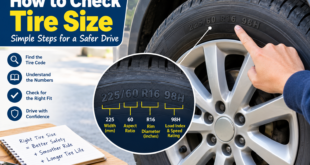
Another place to check is the existing tire. The tire sidewall contains a series of numbers and letters that identify its size.
However, I would not rely only on the current tire if you are unsure whether the previous owner installed the correct size. The manufacturer’s recommended information is a better starting point.
Understanding Tire Size Numbers
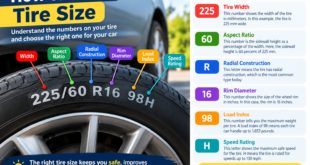
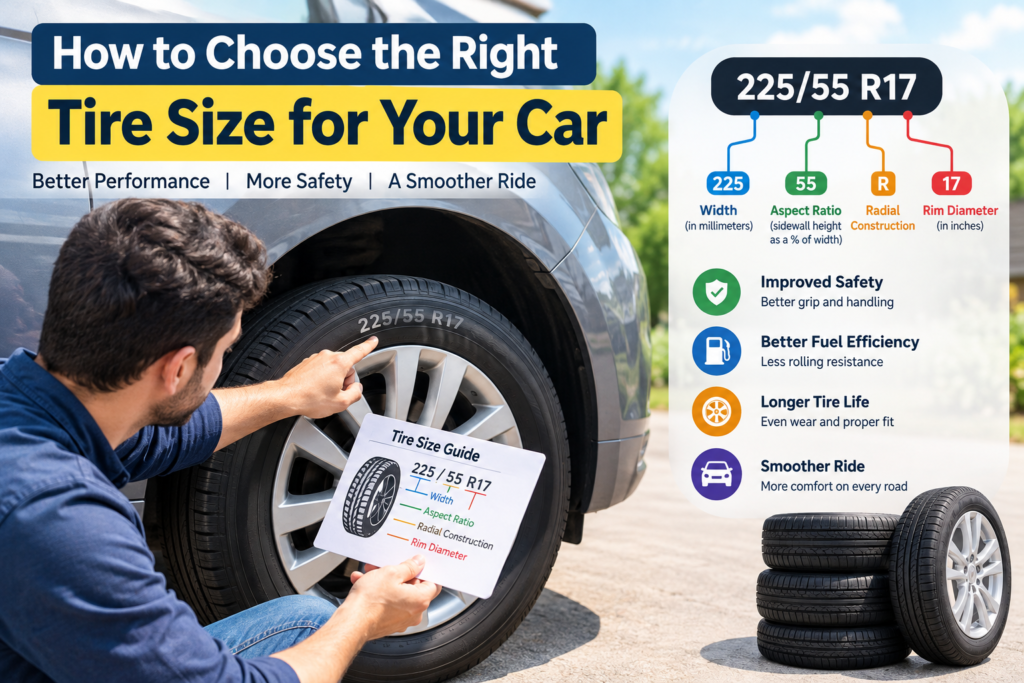
One of the most common tire size examples is 225/55 R17.
At first glance, this may look confusing, but each part has a specific meaning.
The number 225 represents the tire width in millimeters. In this example, the tire is approximately 225 millimeters wide.
The number 55 represents the aspect ratio. It means the sidewall height is 55 percent of the tire’s width.
The letter R means the tire uses radial construction. Radial tires are commonly used on modern passenger vehicles.
The number 17 represents the wheel diameter in inches. Therefore, a 225/55 R17 tire is designed to fit a 17 inch wheel.
Understanding these numbers makes it much easier to compare tire options and avoid ordering the wrong size.
Check the Wheel Size
When choosing the right tire size for your car, you also need to consider the wheel diameter.
For example, if your vehicle requires a tire designed for a 17 inch wheel, you cannot simply install a tire designed for an 18 inch wheel on the same wheel.
The tire and wheel must be compatible.
Some cars are available with different wheel sizes from the factory. A particular model may have one tire size on a basic trim and a different size on a higher trim.
That is why I always recommend checking the exact specifications for your particular vehicle rather than assuming every version uses the same tire size.
Consider Tire Width
Tire width is another important part of tire selection.
A wider tire can provide certain handling characteristics, but wider does not automatically mean better. The vehicle’s suspension, wheel design, body clearance, and manufacturer specifications all matter.
If a tire is too wide for the vehicle, it can create clearance problems. It may also change steering behavior or contact other components under certain conditions.
For normal everyday driving, I believe following the manufacturer’s recommended tire width is the safest and simplest approach.
Understand Aspect Ratio
The aspect ratio is the second major number in a tire size.
For example, in 225/55 R17, the 55 indicates the sidewall height relative to the tire width.
A lower aspect ratio generally means a shorter sidewall. This can provide a different steering feel and appearance, but it may also reduce the amount of sidewall available to absorb bumps.
A tire with a higher aspect ratio generally has a taller sidewall. This can contribute to a softer and more comfortable ride.
When changing tire sizes, aspect ratio needs to be considered together with tire width and wheel diameter. Changing only one number can affect the overall diameter of the tire.
Think About Overall Tire Diameter
The overall diameter of the tire is particularly important because it can influence your vehicle’s speedometer, gearing, clearance, and electronic systems.
If the replacement tire is significantly different in overall diameter from the original tire, your speedometer may no longer be as accurate.
For this reason, changing from one tire size to another should not be done simply because the new size looks better.
If you want to use an alternative tire size, it is best to confirm compatibility with the vehicle manufacturer, tire professional, or a qualified technician.
Check the Load Index
Tire size is not the only information printed on the sidewall.
You should also pay attention to the load index. The load index tells you how much weight the tire is designed to carry under specified conditions.
Every vehicle has a certain weight requirement, so choosing a tire with an insufficient load rating can be a serious mistake.
When I buy tires, I consider the load requirement just as important as the basic tire dimensions. A tire needs to fit the wheel and also be suitable for the weight of the vehicle.
Check the Speed Rating
The speed rating is another specification you should not ignore.
It indicates the maximum speed capability of the tire under specified conditions. You may see letters such as H, V, W, or other ratings on the tire.
The correct speed rating depends on the vehicle and its intended use.
For everyday driving, there is usually no good reason to select a tire simply because it has a much higher speed rating. Instead, I prefer to follow the manufacturer’s recommendation and choose a tire that matches the vehicle’s requirements.
Consider Your Driving Conditions
Choosing the right tire size is only one part of choosing the right tire.
You should also think about how and where you normally drive.
If you mainly drive around a city, comfort, durability, wet road performance, and fuel efficiency may be important to you.
If you regularly drive on highways, stability and long term tread performance may become more important.
If you drive on rough roads, a suitable sidewall profile can also make a noticeable difference in comfort and protection.
Your driving conditions should influence your tire choice, but they should not be used as a reason to ignore the recommended size.
Do Not Choose a Tire Only Because It Looks Good
I understand why some drivers like larger wheels and wider tires. They can give a car a more aggressive appearance.
However, appearance should not be the main factor when selecting tire size.
A tire that looks great but is not suitable for the vehicle can create unnecessary problems. You might experience a harsher ride, incorrect speedometer readings, clearance issues, or changes in handling.
I believe it is better to find a tire that gives you the appearance you want while still meeting the vehicle’s technical requirements.
Check All Four Tires
Before purchasing replacement tires, check the size on all four tires if possible.
Some vehicles use different tire sizes on the front and rear axles. This setup is known as a staggered tire arrangement.
If your car uses the same size on all four wheels, replacement is usually more straightforward. But if the front and rear sizes are different, you need to make sure you purchase the correct size for each axle.
Do not assume that one tire size fits every position on the vehicle.
Should You Change to a Different Tire Size?
Sometimes drivers want to change tire size for better appearance, performance, or availability.
A different tire size may be possible on certain vehicles, but it should be approached carefully.
The replacement must be compatible with the wheel, suspension, braking system, body clearance, load requirements, and electronic systems.
If you are considering a different tire size, I recommend getting professional advice before purchasing the tires. A qualified tire specialist can help determine whether the proposed setup is appropriate.
Check Tire Pressure After Installation
Once you have selected and installed the correct tire size, remember that proper tire pressure is also important.
The recommended tire pressure can usually be found on the driver’s door information label or in the owner’s manual.
Do not automatically use the maximum pressure printed on the tire sidewall as your vehicle’s normal operating pressure. The manufacturer’s recommended pressure is the better reference for everyday driving.
Proper tire pressure can help maintain handling, tire life, and fuel efficiency.
Final Thoughts
Choosing the right tire size for your car does not have to be complicated. The most important thing is to start with the manufacturer’s recommended tire size and understand what the numbers on the tire sidewall mean.
Check the tire width, aspect ratio, wheel diameter, load index, and speed rating before buying. Also consider your normal driving conditions and make sure the tires are compatible with your vehicle.
From my point of view, the best tire is not necessarily the biggest, widest, or most expensive option. The best tire is one that fits your car correctly and provides the combination of safety, comfort, durability, and performance you actually need.
If you take a few minutes to check your vehicle information before purchasing, you can avoid an expensive mistake and feel much more confident about your tire choice. A properly sized tire is an important part of keeping your car safe, comfortable, and ready for everyday driving.