Related Articles
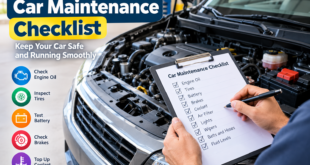

Taking care of a car does not always require advanced mechanical knowledge. In my experience, basic car maintenance is mostly about paying attention to small things before they become expensive problems. A driver who regularly checks the tires, engine oil, brakes, battery, lights, and fluids can keep a car safer, more reliable, and more comfortable to drive.
Many car problems start with simple warning signs. A strange sound, low tire pressure, an unusual smell, or a warning light can tell you that something needs attention. Ignoring these signs can turn a minor issue into a major repair.
In this guide, I will explain the basic car maintenance tasks that every driver should know. These are simple checks that can become part of your normal driving routine.
Check Your Engine Oil Regularly
Engine oil is one of the most important fluids in your car. It lubricates the internal engine parts and helps reduce friction and heat. If the oil level becomes too low, the engine can suffer serious damage.
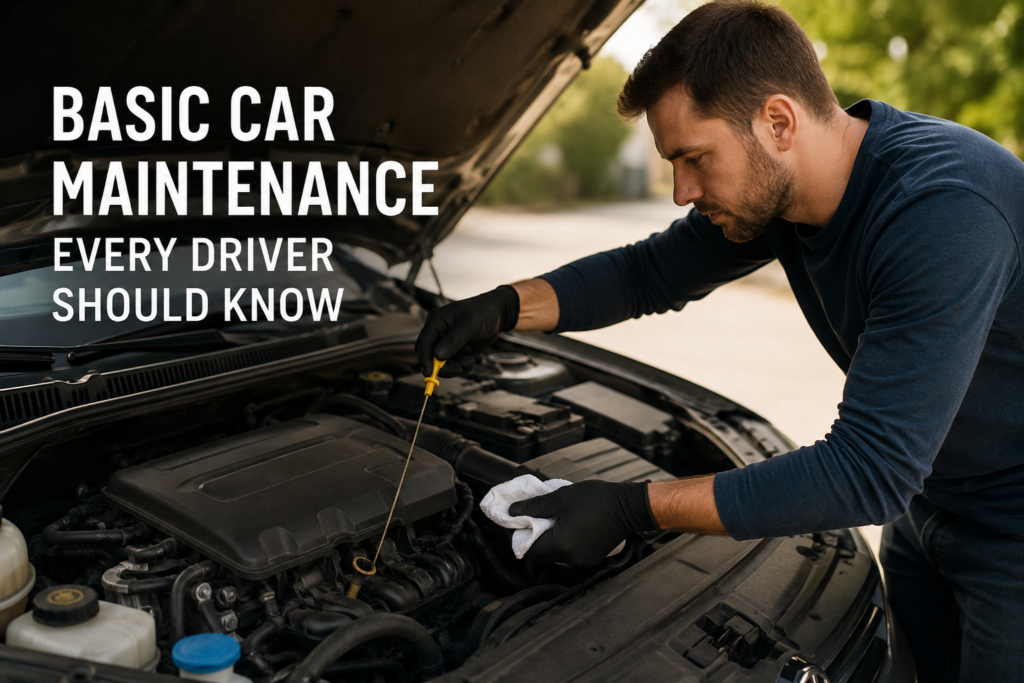
I recommend checking the engine oil regularly, especially before long trips. Park the car on a level surface and allow the engine to cool if the vehicle manufacturer recommends doing so. Locate the dipstick, remove it, wipe it clean, insert it again, and then check the oil level.
The oil should normally be between the minimum and maximum marks. If the level is low, add the correct type of engine oil recommended in your owner’s manual.
Do not simply choose an oil because it is popular or inexpensive. Different engines require different oil grades and specifications. Following the manufacturer’s recommendation is always the safer choice.
Keep Your Tires Properly Inflated
Tire pressure is another important part of basic car maintenance. Properly inflated tires can improve handling, braking, fuel efficiency, and tire life.
I make it a habit to check tire pressure regularly rather than waiting until a tire looks flat. A tire can lose pressure without appearing obviously damaged.
You can usually find the recommended tire pressure on a label inside the driver’s door area or in the owner’s manual. Check the pressure when the tires are cold for a more accurate reading.
Do not use the maximum pressure printed on the tire sidewall as your normal target. That number is not necessarily the recommended pressure for your vehicle.
Also inspect the tires for cracks, cuts, uneven wear, or objects stuck in the tread. If one tire repeatedly loses air, there may be a puncture, valve problem, or other issue that should be inspected.
Inspect Your Brakes
Brakes are one area where I never recommend taking chances. You do not need to be a mechanic to notice possible brake problems.
Pay attention when braking. If you hear grinding, squealing, or unusual noises, have the brakes checked. You should also take notice if the brake pedal feels soft, unusually hard, or different from normal.
If the car pulls to one side when braking, that can also indicate a problem that deserves attention.
Brake components naturally wear over time, so regular inspection is important. The exact service interval depends on your vehicle, driving conditions, and driving habits.
Check Your Battery
A weak battery can leave you stranded without much warning. Although modern batteries can last for several years, their lifespan depends on climate, driving patterns, vehicle use, and battery quality.
Look at the battery terminals and check for visible corrosion. Make sure the battery connections are secure. If your vehicle has difficulty starting, especially with slow engine cranking, the battery may need testing.
I also recommend paying attention to how quickly the engine starts. A noticeable change in starting performance can be an early warning that the battery or charging system needs attention.
If you plan to drive a long distance, checking the battery is a simple precaution that can save you from an inconvenient breakdown.
Keep an Eye on Coolant
The cooling system helps prevent the engine from overheating. Coolant levels should be checked according to the vehicle manufacturer’s instructions.
Never open a hot cooling system because the coolant can be extremely hot and pressurized. Wait until the engine has cooled before inspecting the reservoir.
The coolant should generally sit between the appropriate markings on the reservoir. If the level keeps dropping, do not simply keep adding coolant without finding the reason. A leak or cooling system problem may need professional attention.
If your temperature gauge suddenly rises higher than normal, take it seriously. Continuing to drive an overheating car can cause expensive engine damage.
Check Other Important Fluids
Engine oil is not the only fluid your car needs. Depending on the vehicle, you may also need to monitor brake fluid, transmission fluid, power steering fluid, windshield washer fluid, and coolant.
Modern vehicles can have different systems, so the best approach is to use the owner’s manual as your reference.
Windshield washer fluid is particularly easy to overlook. I like to keep it filled because clear visibility is essential for safe driving, especially during rain, dust, or nighttime driving.
If you notice that a fluid level is falling unusually quickly, investigate the problem instead of repeatedly topping it up.
Inspect Your Lights
Your headlights, brake lights, turn signals, reverse lights, and hazard lights all play an important role in road safety.
A quick light inspection does not take much time. Turn the lights on and walk around the vehicle to see whether they are working properly. You can also ask someone to press the brake pedal while you check the rear brake lights.
A damaged or dim light can make it harder for other drivers to see you. Replacing a faulty bulb or addressing an electrical problem early is much better than discovering the issue during a night drive.
Do not forget to keep your headlights and other light covers clean. Dirt and dust can reduce visibility.
Replace Worn Windshield Wipers
Windshield wipers are simple components, but they have a major effect on visibility.
If your wipers leave streaks, skip across the glass, make unusual noises, or fail to clear water properly, they may need replacement.
I consider good visibility one of the easiest safety improvements a driver can make. There is little benefit in having good tires and good brakes if you cannot clearly see the road ahead.
It is also useful to keep the windshield clean from both the outside and inside. A dirty windshield can create glare, particularly when driving at night.
Pay Attention to Warning Lights
Modern cars use dashboard warning lights to communicate potential problems. Some warnings are minor, while others require immediate attention.
Never ignore a warning light simply because the car still seems to drive normally. Check the owner’s manual to understand what the symbol means.
A red warning light generally deserves more immediate attention than a simple information indicator. If you see a serious warning, stop in a safe location when appropriate and seek professional advice.
The important thing is not to panic but also not to ignore the message.
Check Belts and Hoses
Under the hood, you may see various rubber hoses and belts. These components can become worn, cracked, loose, or damaged over time.
You do not need to remove parts to perform a basic visual inspection. Look for obvious cracks, fraying, leaks, or unusual damage.
If you notice something that does not look right, have it inspected by a qualified technician. Some components can fail suddenly, and replacing them before failure may prevent a breakdown.
Follow the Maintenance Schedule
One of the easiest ways to stay on top of car maintenance is to follow the manufacturer’s maintenance schedule.
Your owner’s manual normally provides information about oil changes, filters, spark plugs, fluid services, inspections, and other maintenance requirements.
I would not rely only on a fixed number of months or kilometers without checking what your vehicle manufacturer recommends. Different cars have different requirements.
Driving conditions can also matter. Frequent short trips, heavy traffic, dusty roads, extreme temperatures, and towing can place additional demands on a vehicle.
Keeping service records is another useful habit. Write down the date, mileage, and work completed. This makes future maintenance easier and can also help when selling the car.
Listen to Your Car
One of the most useful car maintenance habits is simply paying attention.
Cars often communicate problems through sounds, smells, vibrations, and changes in performance. A new clicking sound, grinding noise, unusual vibration, burning smell, or fluid leak should not be ignored.
You know how your car normally feels when you drive it. If something suddenly feels different, take a moment to investigate.
Sometimes the problem may be small. Sometimes it may indicate something more serious. Either way, identifying it early is usually better than waiting until the vehicle stops working.
Keep an Emergency Kit in Your Car
Basic preparation is also part of car maintenance. I recommend keeping a few useful items in the vehicle, such as a tire pressure gauge, flashlight, basic first aid supplies, warning triangle, jumper cables or an appropriate jump starter, and necessary tools.
You should also make sure your spare tire is properly inflated if your vehicle has one. Many drivers only think about the spare after getting a flat tire, which is exactly when discovering that it is also low on air becomes a problem.
Final Thoughts
Basic car maintenance does not have to be complicated. You do not need to become an expert mechanic to take better care of your vehicle. Regularly checking the engine oil, tire pressure, brakes, battery, coolant, lights, wipers, and other important components can make a noticeable difference.
In my view, the best approach is consistency. Spending a few minutes checking your car regularly is much easier than dealing with an unexpected breakdown or expensive repair later.
Always follow your vehicle owner’s manual for specific maintenance requirements, and when you are unsure about a mechanical problem, have the vehicle inspected by a qualified professional.
A well maintained car is not only more dependable. It can also provide better safety, performance, and peace of mind every time you get behind the wheel.