Related Articles

When it comes to car ownership, regular servicing is one of the most important things I believe every driver should take seriously. A car may look perfectly fine from the outside, but several important components are working continuously under the hood, and they need proper attention to keep the vehicle reliable.
One question I often hear is, how often should you service your car? There is no single answer that works for every vehicle because the correct service interval depends on the car model, engine type, driving conditions, mileage, age, and manufacturer recommendations. However, understanding the basic car service schedule can help you avoid expensive repairs and keep your vehicle performing properly.
In this guide, I will explain how often you should service your car, what is normally checked during a service, and why following a regular maintenance schedule is worth your time and money.
How Often Should You Service Your Car?
For many modern cars, a routine service is commonly recommended every 6 to 12 months or around 5,000 to 15,000 kilometers, depending on the vehicle and the manufacturer’s maintenance schedule.
Personally, I would never rely only on mileage. Time is also important. If you drive very little, the engine oil and other fluids can still deteriorate over time.
The best place to start is your owner’s manual. It contains the service interval recommended specifically for your vehicle. Some cars require more frequent maintenance, while newer vehicles may have longer service intervals.
If your manufacturer recommends servicing every 10,000 kilometers or once a year, whichever comes first, I would follow that schedule rather than waiting for the car to develop a problem.
Why Regular Car Servicing Matters
Regular car servicing is not simply about changing engine oil. A proper service gives you an opportunity to identify small problems before they become major mechanical failures.
For example, worn brake pads may not seem urgent at first, but continuing to drive with badly worn brakes can damage other components and increase repair costs. Similarly, an old battery may work normally one day and fail unexpectedly the next.
Regular maintenance can help improve:
- Engine performance
- Fuel economy
- Brake performance
- Tire safety
- Battery reliability
- Cooling system performance
- Vehicle resale value
- Overall driving safety
In my experience, preventive maintenance is usually much easier on the wallet than waiting for something to break.
Your Owner’s Manual Should Be Your First Guide
Every vehicle is different. A small city car, a large SUV, a diesel vehicle, and a hybrid car can all have different maintenance requirements.
The owner’s manual usually explains when important maintenance tasks should be completed. It may include recommended intervals for engine oil, oil filters, air filters, spark plugs, transmission fluid, coolant, brake fluid, and timing components.
Some modern vehicles also have a service reminder system. This can be useful, but I still recommend knowing the actual maintenance schedule for your specific car.
Do not assume that every vehicle needs servicing at the same interval simply because two cars look similar.
What Is Included in a Basic Car Service?
A basic car service normally involves checking several important areas of the vehicle.
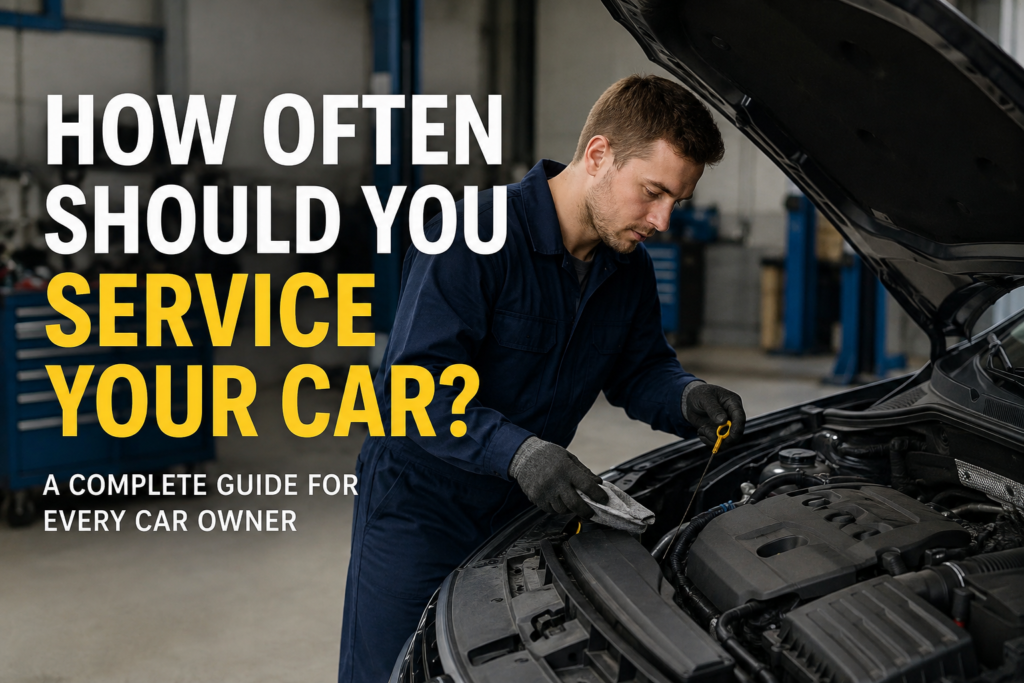
Engine Oil and Oil Filter
Engine oil is one of the most important fluids in your car. It lubricates moving engine components and helps reduce friction and heat.
Over time, engine oil becomes contaminated and loses some of its effectiveness. The oil filter also collects dirt and contaminants.
For this reason, oil and filter changes should be completed according to the manufacturer’s recommended interval.
Brake Inspection
Brakes should be checked regularly because they are directly connected to your safety.
A mechanic may inspect brake pads, discs, drums, brake fluid, and other related components. If you notice squealing, grinding, vibration, or a change in braking performance, do not wait for your next scheduled service.
Tire Inspection
Tires deserve attention at every service. A mechanic can check tire pressure, tread depth, uneven wear, and visible damage.
I also recommend checking tire pressure yourself regularly because incorrect pressure can affect handling, braking, tire life, and fuel consumption.
Battery Check
Your battery is another component that should not be ignored. During a service, its condition and charging system can be checked.
If your car is becoming slow to start, especially in the morning, the battery may need attention.
Fluid Checks
A service may include checking engine coolant, brake fluid, transmission fluid where applicable, power steering fluid, and windshield washer fluid.
Low or contaminated fluids can sometimes indicate a larger problem, so simply topping up a fluid without finding the reason for a loss may not be enough.
Should You Service Your Car Every Six Months?
For some vehicles and driving conditions, a six month inspection can be a good idea even when a full service is not required.
This can be particularly useful if you drive frequently, travel long distances, drive in very hot weather, deal with heavy traffic, or regularly use your vehicle on poor roads.
If your car is older, I would also consider more frequent inspections. Older vehicles can develop small issues that are easier and cheaper to fix when discovered early.
However, you should always use the manufacturer’s service schedule as your main reference.
What About Cars That Are Driven Very Little?
A common mistake is thinking that a car does not need servicing if it is rarely driven.
Even a vehicle that spends most of its time parked can experience aging and deterioration. Engine oil can degrade with time, batteries can lose charge, tires can develop problems, and rubber components can age.
If you drive only a few thousand kilometers a year, pay attention to the time based service interval as well as mileage.
For example, if your manufacturer recommends servicing once a year, you should not automatically wait two or three years just because you have driven very few kilometers.
Does Driving Style Affect Service Intervals?
Yes, driving conditions can have a major effect on maintenance needs.
Frequent short trips can be harder on some engines because the engine may not reach its ideal operating temperature for long enough. Heavy traffic, frequent stopping and starting, towing, dusty roads, extreme temperatures, and aggressive driving can also increase wear on certain components.
If your driving conditions are severe, check whether your vehicle manufacturer provides a separate maintenance schedule for severe use.
I believe this is especially important for drivers who use their cars every day in busy urban traffic.
When Should You Change Engine Oil?
Engine oil change intervals vary significantly between vehicles.
Some cars may require an oil change after a relatively short mileage interval, while others can go considerably longer using specific modern synthetic oils.
The important thing is to use the correct oil specification recommended for your engine. Choosing an oil simply because it is cheap or easily available is not always a good idea.
If you are unsure, check your owner’s manual or ask a qualified mechanic.
How Often Should Older Cars Be Serviced?
Older vehicles often benefit from closer attention because components naturally wear with age and mileage.
An older car may require more frequent inspections of suspension components, belts, hoses, brakes, cooling systems, batteries, and fluid levels.
This does not necessarily mean you need to spend money on unnecessary repairs. Instead, I recommend inspecting the vehicle regularly and repairing genuine problems before they become serious.
A well maintained older car can often remain dependable for many years.
Signs Your Car Needs Servicing
Sometimes your car will tell you that it needs attention before the scheduled service date.
Some common warning signs include:
- Strange engine noises
- Difficulty starting
- Reduced fuel economy
- Warning lights on the dashboard
- Brake squealing or grinding
- Steering vibration
- Uneven tire wear
- Engine overheating
- Fluid leaks
- Unusual smells
- Poor acceleration
- Rough engine operation
If you notice one of these symptoms, do not simply wait for the next scheduled service. A professional inspection can help identify the cause.
What Happens If You Skip Car Servicing?
Skipping one service does not necessarily mean your car will immediately fail, but repeated neglect can create expensive problems.
Old engine oil can contribute to increased engine wear. Worn brake components can become dangerous. Dirty filters can affect engine performance. Neglected cooling systems can contribute to overheating.
The biggest problem with skipping maintenance is that small problems can gradually become bigger ones.
For example, replacing a worn belt may be relatively straightforward, while dealing with serious engine damage caused by a failed component can be considerably more expensive.
How Much Does Regular Car Servicing Save?
It may seem like servicing is an expense, but I look at it as an investment in the vehicle.
Regular maintenance can help reduce the chance of unexpected breakdowns and major repairs. It can also help maintain fuel efficiency and preserve the value of the car.
A service bill may not always feel pleasant, but an unexpected engine, transmission, or cooling system repair can be far more expensive.
That is why I prefer to follow a maintenance schedule instead of waiting until something goes wrong.
A Simple Car Service Schedule
For everyday driving, a simple maintenance routine can make things easier.
Check your tire pressure regularly and inspect the tires for damage. Check engine oil and other accessible fluids according to your vehicle’s instructions.
Follow the manufacturer’s recommended service interval for oil changes and routine inspections.
During regular servicing, have the brakes, battery, suspension, filters, fluids, tires, and other important components inspected.
As the car gets older or the mileage increases, pay closer attention to major maintenance items recommended by the manufacturer.
Final Thoughts
So, how often should you service your car? For most drivers, the answer is to follow the service interval provided by the vehicle manufacturer, commonly around every six to twelve months or a specified mileage interval.
The exact schedule depends on your car, engine, age, mileage, and driving conditions. Regular car servicing is one of the simplest ways to protect your investment and reduce the risk of unexpected mechanical problems.
From my point of view, good car maintenance is about being proactive rather than reactive. You do not need to wait for a warning light, strange noise, or breakdown before paying attention to your vehicle.
A few regular checks and timely services can keep your car safer, smoother, and more dependable for years. If you are unsure when your next service is due, check your owner’s manual, review your previous service records, and speak with a qualified mechanic who understands your vehicle.