Related Articles

Taking care of a car does not always require a mechanic or a garage. In my experience, some of the most useful car maintenance habits are the simple checks we can do ourselves. A few minutes each day can help us notice small problems before they become expensive repairs. That is why I believe daily car checks should be part of every driver’s routine.
You do not need advanced mechanical knowledge to inspect your car. Checking the tires, lights, fluids, windshield, brakes, and warning signs can give you a better idea of your car’s condition. These daily car checks can also improve safety and help your vehicle stay reliable for longer.
In this guide, I will explain the basic daily car checks that every driver can do without special tools.
Check Your Tires Before Driving
Tires are one of the first things I recommend checking before driving. They are the only parts of your car that stay in direct contact with the road, so their condition has a major effect on safety and handling.
Take a quick look at all four tires and check for anything unusual. Look for visible cuts, cracks, nails, stones, or objects stuck in the tread. Also check whether one tire looks noticeably lower than the others.
Tire pressure is equally important. Low tire pressure can affect fuel economy, braking, steering, and tire life. High pressure can also reduce proper road contact and affect handling.
I recommend checking tire pressure regularly with a reliable pressure gauge and following the pressure recommended by your vehicle manufacturer. The correct figure is usually found on a label inside the driver’s door or in the owner’s manual.
Do not rely only on how a tire looks because a tire can be underinflated without appearing completely flat.
Look at the Engine Oil Level
Engine oil is essential for keeping the engine’s moving parts properly lubricated. Although the oil does not need to be checked every single time you drive, making it part of a regular routine is a smart habit.
If your car has a traditional oil dipstick, park on a level surface and allow the engine to cool according to the manufacturer’s instructions. Remove the dipstick, wipe it clean, insert it again, and then remove it to check the level.
The oil should normally sit between the marked levels on the dipstick. If it is very low, do not ignore it. A low oil level can lead to increased engine wear and, in serious situations, major engine damage.
I also pay attention to the appearance of the oil and any unusual smell. If you notice a sudden change, excessive oil consumption, or oil leaking underneath the vehicle, it is better to have the car inspected.
Check the Coolant Level
Engine coolant helps control engine temperature. A car that loses coolant can eventually overheat, which can cause serious damage.
Before checking coolant, make sure the engine is cool. Never open a hot cooling system because pressurized coolant can cause severe burns.
Look at the coolant reservoir and check whether the level is between the appropriate markings. If the level is repeatedly dropping, there may be a leak or another cooling system problem.
I would not treat frequent coolant loss as something normal. Adding coolant may temporarily solve the low level, but the reason for the loss should still be investigated.
Inspect the Brake Fluid
Brake fluid is another important part of your car’s safety system. Open the hood and locate the brake fluid reservoir if your vehicle allows easy inspection.
Check that the fluid level is within the recommended range. If you notice a significant drop, have the braking system checked by a qualified technician.
There are other brake warning signs that are even easier to notice while driving. Pay attention if the brake pedal feels unusually soft, the car takes longer to stop, or you hear unusual sounds when braking.
I believe these signs should never be ignored because good brakes are essential for safe driving.
Test Your Lights
A quick light check takes very little time but can make a big difference. Turn on your headlights and check that they are working correctly.
Also check the brake lights, turn signals, parking lights, reverse lights, and hazard lights. If possible, ask someone to stand outside the car while you operate the controls.
Lights are especially important at night, during rain, in fog, and in busy traffic. A damaged or failed light can make it harder for other drivers to understand what you are doing.
Keeping the light lenses clean is also useful because dirt and dust can reduce visibility.
Check the Windshield and Wipers
Your windshield gives you the view you need to drive safely, so it should always be in good condition.
Before driving, take a quick look for cracks, chips, or anything blocking your view. Small windshield damage can sometimes become worse because of temperature changes, road vibration, or impacts.
I also recommend checking the windshield wipers regularly. If they leave streaks, skip across the glass, or make unusual noises, they may need replacement.
Make sure the windshield washer reservoir has enough fluid as well. Clean glass can make a major difference when driving in dusty or rainy conditions.
Look Under the Car
One of the simplest daily car checks is to look underneath the vehicle after it has been parked.
You do not need to crawl under the car. Simply look around the ground for unusual fluid spots or wet areas.
Different fluids can have different colors and appearances, but it is not always easy to identify them correctly just by looking. If you notice a new or unexplained leak, it is better to have a professional inspect it.
A small leak may seem harmless at first, but ignoring it can allow a minor problem to become a major repair.
Pay Attention to Dashboard Warning Lights
Modern cars use dashboard warning lights to tell drivers when something needs attention. I always recommend taking warning lights seriously.
Some lights may indicate routine information, while others can signal an important mechanical or safety problem.
If a warning light appears unexpectedly, check your owner’s manual to understand what it means. A flashing warning light or a serious warning should receive immediate attention.
Do not simply ignore a warning because the car still seems to drive normally. Some problems can develop without obvious changes in driving performance.
Listen for Unusual Sounds
Your car can often tell you that something is wrong through sound. This is something every driver can learn to notice.
Pay attention to new rattles, squeaks, grinding sounds, clicking noises, humming, or unusual engine sounds. Try to remember when the noise occurs. Does it happen when starting the engine, accelerating, braking, turning, or driving over bumps?
This information can be extremely useful when explaining the problem to a mechanic.
In my opinion, the biggest mistake is getting used to an unusual sound and assuming it will disappear. Sometimes it does, but often it becomes more noticeable as the underlying problem gets worse.
Notice Changes in Steering and Braking
You should also pay attention to how the car feels while driving.
If the steering wheel suddenly feels different, the car pulls to one side, the steering becomes unusually heavy, or you feel vibrations, something may need inspection.
The same applies to braking. If the pedal feels different or the vehicle does not stop as confidently as usual, do not delay getting it checked.
Small changes in how a car drives can provide early warnings before a mechanical problem becomes more serious.
Check Your Mirrors and Number Plates
Before starting your journey, make sure your mirrors are properly adjusted and clean. Good visibility is important for changing lanes, reversing, parking, and watching surrounding traffic.
It is also worth checking that your number plates are clean and securely attached. Dirt, mud, or damage can make them difficult to read.
These may seem like very small details, but they are part of responsible daily car care.
Make Sure the Fuel Level Is Enough
Running very low on fuel can create unnecessary stress, especially when driving long distances or in unfamiliar areas.
I prefer to check the fuel gauge before leaving rather than waiting until the warning light appears. This is particularly useful when traveling on highways or through areas where fuel stations may be far apart.
For electric vehicles and hybrids, the same principle applies to checking the available battery charge and planning charging stops when necessary.
Keep an Eye on the Battery
Most modern car batteries do not require daily maintenance, but you can still watch for warning signs.
If your engine takes longer than usual to start, the lights appear weaker, or electronic systems behave strangely, the battery or charging system may need attention.
You can also visually inspect the battery area if it is accessible. Look for obvious corrosion or damaged connections, but avoid touching electrical components if you are unsure about what you are doing.
Keep the Car Clean and Free From Clutter
Daily car maintenance is not only about the engine and mechanical components. A clean and organized car can also make driving more comfortable and safer.
Remove objects that could roll around under the pedals or block your view. Keep the windshield, mirrors, and windows clean.
I also recommend keeping essential items such as the owner’s manual, emergency contact information, and basic roadside equipment in an accessible place.
A Simple Daily Car Check Routine
You do not need to spend half an hour inspecting your car every morning. A quick routine can be enough for most drivers.
Before driving, look at the tires, check around the vehicle for leaks, inspect the lights, look through the windshield, and pay attention to any warning lights.
Once you start the engine, listen for unusual sounds and notice whether the car feels normal. If something feels different from the previous day, do not automatically assume it is nothing.
For longer trips, I recommend taking a little more time to check tire pressure, fluid levels, lights, windshield condition, and emergency equipment.
Why Daily Car Checks Matter
The main benefit of daily car checks is early problem detection. A tire that is slowly losing pressure, a fluid leak, a damaged wiper, or a warning light can be noticed before it turns into a larger problem.
Regular checks can also help reduce unexpected breakdowns and improve your confidence behind the wheel. More importantly, they can help identify issues that may affect your safety and the safety of other road users.
You do not have to be a car expert to take better care of your vehicle. You simply need to develop a habit of paying attention.
Final Thoughts
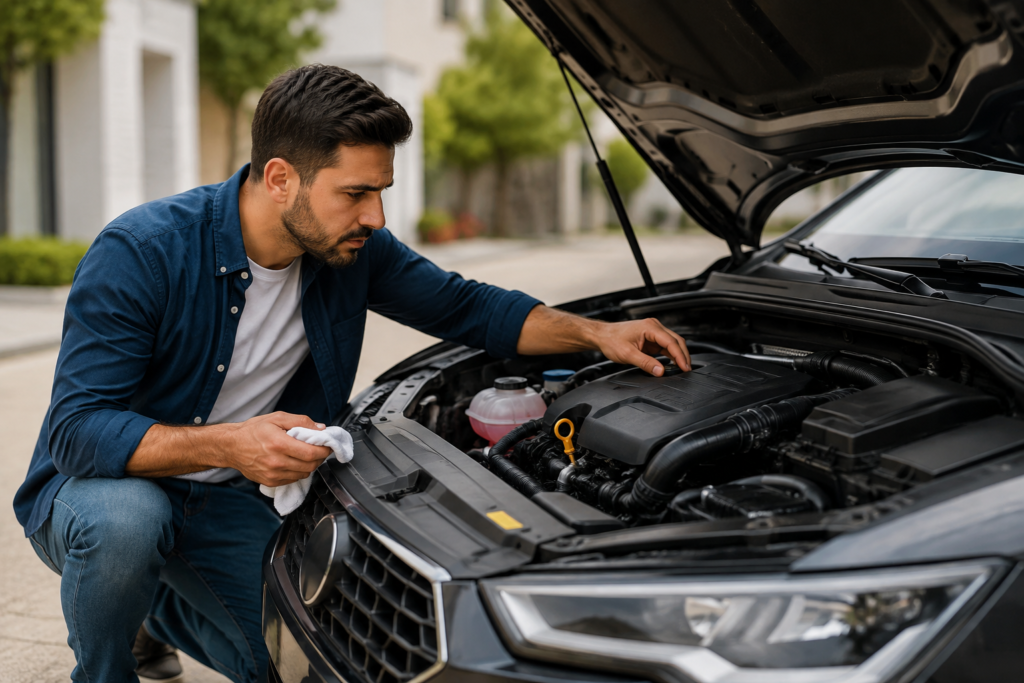
In my view, daily car checks are one of the easiest ways to become a more responsible driver. You do not need expensive equipment or advanced mechanical skills. Most checks can be completed in just a few minutes.
Check your tires, fluids, lights, windshield, brakes, dashboard warnings, and the area around your vehicle. Listen to your car and pay attention to changes in how it drives.
A small check today can sometimes prevent a much bigger problem tomorrow. If you make these simple checks part of your normal driving routine, your car is more likely to remain safe, reliable, and ready for the road.
Good car maintenance starts with awareness, and every driver can develop that habit.