Related Articles
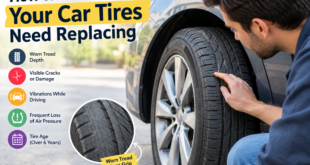
When I look at tire wear, I see it as more than just a sign that a tire is getting old. The way a tire wears can tell us a lot about the condition of the vehicle, driving habits, tire pressure, suspension, and wheel alignment. Uneven tire wear is something many drivers notice only after the problem has become serious. By that time, the tire may already have lost a significant amount of its useful life.
In my view, understanding what causes uneven tire wear can help drivers save money and avoid unnecessary safety risks. A tire should normally wear relatively evenly across its tread. When one side, the center, or certain sections wear faster than others, there is usually an underlying reason that needs attention.
What Is Uneven Tire Wear?
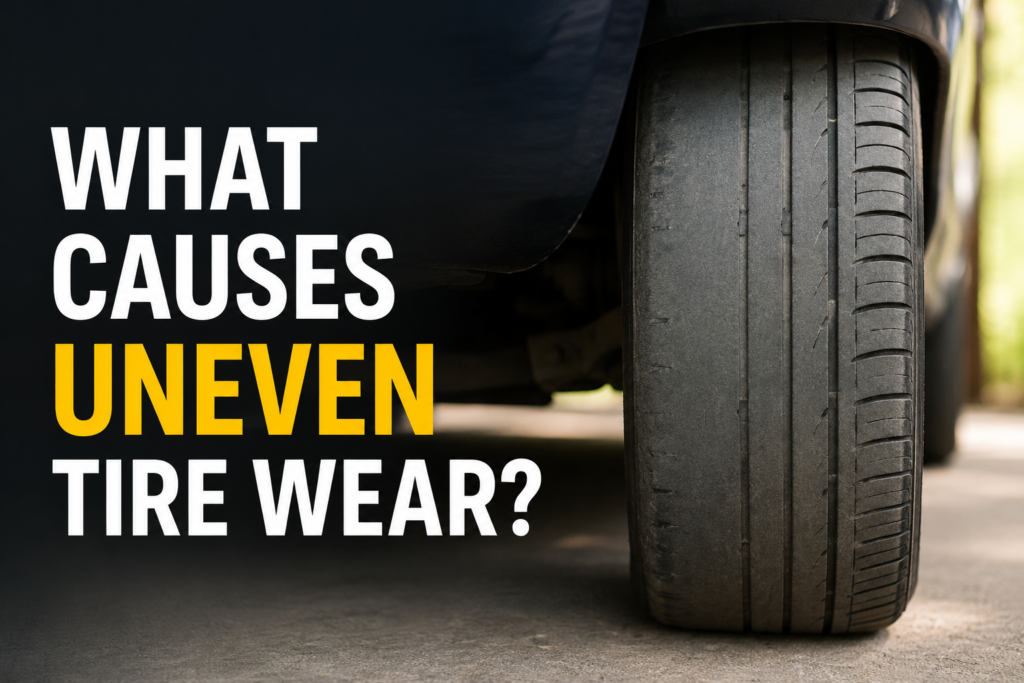
Uneven tire wear means that different parts of the tire tread are wearing at different rates. Instead of the tread becoming smoothly thinner across the entire surface, you may notice that the inner edge, outer edge, center, or individual tread blocks are wearing faster.
Sometimes the difference is easy to see. In other cases, you may notice it by running your hand gently across the tread and feeling an unusual pattern. You might also hear more road noise or feel vibrations while driving.
Uneven tire wear should not simply be ignored. Tires are the only parts of the vehicle that directly contact the road, so their condition has a major effect on braking, steering, handling, and overall driving performance.
Incorrect Tire Pressure
One of the most common causes of uneven tire wear is incorrect tire pressure. I always consider tire pressure one of the first things to check when a tire does not appear to be wearing normally.
When a tire is underinflated, its outer edges can carry more of the load. This can cause the shoulders of the tire to wear faster than the center. An overinflated tire can have the opposite effect, causing the center portion of the tread to wear more quickly.
This is why checking tire pressure regularly is important. The recommended pressure can usually be found in the vehicle owner’s manual or on the manufacturer’s tire information label.
It is also important to check pressure when the tires are cold because driving heats the tires and changes the pressure reading.
Wheel Alignment Problems
Another major reason for uneven tire wear is incorrect wheel alignment. Wheels need to sit at specific angles so that the tires make proper contact with the road.
If the alignment is out of specification, a tire may begin wearing more heavily on its inner or outer edge. Drivers may also notice that the vehicle pulls to one side or that the steering wheel does not sit straight while driving.
Poor alignment can happen after hitting potholes, curbs, or other road obstacles. It can also develop because of worn suspension components.
If I notice unusual wear on one edge of a tire, I would not simply replace the tire without checking the alignment. A new tire could develop the same problem if the underlying alignment issue remains.
Worn Suspension Components
The suspension system plays an important role in keeping the tires in proper contact with the road. Components such as shocks, struts, bushings, ball joints, and control arms can affect how the tire moves and sits against the road.
When suspension components become worn, the tire may move more than it should. This can create irregular patterns across the tread.
A common example is a tire that develops a cupped or scalloped appearance. This type of wear can sometimes be associated with suspension problems, poor wheel balance, or improper tire inflation.
This is one reason I believe tire inspection should not be limited to the rubber itself. If a tire is wearing unusually fast, the suspension should also be inspected.
Unbalanced Wheels
Wheel imbalance can also contribute to uneven tire wear. A wheel and tire assembly needs to rotate smoothly. When its weight is not distributed properly, vibrations can develop, especially at certain speeds.
Over time, these vibrations can contribute to irregular tread wear. You may feel the steering wheel shaking or notice vibration through the vehicle.
Wheel balancing is normally performed using specialized equipment that identifies where small balancing weights are needed. If you recently installed new tires and notice vibration afterward, having the wheels checked can be a sensible step.
Aggressive Driving Habits
Driving style can have a noticeable effect on tire life. Hard acceleration, sudden braking, fast cornering, and frequent high speed driving can place additional stress on the tread.
Aggressive cornering can put greater pressure on the outside edges of the tires. Repeated hard braking can also create additional tread stress.
I think smooth driving is one of the simplest ways to help tires last longer. Gradual acceleration, controlled braking, and sensible cornering not only reduce tire wear but can also make the driving experience more comfortable.
Road Conditions and Potholes
Road conditions are another factor that should not be overlooked. Potholes, broken pavement, rough roads, and road debris can affect tires and wheels.
A strong impact can change wheel alignment or damage suspension components. It can also cause a tire to develop internal damage that may not be immediately visible.
For drivers who regularly travel on rough roads, checking the tires more frequently can be worthwhile. Even if the tire appears normal from a distance, unusual vibration or a sudden change in handling can indicate that something needs inspection.
Lack of Tire Rotation
Tires do not always experience the same amount of stress. On many vehicles, the front tires handle steering and may experience different loads from the rear tires. Depending on the vehicle’s drivetrain and driving conditions, some tires can wear faster than others.
Regular tire rotation helps distribute wear more evenly. The correct rotation pattern depends on the vehicle and tire type, so it is important to follow the vehicle or tire manufacturer’s recommendations.
If tires are not rotated when recommended, one pair may become significantly more worn than the other. Regular rotation can help extend the overall service life of the tire set.
Problems With Brakes
Brake problems can sometimes contribute to abnormal tire wear. A brake component that does not release correctly can create excessive heat and additional resistance at a wheel.
This may be accompanied by unusual smells, pulling while braking, excessive heat around one wheel, or reduced vehicle performance.
If one wheel or tire area appears to be experiencing unusual heat or wear, I would have the braking system inspected rather than assuming the tire itself is the only problem.
Incorrect Tire Installation
Tire installation also matters. A tire that has not been mounted or balanced correctly can develop problems that affect its performance and wear pattern.
Different tires may also have specific requirements regarding rotation direction or installation position. Some tires are designed to rotate in one direction, while others have specific inside and outside markings.
For this reason, professional installation is important, especially when using specialized tire designs.
Different Causes Create Different Wear Patterns
One useful way to understand uneven tire wear is to look at the pattern.
If the center of the tread is wearing faster than the edges, excessive tire pressure may be involved. If both outer shoulders are wearing faster, low tire pressure can be one possible cause.
If only the inner or outer edge is wearing heavily, wheel alignment may need to be checked. If the tread has patches of uneven wear or a repeating scalloped pattern, wheel balance or suspension problems may be worth investigating.
These patterns are useful clues, but they should not be treated as a definite diagnosis. Several problems can create similar symptoms, so a professional inspection may be necessary.
How to Prevent Uneven Tire Wear
Preventing uneven tire wear is generally easier and less expensive than dealing with premature tire replacement.
First, check tire pressure regularly and keep it at the recommended level. Second, follow the recommended tire rotation schedule. Third, have the wheel alignment checked when necessary, particularly after a strong pothole or curb impact.
It is also important to inspect your tires visually. Look for cracks, bulges, exposed cords, unusual tread patterns, or objects stuck in the tread.
Pay attention to changes while driving as well. New vibrations, steering problems, pulling to one side, or unusual road noise can sometimes be early signs of a tire, wheel, suspension, or alignment problem.
When Should You Replace a Tire?
Uneven wear can sometimes become severe enough that the tire needs to be replaced. If the tread is excessively worn, damaged, or showing signs of structural problems, continuing to drive on it can be dangerous.
It is also important to remember that replacing a tire does not automatically solve the problem. If incorrect alignment, tire pressure, suspension wear, or another mechanical issue caused the uneven wear, that problem should be corrected as well.
Otherwise, the replacement tire may eventually develop the same pattern.
Final Thoughts
In my opinion, what causes uneven tire wear is not a question with just one answer. Tire pressure, wheel alignment, suspension problems, wheel imbalance, driving habits, road conditions, braking issues, and missed tire rotations can all play a role.
The good thing is that many causes of uneven tire wear can be identified early. A few minutes spent checking tire pressure and inspecting the tread can provide useful information about the condition of your vehicle.
I believe tires should never be treated as something we only think about when they become completely worn. They are an important part of vehicle safety and performance. Paying attention to their wear pattern can help identify problems early, improve handling, extend tire life, and potentially save money on unnecessary tire replacements.
If you notice that one side of a tire is wearing faster, the center is becoming smooth, or the tread has an unusual pattern, it is better to investigate the cause instead of waiting for the problem to become worse. Proper tire maintenance, regular inspections, correct inflation, and timely alignment and suspension checks can go a long way toward achieving even tire wear and longer tire life.